
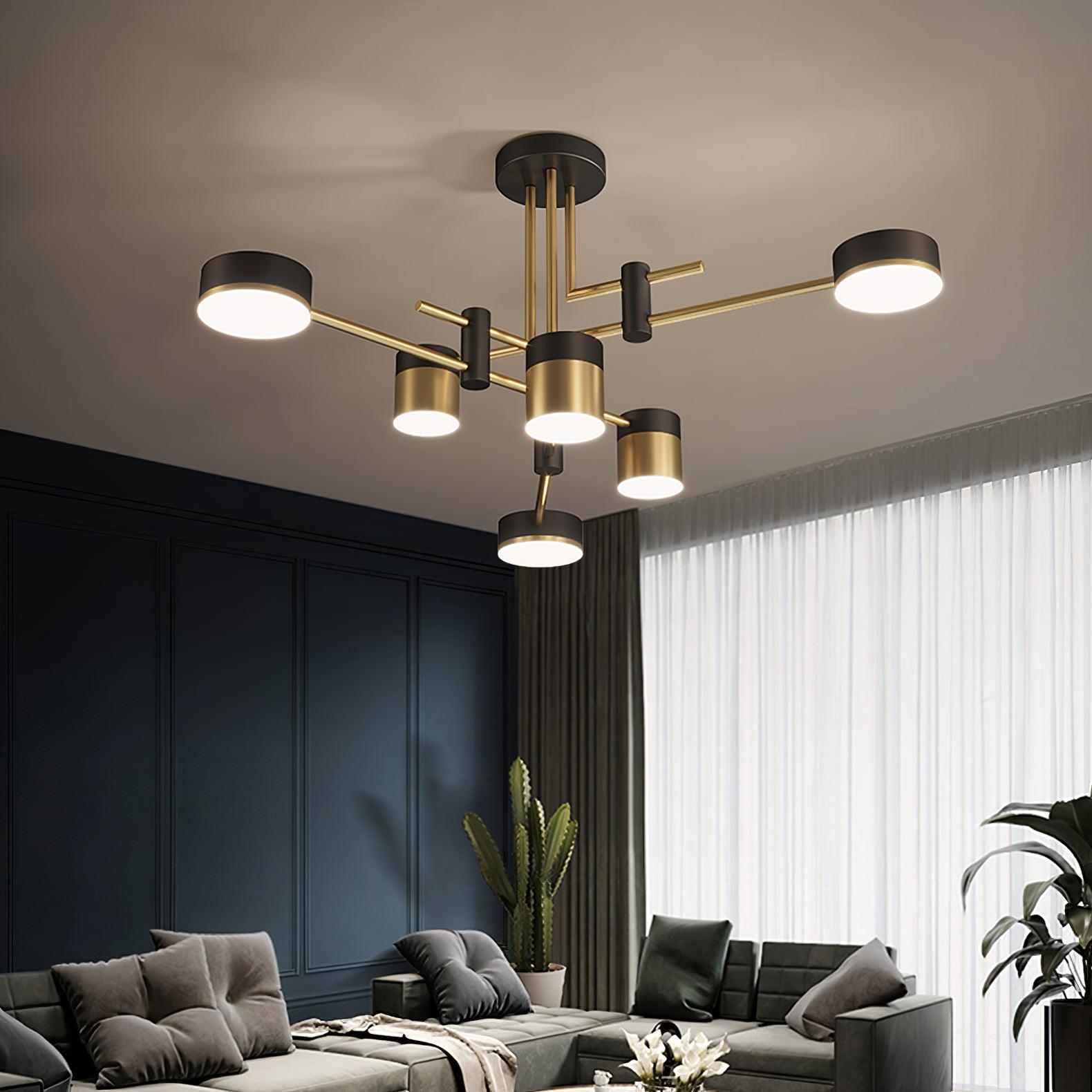
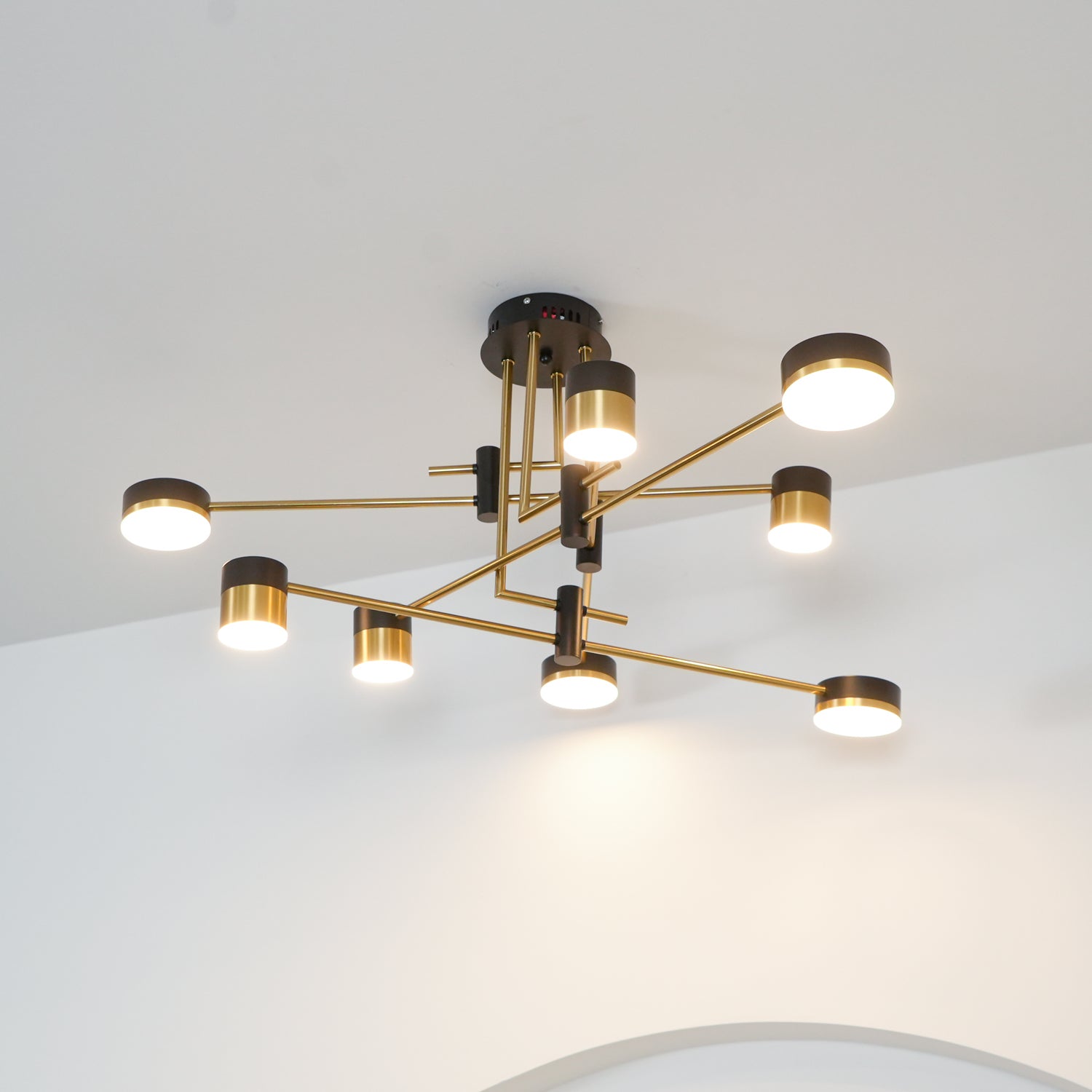
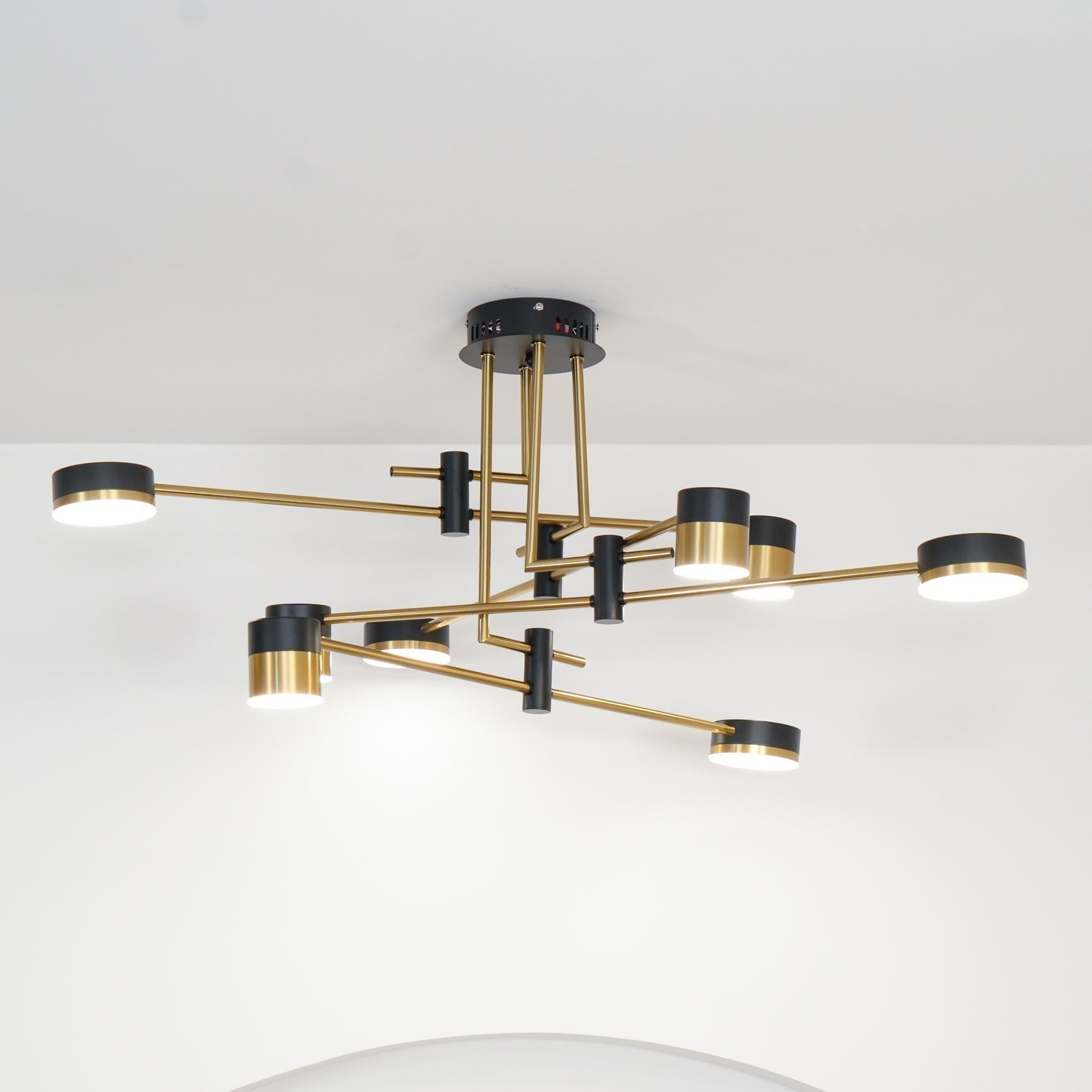
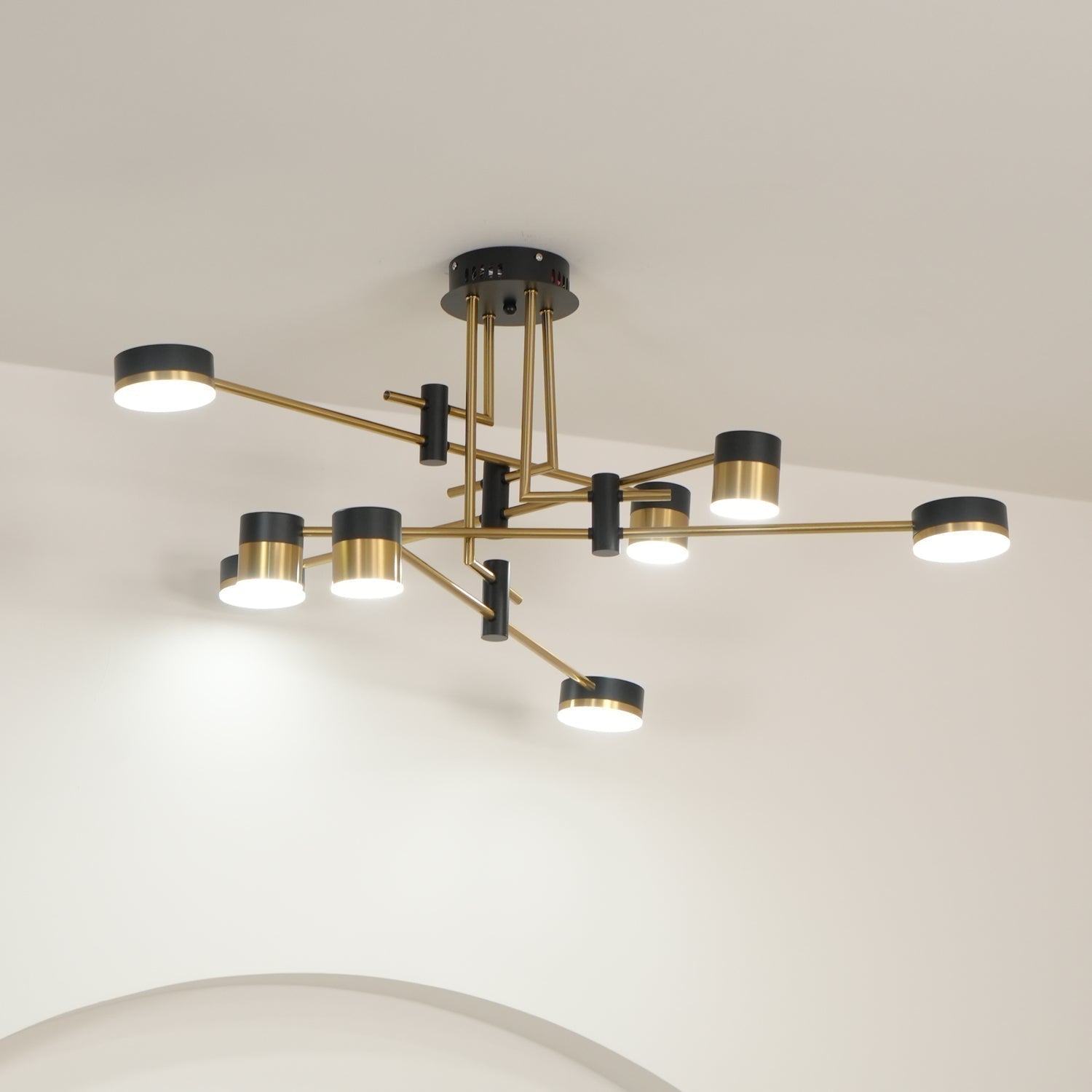
The short answer: if you want a dining-room or foyer fixture that looks far more expensive than it is, a black-and-gold branch chandelier in iron and acrylic is one of the highest-leverage choices available. This one hangs from multiple black arms, each tipped with a gold-finished shade, and runs on a built-in LED engine — so there are no bulbs to buy, match, or replace later. It comes in three sizes (4-light, 6-light, 8-light), three color temperatures (3000K, 4000K, 6000K), wires into standard 110–240V, and costs $169.99 at MiniHouzz.
The rest of this guide covers what the fixture is actually made of, how to choose the right size for your ceiling, where to hang it, and the three limitations you should know before you order.
What a black-and-gold chandelier actually does to a room
Most builder-grade dining fixtures are one of two things: a single shaded pendant that disappears into the ceiling, or a chrome-and-glass piece that reads as hotel-corridor generic. A black-and-gold branch silhouette works differently. The black arms give it graphic structure — the fixture has a visible drawing, not just a glow — while the gold shades add the one warm metallic note that makes a neutral room feel intentional.
That combination is why the style keeps showing up in boutique hotels and staged listings. Black keeps it from looking fussy; gold keeps it from looking industrial. In practice, it behaves best in rooms with a lot of visual quiet around it: a neutral dining table, a bare foyer ceiling, a hallway with one piece of art. Put it above a busy patterned rug with four competing chair styles and the effect collapses.
Where it fits best
- Dining rooms over a rectangular or round table of 4–8 seats.
- Two-story or standard foyers where you want a focal point visible from the front door.
- Open-concept living/dining spaces that need a visual divider between zones.
- Stairwells and landings with a ceiling mount and enough drop clearance.
Materials and build: iron frame, acrylic shades
The frame is iron, finished in black. The shades are acrylic with a gold finish. This is worth being explicit about, because the material choice is what makes the price possible and also what sets expectations.
Acrylic shades diffuse light evenly and hold up to the heat of an integrated LED module without the yellowing that older plastics showed. They are also far lighter than glass, which matters on a multi-arm fixture: less weight on the ceiling mount, less stress on each arm joint over years of hanging. The trade-off is honest — acrylic will not have the refractive sparkle of cut crystal, and it can scratch if you clean it with an abrasive cloth. A soft, dry or barely damp microfiber cloth is all it needs.
The iron frame is the structural part, and it is what gives the piece its thin, drawn look. Black iron also hides dust better than polished metal, which is a small but real advantage in a fixture mounted above eye level.
What is built in, and what that means day to day
- Integrated LED, not replaceable. The light engine is sealed into the fixture. You will never shop for bulbs, and you will never have a mismatched-bulb problem. The flip side: when the module eventually reaches end of life, the fixture is replaced rather than re-lamped.
- Hardwired, ceiling mount. This is a permanent installation, not a plug-in. Plan for a junction box at the mounting point.
- Standard switch control. It works with common push (on/off) switches, which are not included.
- Not dimmable. This is designed for standard on/off operation — no dimmer compatibility.
If a dimmer is non-negotiable for your room, this is the point to stop and look at a different fixture. It is a genuinely useful constraint to know before ordering rather than after.
Choosing the size: 4-light, 6-light, or 8-light
All three sizes share the same 38.1 cm (15″) height at the 6- and 8-light level, with the 4-light sitting shorter at 32 cm (12.6″). Width is the variable that matters most, because it determines whether the fixture looks scaled to the table beneath it.
| Size | Length | Height | Power | Best-fit rooms |
|---|---|---|---|---|
| 4-light | 60 cm / 23.6″ | 32 cm / 12.6″ | ~30W | Compact dining nooks, small foyers, breakfast areas |
| 6-light | 76 cm / 29.9″ | 38.1 cm / 15″ | ~45W | Standard 6-seat dining rooms, mid-size foyers |
| 8-light | 101.6 cm / 40″ | 38.1 cm / 15″ | ~60W | Long 8-seat tables, double-height foyers, open-plan dining |
A reliable starting rule: the fixture’s width should land somewhere around one-third to one-half the width of the table. So a 1.8 m (72″) table pairs naturally with the 76 cm 6-light and can carry the 101.6 cm 8-light if the ceiling is generous. For foyers, match the fixture to the ceiling’s visual weight — a narrow entry hall will be overwhelmed by the 40″ version.
Light color: 3000K, 4000K, or 6000K
This fixture is offered in three color temperatures, and the choice changes the room more than most people expect. Pick based on function, not trend.
- 3000K warm. The default for dining and living spaces. It flatters skin tones, makes wood and brass read richer, and feels like evening light. If the fixture hangs over a table where people eat and talk, start here.
- 4000K neutral. Cleaner and more “architectural.” Good for foyers, hallways, and open-plan rooms where the chandelier needs to read as a design object rather than a mood light. It also sits closer to daylight, which helps a space feel larger.
- 6000K cool. Bright, crisp, slightly clinical. Best reserved for utility-adjacent spaces or rooms with cool-toned finishes — grey floors, white lacquer, polished concrete. Over a warm wood dining table it tends to fight the furniture.
One caveat worth stating plainly: because the temperature is set at the fixture level, this is a decision you make once. Order the wrong one and you cannot correct it with a bulb swap later. When in doubt for a dining room, 3000K is the safer call.
Installation: height, ceiling, and what to plan for
Because this is a hardwired ceiling fixture, the installation decisions are made once — get them right and the room works, get them wrong and the fixture either crowds the table or floats too high to read.
Over a dining table
The conventional target is 30–36 inches (76–91 cm) from the bottom of the fixture to the tabletop. Sit at the table and check it before you commit: you want a clear view across to the person opposite you, and no glare in the eyes of anyone seated. If your ceiling is low, favor the shorter 4-light at 32 cm and keep to the lower end of that range; the 6- and 8-light versions add roughly 6 cm of height.
In a foyer
Keep the lowest point at least 7 feet (about 2.1 m) above the floor so people walk under it comfortably. A practical sizing cue for hanging fixtures is roughly 2.5–3 inches of fixture height per foot of ceiling height — so a 10-foot ceiling supports a taller drop than an 8-foot one. In a double-height foyer, the fixture is read from below and from the stairs; center it on the door axis if the ceiling allows.
Before the electrician arrives
- Confirm a ceiling junction box at the mounting point, rated to carry the fixture’s weight.
- Confirm supply voltage — the fixture is rated AC 110–240V, so it suits both North American and European supply.
- Decide the color temperature now, at order time.
- Confirm you have a standard on/off switch, not a dimmer.
Three limitations to know before you order
Every fixture has constraints. These are the ones that matter for this one, stated up front rather than buried in a spec sheet:
- Not dimmable. On/off only. If you want a dimmable focal light over a dining table, this is the wrong fixture for that room.
- The LED is sealed in. Long service life and no bulb matching, but no re-lamping either.
- IP20, indoor only. It is rated for indoor use and is not waterproof. Do not install it in a shower surround, above a bathtub, on a covered porch, or anywhere with direct water contact or heavy moisture.
None of these are defects — they are design decisions that make the price and the look possible. But they should match how you plan to use the room.
Who this chandelier is for
- A good fit if: you want a designer-looking focal piece for a dining room or foyer, you have a hardwired ceiling point, you are fine with on/off switching, and you want to skip bulb shopping entirely.
- Not the right fit if: you need dimming, you want replaceable bulbs, or the fixture is headed outdoors or into a wet area.
Frequently asked questions
Can the integrated LED be replaced?
No. The LED module is built fully into the fixture and is not replaceable. It is engineered for long, energy-efficient service, but the fixture is the serviceable unit rather than the light engine.
Is it suitable for damp or outdoor locations?
No. It is IP20 rated and intended for indoor use only. It is not waterproof and should not go anywhere with direct water contact.
What are the sizes and wattages?
Three options: 4-light at 60 × 32 cm (23.6″ × 12.6″), about 30W; 6-light at 76 × 38.1 cm (29.9″ × 15″), about 45W; and 8-light at 101.6 × 38.1 cm (40″ × 15″), about 60W.
Will it work with a dimmer switch?
No. It is designed for standard on/off operation with a common push switch (not included).
What voltage does it require?
AC 110–240V, so it is compatible with standard North American and European residential supply. It is hardwired and ceiling mounted.
What certifications does it carry?
The fixture is listed as UL certified, ETL listed, CE approved, RoHS compliant, and FCC certified.
The bottom line
A black-and-gold branch chandelier is a fast way to give a dining room or foyer a designed, boutique-hotel quality without moving to a crystal price bracket. The iron frame and acrylic shades keep it light and durable, the integrated LED removes bulb maintenance entirely, and the three sizes cover everything from a breakfast nook to a long eight-seat table. The trade-offs are clear and worth accepting on purpose: no dimming, no re-lamping, indoor only.
If that matches your room, you can see the current price and size options on the MiniHouzz product page. Before you order, fix two things: measure your table or foyer width to pick the size, and decide between 3000K, 4000K, and 6000K — that last choice is permanent, and it is the one most people wish they had thought about first.