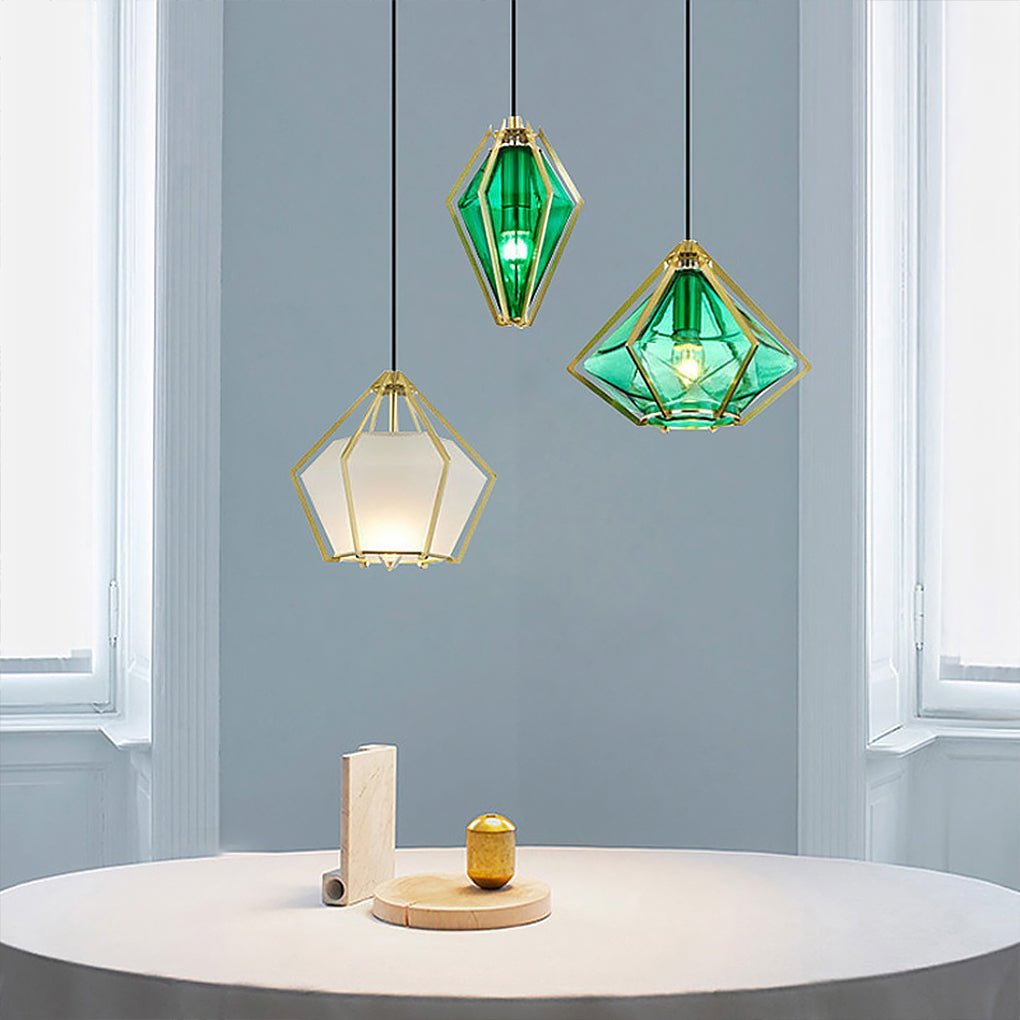
An art glass pendant light is a single-shade hanging fixture where the glass itself is the design statement — no fabric drum, no metal cage, just a sculpted glass body lit from within. This MiniHouzz piece is a compact, Nordic-postmodern take on that idea: four glass silhouettes, an E14 socket, 110V operation, and a 59-inch adjustable chain, at $102.
If you are deciding whether it fits your room, the short answer is this: it is a small-footprint accent pendant built for repetition and for tight spaces — bedside, bar counter, a pair over a small dining table, or a run down a hallway — rather than a single large statement piece over a big island. Below is what the specs actually mean in a room, and how to place it well.
Design and materials: what “art glass” means here
The shade is glass, and the fixture is deliberately minimal: the light source is exposed inside the glass, so the shape of the shade and the quality of the bulb do most of the visual work. There is no diffuser layer between you and the bulb, which is why bulb choice matters more here than on a shaded fabric pendant.
Four styles are offered, and they are genuinely different proportions rather than the same shape in different colors:
| Style | Diameter | Height | Weight |
|---|---|---|---|
| A | 5.91 in (15.01 cm) | 8.26 in (20.98 cm) | 2.86 lb (1.30 kg) |
| B | 9.44 in (23.98 cm) | 8.66 in (22.00 cm) | 3.96 lb (1.80 kg) |
| C | 10.62 in (26.97 cm) | 8.26 in (20.98 cm) | 3.96 lb (1.80 kg) |
| D | 6.29 in (15.98 cm) | 25.19 in (63.98 cm) | 6.39 lb (2.90 kg) |
Read that table as three squat, wide-ish shapes (A, B, C) plus one tall, narrow column (D). Styles A through C behave like a classic globe or bowl pendant — best hung in multiples or as a single accent over a small surface. Style D is the vertical, sculptural option at just over two feet tall, which changes the placement math completely: it needs vertical clearance, and it reads as a hanging sculpture rather than a lamp.
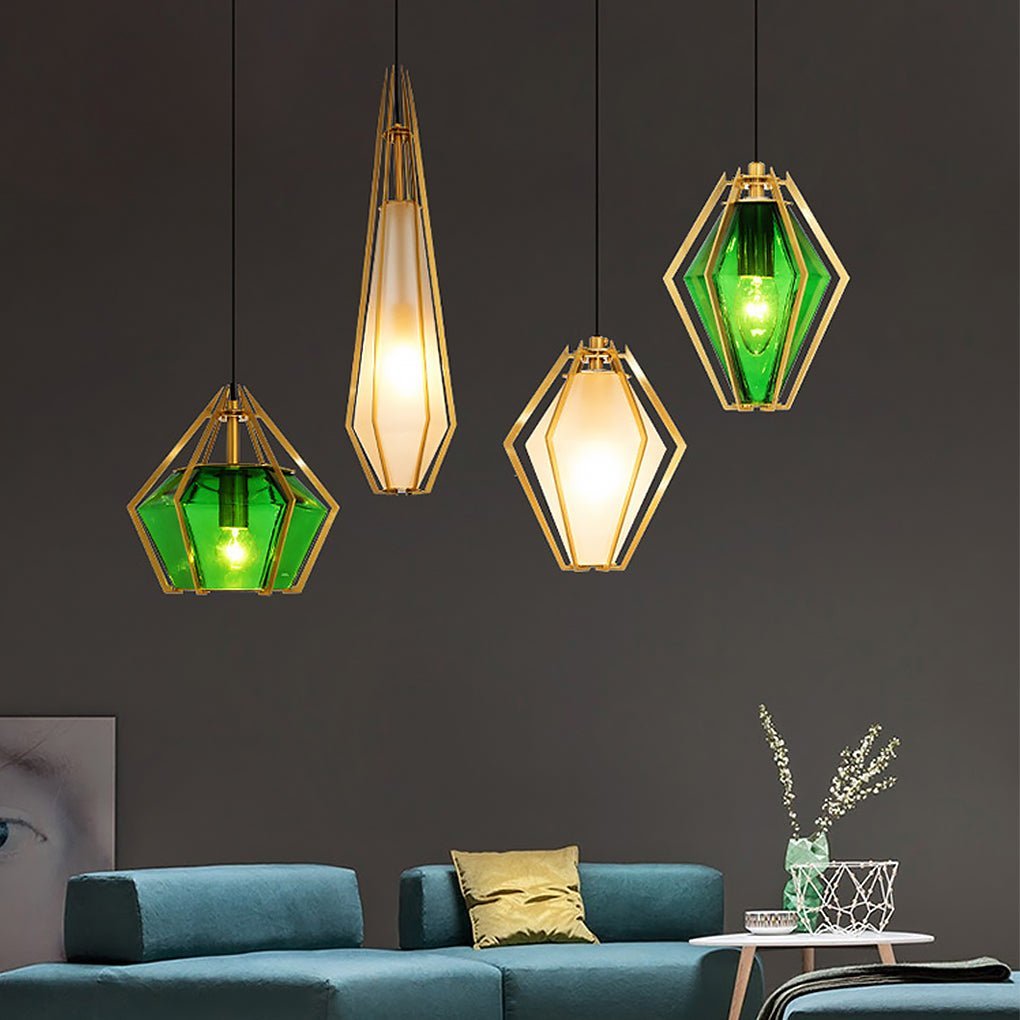
Where each silhouette actually works
Style A (5.91 in) — bedside and paired accents
At under six inches wide, Style A is the safest choice for symmetry: hang two, one on each side of a bed or a bathroom vanity mirror, and they read as intentional rather than heavy. It is also the least visually dominant option, so it suits small bedrooms and renters who do not want to rewire a room.
Style B and C (9.44 in and 10.62 in) — bar, small dining, entry
These are the sizes that hold a small surface without overwhelming it. Over a two- or three-seat bar counter, a single B or C is enough; over a small dining table, use one centered, or two if the table is long enough to justify the repetition. Style C is the widest, so give it more clearance from walls and tall cabinetry.
Style D (25.19 in tall) — stairwells, corners, tall rooms
Style D is the one to buy when you have air to fill: a stairwell void, a double-height corner, or beside a tall window where a squat globe would look stranded. Because it is 25 inches of glass, verify the drop before ordering — with a 59-inch chain you can always shorten, but you cannot make a low ceiling taller.
Coverage is worth noting plainly: the fixture is specified for areas of roughly 11 to 54 square feet (1.02 to 5.02 sq m). That is accent lighting, not room lighting. Plan on this fixture as one layer — task or ambient light from elsewhere in the room should still carry the space.
All four styles share the same glass body construction and 59-inch adjustable chain — compare them side by side on the MiniHouzz art glass pendant light product page.
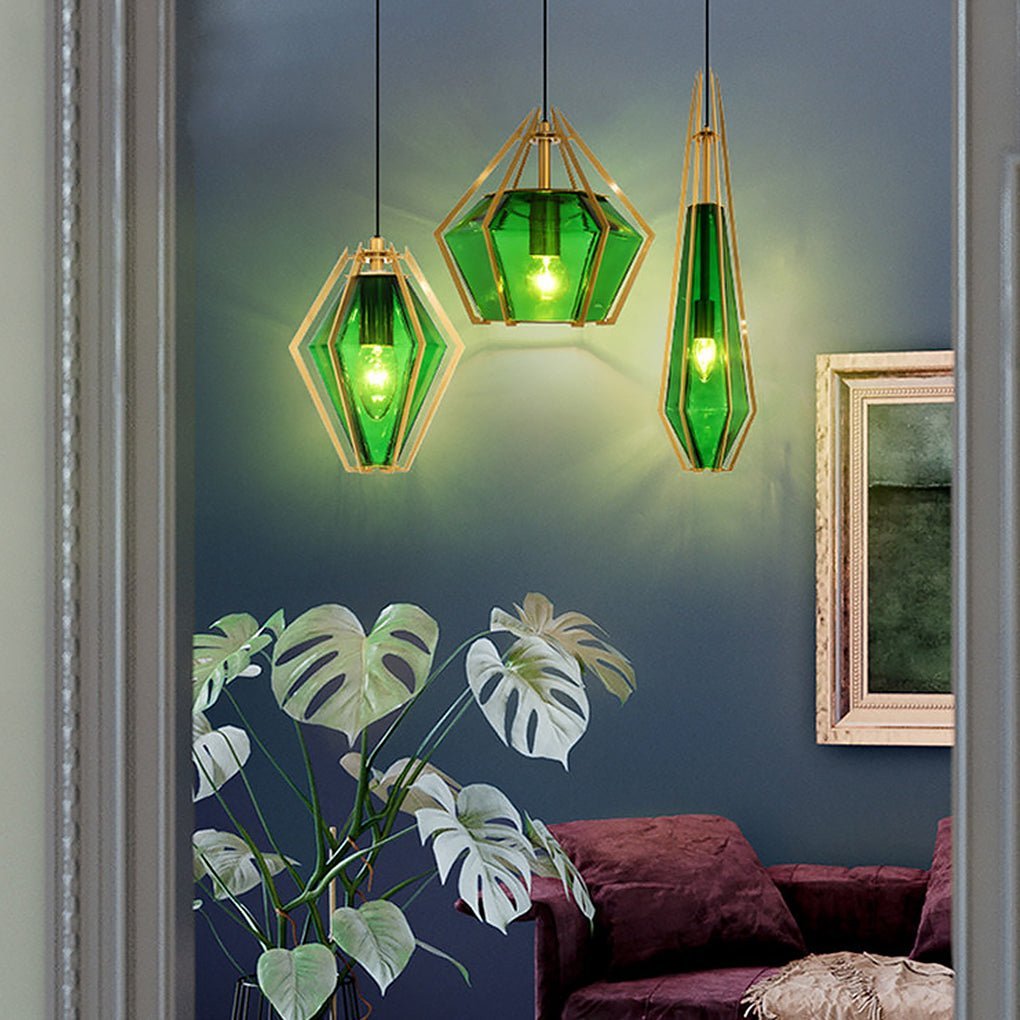
Hanging height and spacing: the numbers that matter
These are working rules, not code requirements, and they shift with ceiling height and what people do at the surface underneath.
- Over a dining table: 30 to 36 inches from the tabletop to the bottom of the shade. With a low ceiling, go closer to 30; with an eight-foot ceiling or higher, 34 to 36 gives the room breathing space.
- Over a bar or kitchen counter: 30 to 36 inches above the counter for seated use; raise it toward 40 inches if people stand at the counter.
- Bedside: bottom of the shade roughly 24 to 30 inches above the nightstand, or 60 to 66 inches above the floor. Sit on the bed and check that the bulb is not in your eyeline when you are lying down.
- Hallway or entry: keep the bottom of the fixture at least 80 inches above the floor so it clears head height.
- Pairs: space multiple pendants 24 to 30 inches apart on center, and leave at least 18 inches from the edge of a counter or table to the outer edge of the shade.
The 59-inch chain is adjustable on all styles, which is the practical reason this fixture is easy to fit: you cut the drop to the room instead of shopping for a specific stem length. Leave a little slack at the canopy rather than cutting to the exact inch.
Style D, specifically
Because Style D is 25.19 inches tall, treat its body as the constraint. In an eight-foot room, that leaves roughly 70 inches of clearance to the floor once you account for the canopy — fine over a stairwell or in a corner, tight over a walkway. Keep it out of circulation paths.
Bulb, voltage, and light quality
Three facts shape the buying decision here, and they are the ones most often missed:
- The socket is E14. This is the small European screw base (14 mm), not the E26 medium base used by most US fixtures. E14 LED candelabra bulbs are widely sold online, but they are not stocked in every US hardware store aisle — order the bulbs with the fixture rather than after it.
- The bulb is not included. Budget for it, and buy spares: in a two- or three-pendant arrangement, mismatched bulbs are immediately visible through clear glass.
- Voltage is 110V, which matches standard North American residential circuits. That is the configuration to order for US and Canadian homes.
For light quality with exposed glass, 2700K to 3000K is the range that keeps a warm, residential feel; 4000K and above will make clear glass look clinical. Because the bulb sits in open view, choose a bulb with a clean silhouette — a visible filament or an opaque candelabra tip — rather than a bulky globe. If you want dimming, use a dimmable bulb on a compatible dimmer circuit; the fixture itself is a socket and chain, so the dimming behavior comes from the bulb and dimmer you pair with it.
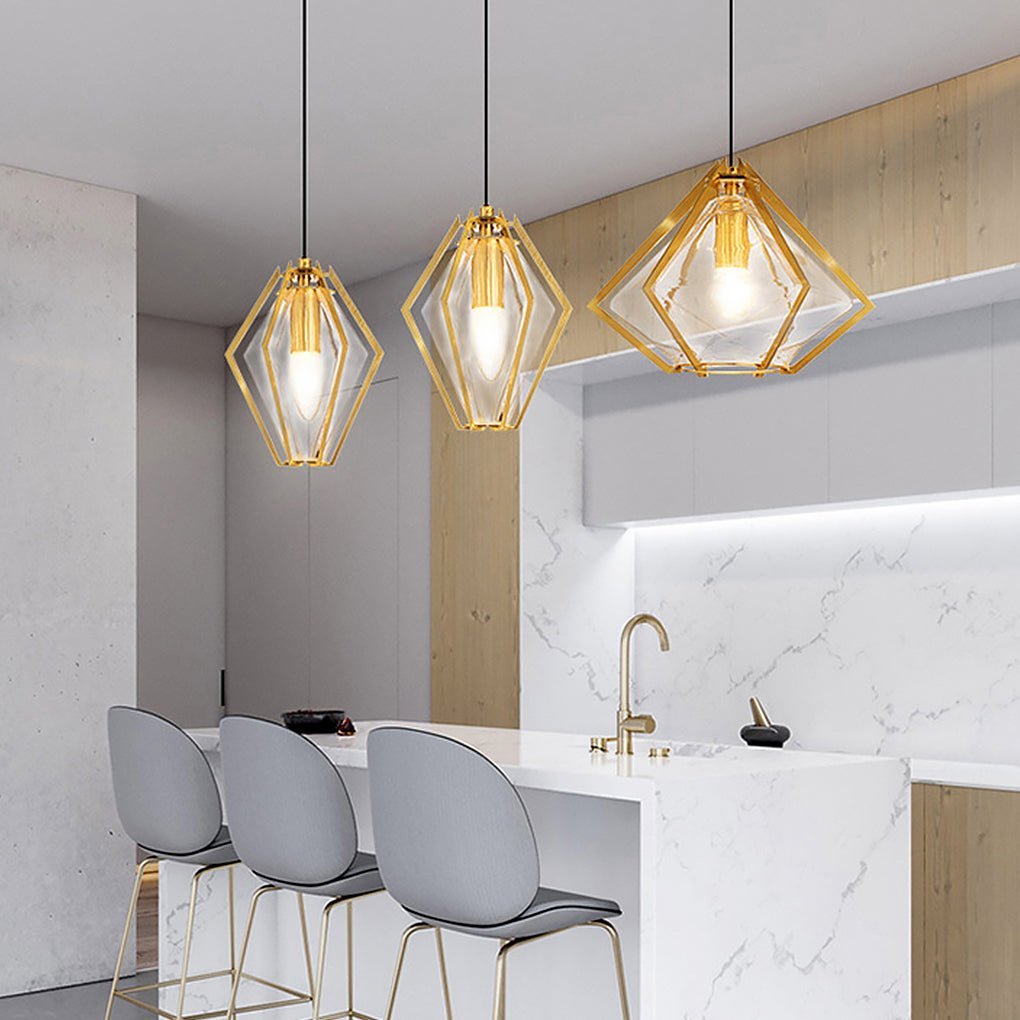
Installation notes before you commit
This is a hardwired ceiling fixture, so the practical questions are about the junction box and the drop, not the shade.
- Confirm the ceiling box can carry the weight: the heaviest style is Style D at 6.39 lb, which is well within a standard fixture-rated box.
- Check the ceiling height at the exact mounting point, not the room average — sloped ceilings and soffits change the drop calculation.
- Two people make chain-hung glass far easier: one holds the shade clear of the ceiling while the other sets the canopy.
- Handle glass with clean gloves; fingerprints on the inside of a clear shade are hard to reach later.
- If you are hanging three or more, lay out the spacing on the ceiling with painter’s tape first. Eyeballing repetition rarely works.
The manufacturer lists UL, ETL, CE, RoHS, and FCC compliance for this fixture. If your project requires documentation for a permit or a commercial inspection, request the certificate copies before ordering rather than after.
How it compares to other pendant materials
The trade-off with art glass is simple and worth stating plainly:
- Versus fabric shades: glass does not yellow, sag, or collect dust the same way, and it is easier to wipe clean — but it gives no diffusion, so the bulb is always visible, and it offers less acoustic softness in a hard-surfaced room.
- Versus metal cages or brass: glass reads softer and more decorative, and it disappears visually against a light wall instead of adding a dark shape. Metal will generally feel more industrial and more forgiving of a rough bulb.
- Versus a large single chandelier: four small pendants at $102 each will often light a long table or a hallway more evenly than one central fixture, and they let you change the composition later.
Where glass wins clearly: small rooms where a heavy fixture would crowd the ceiling, and spaces where you want the light itself to be the decoration.
Care and cleaning
Switch the circuit off and let the fixture cool, then wipe the outside of the shade with a soft dry microfiber cloth. Avoid spray cleaners directly on or inside the glass; if you need moisture, dampen the cloth, not the fixture. Dust the inside of open shades with a dry brush or a can of compressed air held at a distance.
FAQ
Is this pendant bright enough to light a room on its own?
No — treat it as accent lighting. The manufacturer specifies coverage of roughly 11 to 54 square feet, so a single unit lights a bedside, a bar seat, or a hallway segment. For a whole dining room, plan on multiple pendants or additional ambient light.
What bulb should I order?
An E14-base bulb, 110V, not included. A dimmable LED candelabra bulb in 2700K to 3000K is the practical default; buy the same model and wattage for every pendant in a grouping so the shades match.
Can I use it with a sloped ceiling?
It hangs from a chain with a canopy, and the chain length is adjustable, which usually accommodates a moderate slope. Steep vaulted ceilings are a different problem — the canopy may not sit flush, so check the slope angle against the canopy design before ordering.
Which style for a kitchen island?
Most islands take two or three pendants, so Style A at 5.91 inches is the easiest to repeat; Style B works if you want a larger single shade over a two-seat island. Confirm the island width supports at least 18 inches of clearance from each edge.
Are the dimensions exact?
The manufacturer notes slight variation from manual measurement, and that colors and color temperature can look different due to photography lighting and display differences. Order one unit first if the fit is tight.
Bottom line
This is a good buy for someone who wants a small, genuinely decorative glass pendant at a moderate price and is willing to plan the bulb and the drop. Pick Style A for pairs and tight spaces, B or C for a counter or small table, and D when you have vertical space to fill. Check your socket assumption (E14, not E26), buy the bulbs with the fixture, and hang it as accent light rather than as the room’s only source.