
If you are lighting a bathroom vanity and want the fixture to read as part of the architecture rather than as hardware bolted to the wall, a linear wall sconce is the simplest way to get there. The MINIHOUZZ Minimalist Linear Wall Sconce is a hardwired, integrated-LED fixture with a slim metal body and an acrylic diffuser, sold as a set of two and available in three lengths: 27″, 38.5″ and 50″. It is designed for indoor use, listed as IP20 damp-rated, and comes with a fixed LED light source that you choose in 3000K, 4000K or 6000K at order.
Short version: it is the right choice if you want a continuous, low-glare wash of light across a mirror wall, you have a hardwired wall box in place, and you do not need dimming. It is the wrong choice if you want a plug-in fixture, a replaceable bulb, or adjustable brightness at the switch.
Why a linear fixture instead of a bulb-based sconce
Two bulb sconces flanking a mirror throw two pools of light. A linear fixture throws one band. On a vanity, that difference shows up three ways: fewer shadows under the eyes and jawline, a cleaner silhouette against the wall, and no visible bulb to stare at while standing at the sink. The diffuser does the work here — the acrylic shade spreads the LED output so you see an even line rather than a row of bright points.
It also solves a layout problem. A single 38.5″ or 50″ fixture covers the visual width of a mirror without requiring two wall boxes and two runs of cable, which matters most when you are working with an existing wall.
Materials and finish: what you are actually specifying
The body is metal with aluminium and acrylic components, finished in either black or gold, with a white shade. In practical terms:
- Metal body holds the straight line rigid across the full length — this is why a 50″ linear fixture still reads as a clean edge rather than a soft bow.
- Aluminium is the structural and thermal element behind the integrated LED.
- Acrylic diffuser is the visible white face. It is the part that determines whether the light looks soft or harsh, and it is why the fixture reads as a matte bar when the light is off.
Black suits a matte black frame, dark tile, or a hard-edged modern palette. Gold reads warmer and disappears against cream stone, travertine and brass hardware. If your faucet and cabinet pulls are one finish, matching the sconce to them is the fastest route to a room that looks intentional.
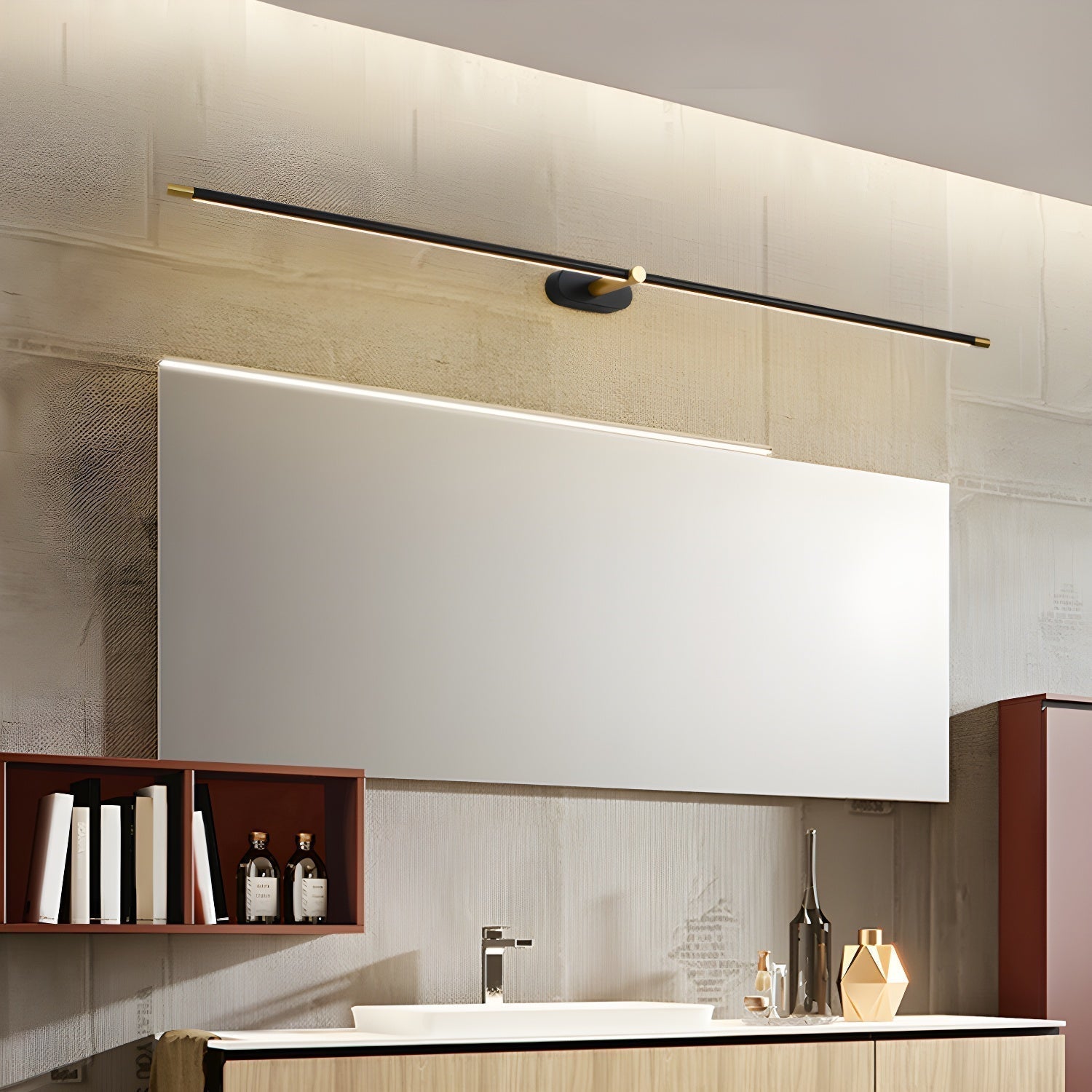
Sizing: match the length to the vanity, not to the wall
The most common mistake with a linear sconce is going too short. A fixture that stops well inside the mirror edges leaves the ends of the vanity in shadow and looks undersized. A rough rule of thumb used in bathroom lighting design is that the fixture run should cover about 60–75% of the vanity width. Applied to these three sizes:
| Fixture length | Typical vanity width | Where it works best |
|---|---|---|
| 68 cm / 27″ | Roughly 36″–48″ | Powder rooms, single sinks, narrow alcoves |
| 98 cm / 38.5″ | Roughly 48″–60″ | Standard single vanity, most primary bathrooms |
| 128 cm / 50″ | Roughly 60″–72″ | Double vanities, long mirror walls |
Because the fixture is only 5 cm (2″) tall, length is the only dimension that changes the visual weight. Going one size up rarely looks heavy — going one size down almost always looks mean. When you are between sizes and the wall allows it, size up.
Mounting height and horizontal placement
For a fixture mounted above a mirror, the usual target is 60″–72″ from the finished floor to the center of the fixture, or roughly level with the top of the mirror frame. Both are starting points, not rules — a tall mirror or a low ceiling will push you toward the mirror-top alignment.
Center the fixture on the vanity, not on the room. Then check two things before you drill: that the fixture is not so close to the ceiling that the top edge disappears into shadow, and that it clears any cabinet doors that swing upward.
For a double vanity, the set-of-two packaging is the point. You can run one fixture above each sink and center each on its own basin, which gives you a genuinely even two-station layout without needing a 50″ bar in the middle of the wall.
Color temperature: pick once, live with it
The LED is integrated, so the color temperature is a decision you make at purchase. There are three options and they do different jobs:
- 3000K (warm) — closest to traditional incandescent. Flatters skin, suits wood vanities, stone with warm veining, and bathrooms that are used at night. If the room has no daylight, this is usually the comfortable choice.
- 4000K (neutral) — the safest all-rounder for a bathroom. Reads as white without going clinical, and is the one most people should default to if they are unsure.
- 6000K (cool) — crisp and slightly blue. Good for detailed tasks, makeup application in a bright room, or a very modern palette in white and chrome. In a small warm-toned bathroom it can feel stark.
A useful constraint: keep the sconce color temperature consistent with the other fixtures in the same sightline. Mixing 3000K at the vanity with 4000K downlights overhead is the single most common reason a new bathroom looks slightly off.
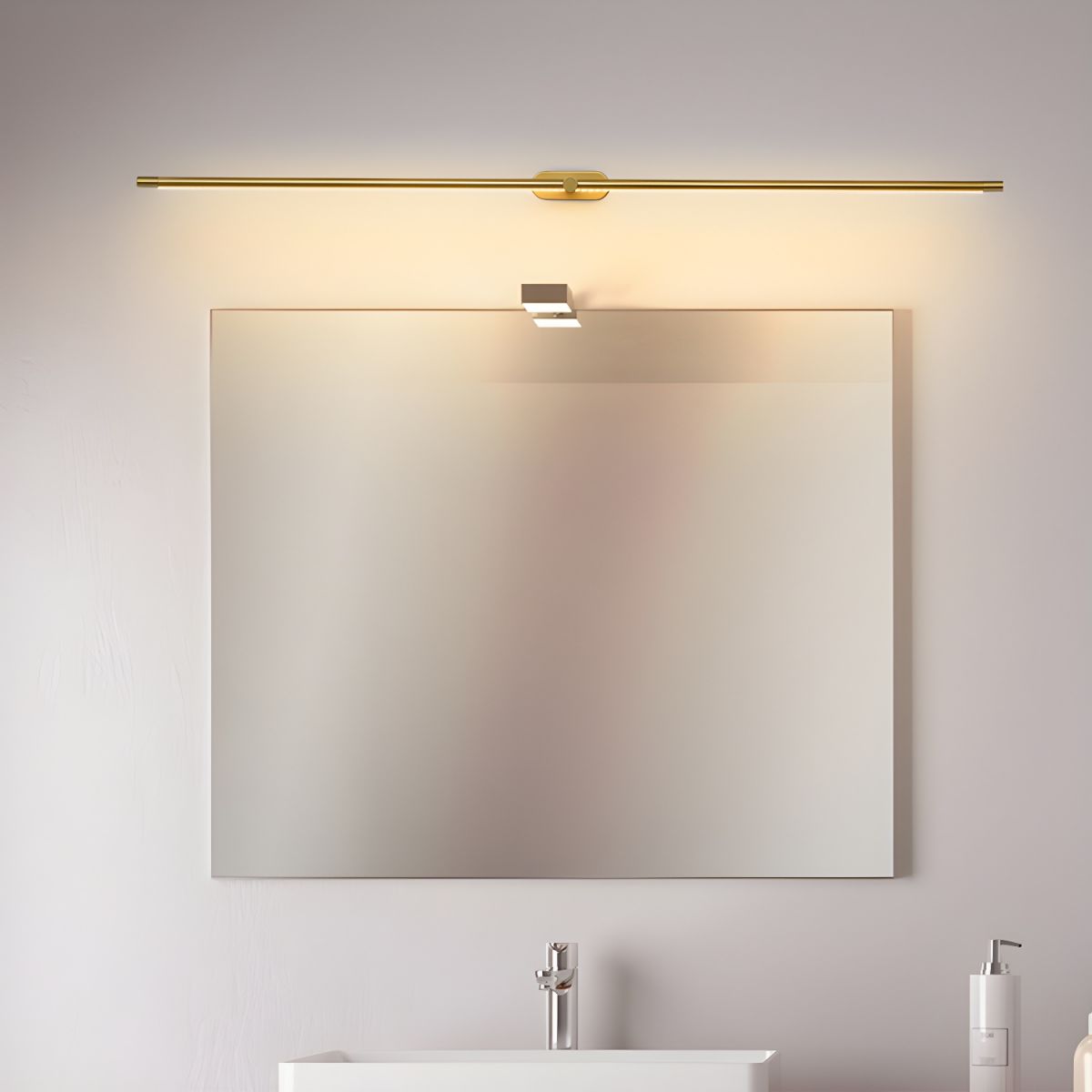
Installation and electrical notes
This is a hardwired fixture. It connects to an external wall light switch for controlled power supply and is compatible with common push switches. It is not designed for dimming — if dimming is a requirement, plan for a different fixture rather than a dimmer swap later.
The electrical specifications are straightforward: AC 110–240V, so it works on both North American and European supply, and it carries UL, ETL, CE and SAA listings plus RoHS and FCC compliance. It is rated IP20 and described as damp-rated for indoor use, which makes it suitable for a bathroom when installed in accordance with local electrical codes.
Two practical cautions. First, IP20 is an indoor rating: keep the fixture out of direct spray and outside wet zones such as inside a shower enclosure. Second, hardwired bathroom lighting is a licensed-electrician job in most jurisdictions — a linear fixture is easy to install but it still needs a proper wall box and a code-compliant circuit, and the set-of-two packaging means you should confirm you have a box behind each fixture location before ordering.
How it compares to the usual alternatives
| Option | Strength | Trade-off |
|---|---|---|
| Linear sconce (this fixture) | Even light band, clean silhouette, no visible bulb, one wall box | Fixed color temperature, no dimming, hardwired only |
| Pair of bulb sconces | Replaceable bulbs, dimmable options, flexible placement | Two boxes, two shadows, visible bulbs in the eyeline |
| Bar light / vanity strip | Wide coverage, familiar look | Usually bulkier, often reads as builder-grade |
| Backlit mirror | No wall fixture at all | Replaces the mirror too, higher cost, no uplight on the wall |
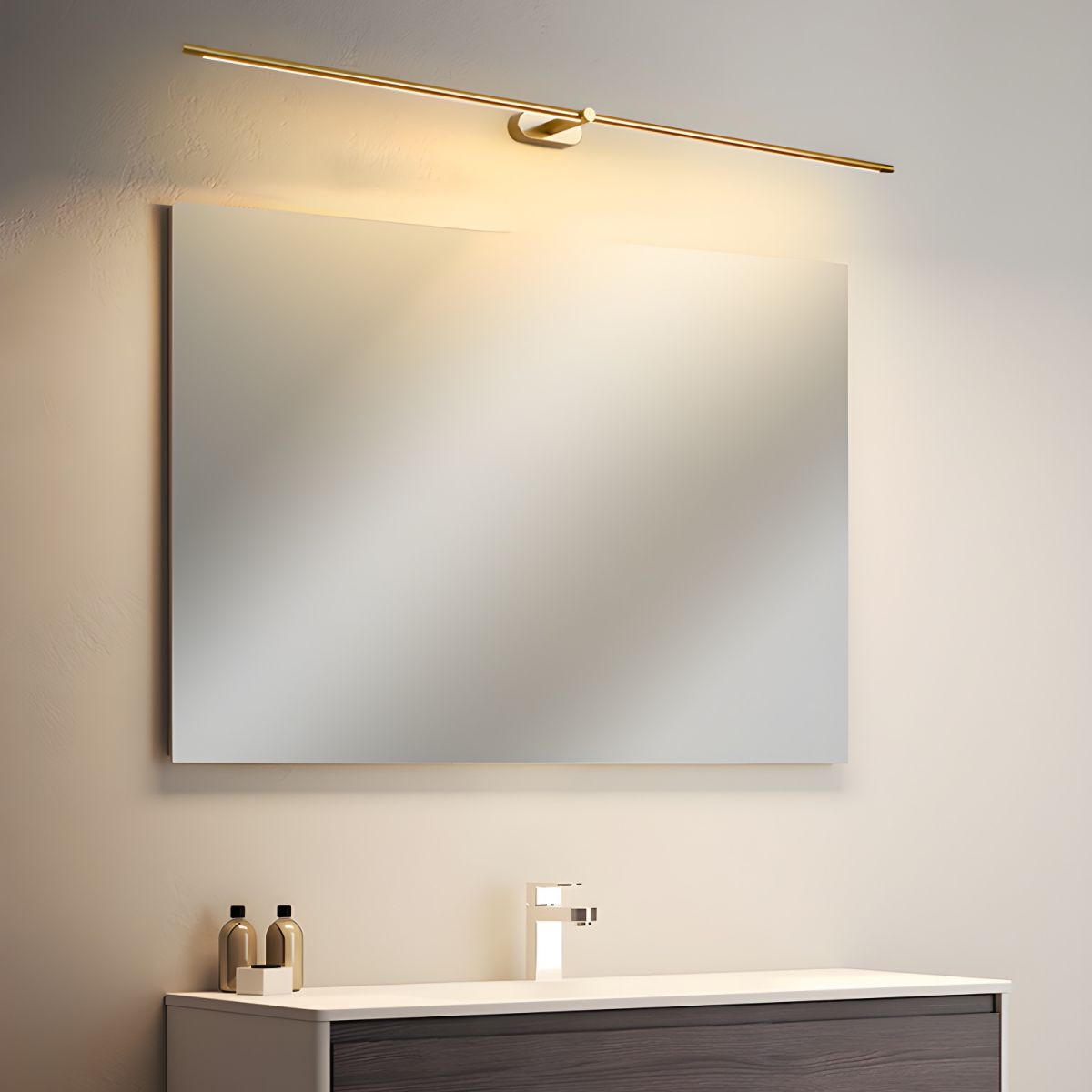
Before you order: a five-point check
- Measure the vanity width, then pick the length that lands in the 60–75% band.
- Confirm the wall box height puts the fixture center between 60″ and 72″ from the floor, or level with the mirror top.
- Decide the color temperature against the rest of the room’s lighting, not in isolation.
- Check the finish against your faucet and cabinet hardware — black or gold, white shade either way.
- Accept the constraints: hardwired, integrated LED, not dimmable, indoor only.
Frequently asked questions
Can this wall lamp be used in a bathroom?
Yes. It is IP20 damp-rated and intended for indoor use, which makes it suitable for bathroom environments when installed according to local electrical codes. Keep it out of direct water spray.
Is the LED integrated or replaceable?
The light source is an integrated LED, designed for long-lasting performance and energy efficiency. It is not a bulb-replacement fixture, so the color temperature you choose at purchase is the one the room keeps.
Can I use this with a dimmer switch?
No. It is compatible with common push switches and connects to an external wall light switch for controlled electricity supply, and it is not designed for dimming.
What are the available dimensions?
Three lengths, all 5 cm (2″) tall: 68 cm / 27″, 98 cm / 38.5″, and 128 cm / 50″ in diameter. Dimensions may vary slightly due to manual measurement.
Does it come as one fixture or two?
It ships as a set of two — two individual fixtures packaged together, which suits a double vanity or a pair of alcoves.
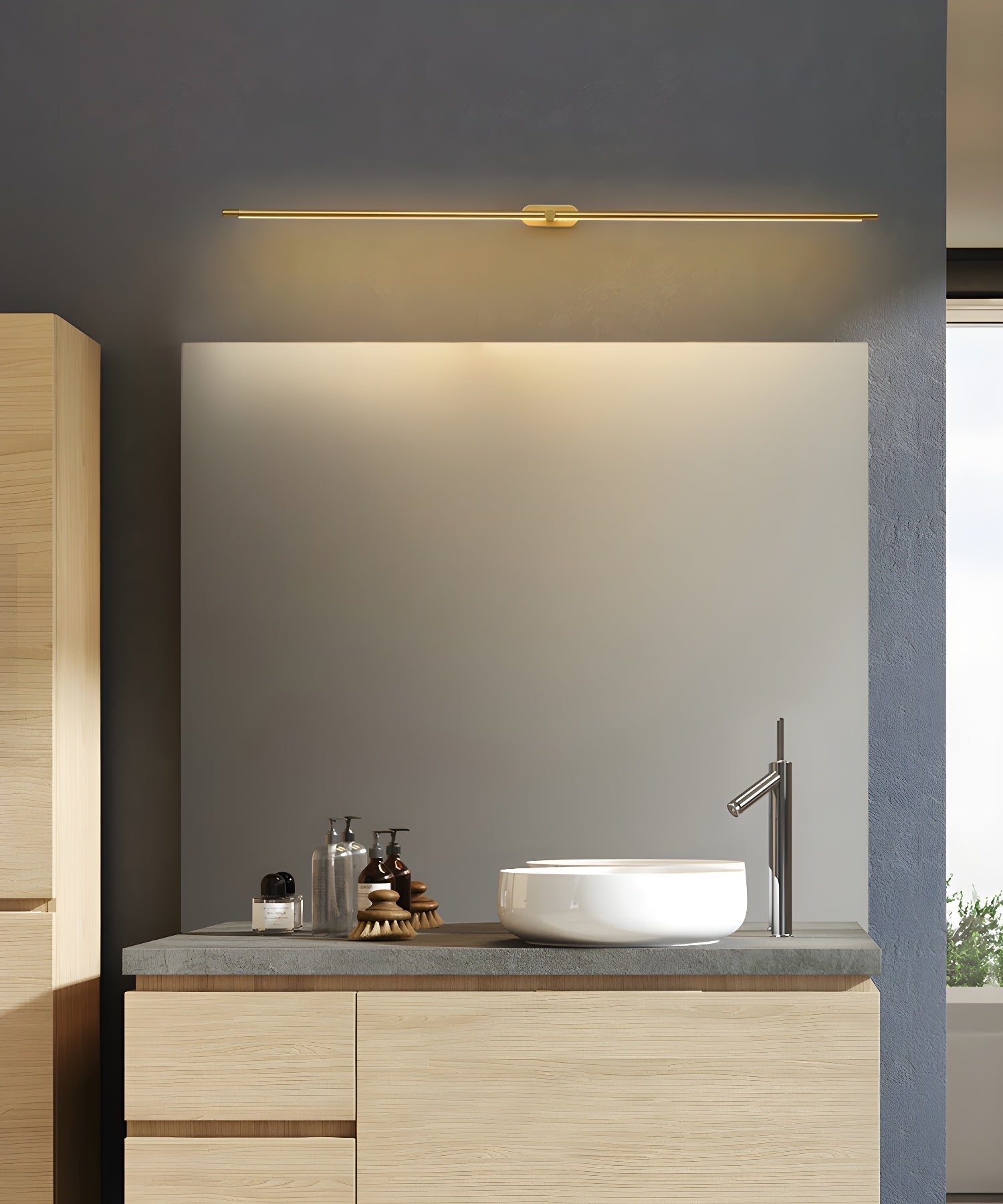
The bottom line
A linear integrated-LED sconce is the quiet option: it lights the wall evenly, hides its own technology, and lets the mirror and stone do the talking. If your vanity is roughly 48″–60″ wide, the 38.5″ version is the natural fit; if it is longer, go to 50″; if the room is a powder room, the 27″ is enough. Choose 4000K unless the room gives you a reason to go warmer or cooler, and confirm you have a hardwired wall box before you commit.
You can see the full set of lengths, finishes and product shots on the Minimalist Linear Wall Sconce product page. If you need custom dimensions or help laying out lighting for a specific bathroom, MiniHouzz design consultants can review the plan with you — start with the product listing and ask for a layout check.