
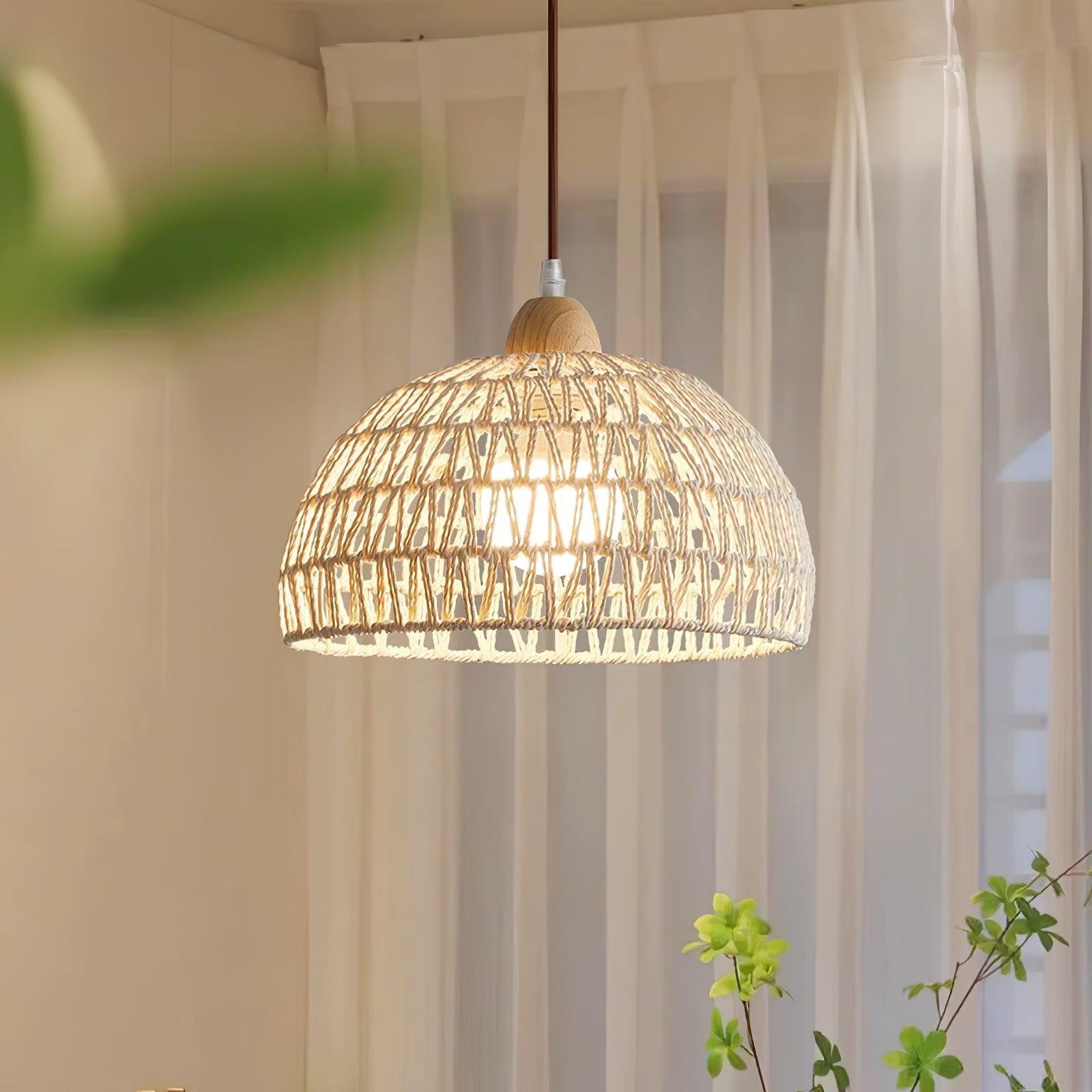
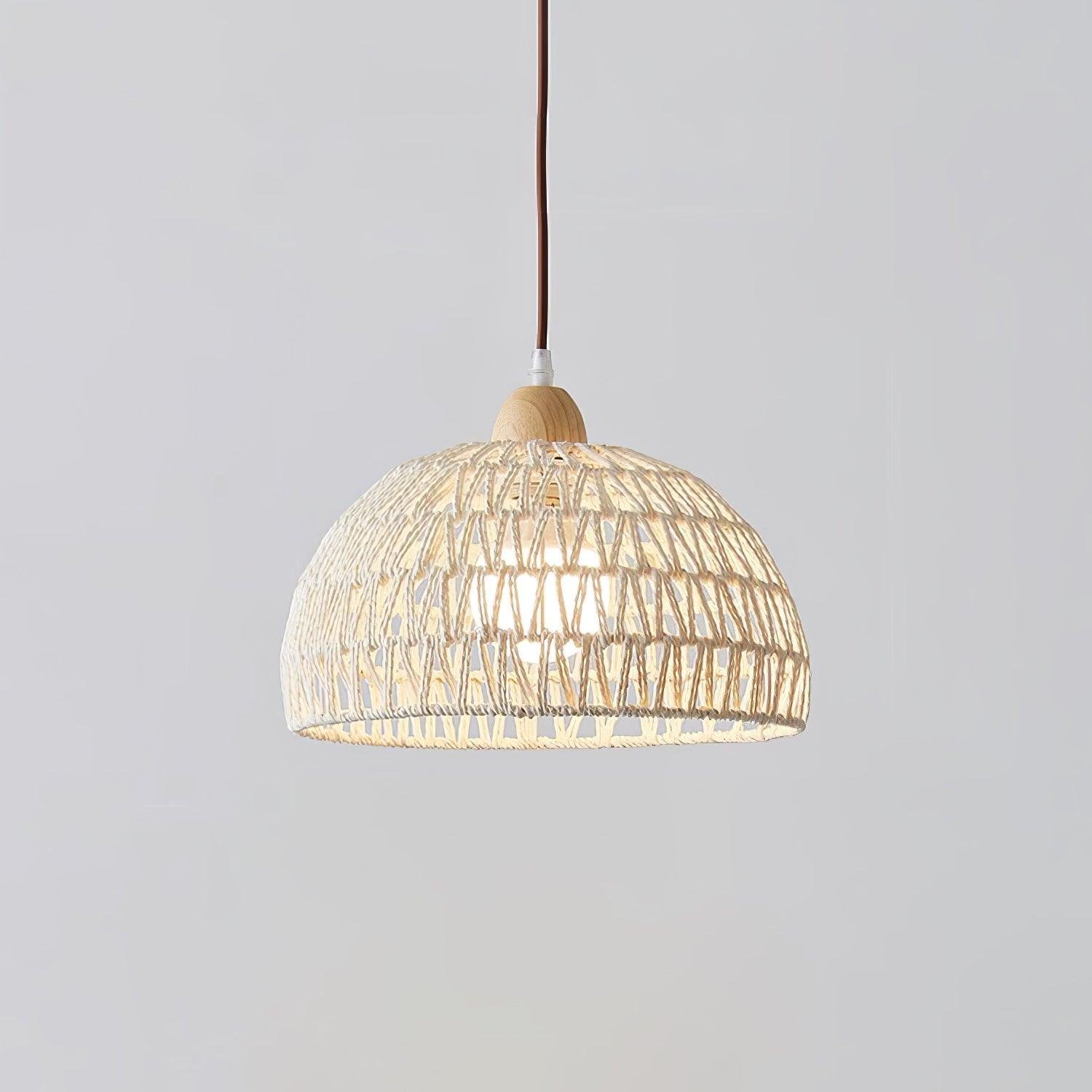
The Rattan Arch Pendant Light combines a curved metal frame, a handcrafted natural rattan shade, and solid wood body accents in a nature wood finish. It is built for people who want warm, filtered light over a dining table or kitchen island without the visual weight of an all-metal fixture. It comes in four configurations — one 7.9″ head, one 11.8″ head, a two-head 23.6″ run, and a three-head 27.6″ run — all with a 59″ adjustable cable and hardwired ceiling mounting.
If you are deciding whether it works in your room, the answer usually comes down to three things: the size of the surface below it, your ceiling height, and whether your ceiling is flat or sloped. This guide covers all three, plus bulb choice and installation constraints, so you can order once and hang it right.
Design and materials: what the fixture is actually made of
Three materials do the work here, and each has a job:
- Metal frame — carries the structure and the arch form. The curve is what separates this from a standard drum or dome pendant; it reads as architectural rather than decorative.
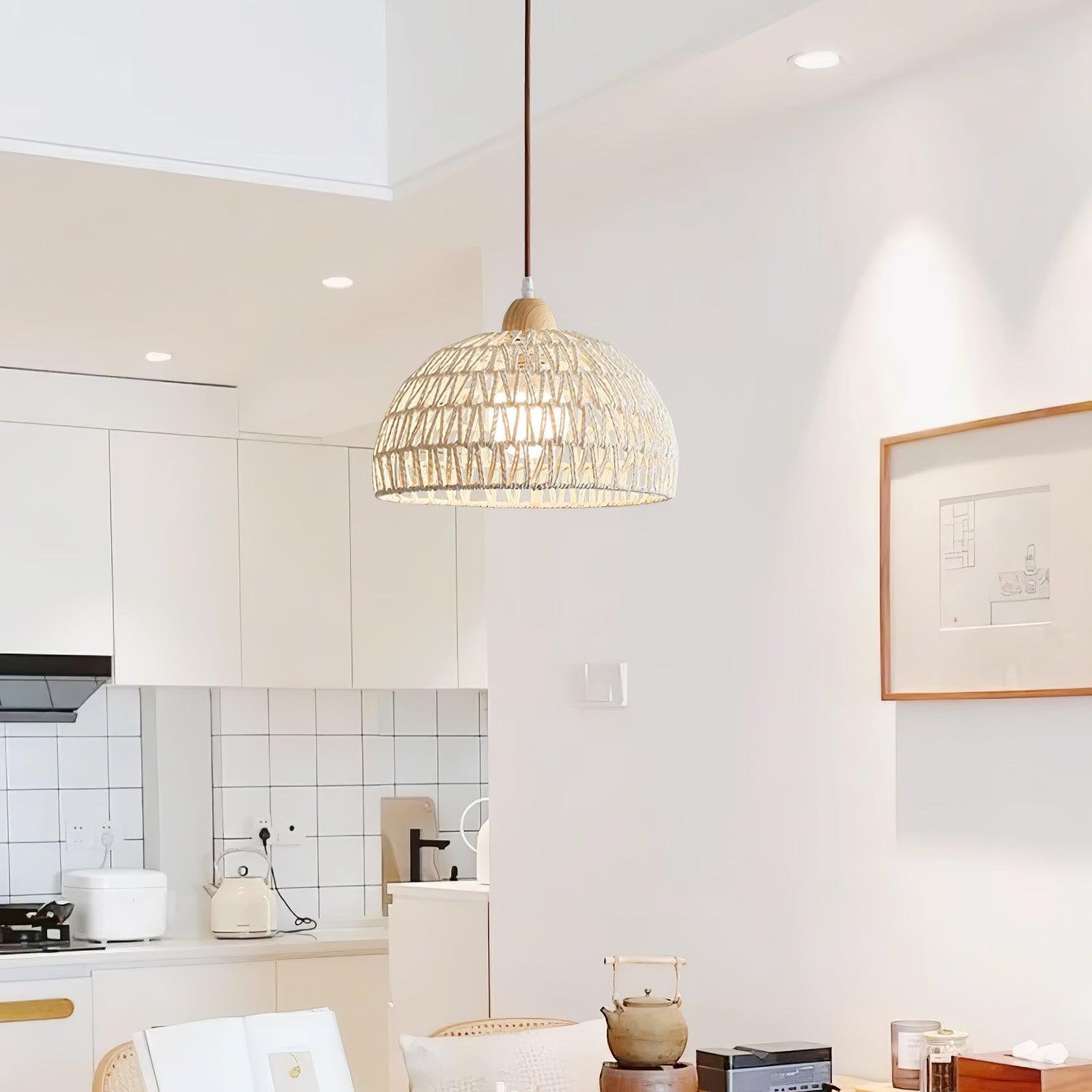
- Natural rattan shade — handcrafted, which means open weave and slight irregularity are part of the material. Rattan diffuses light rather than blocking it, so you get a soft glow plus patterned shadows on the ceiling and wall.
- Wood accents — nature wood finish at the body, tying the piece to oak, walnut and teak furniture rather than fighting it.
The fixture is hardwired and ceiling-mounted. It is listed to UL, ETL, CE and SAA standards, and the manufacturer also states RoHS and FCC compliance. Those listings matter for two practical reasons: an inspector or electrician will want to see them, and they indicate the wiring and components were tested to a recognized standard rather than assembled to no spec at all.
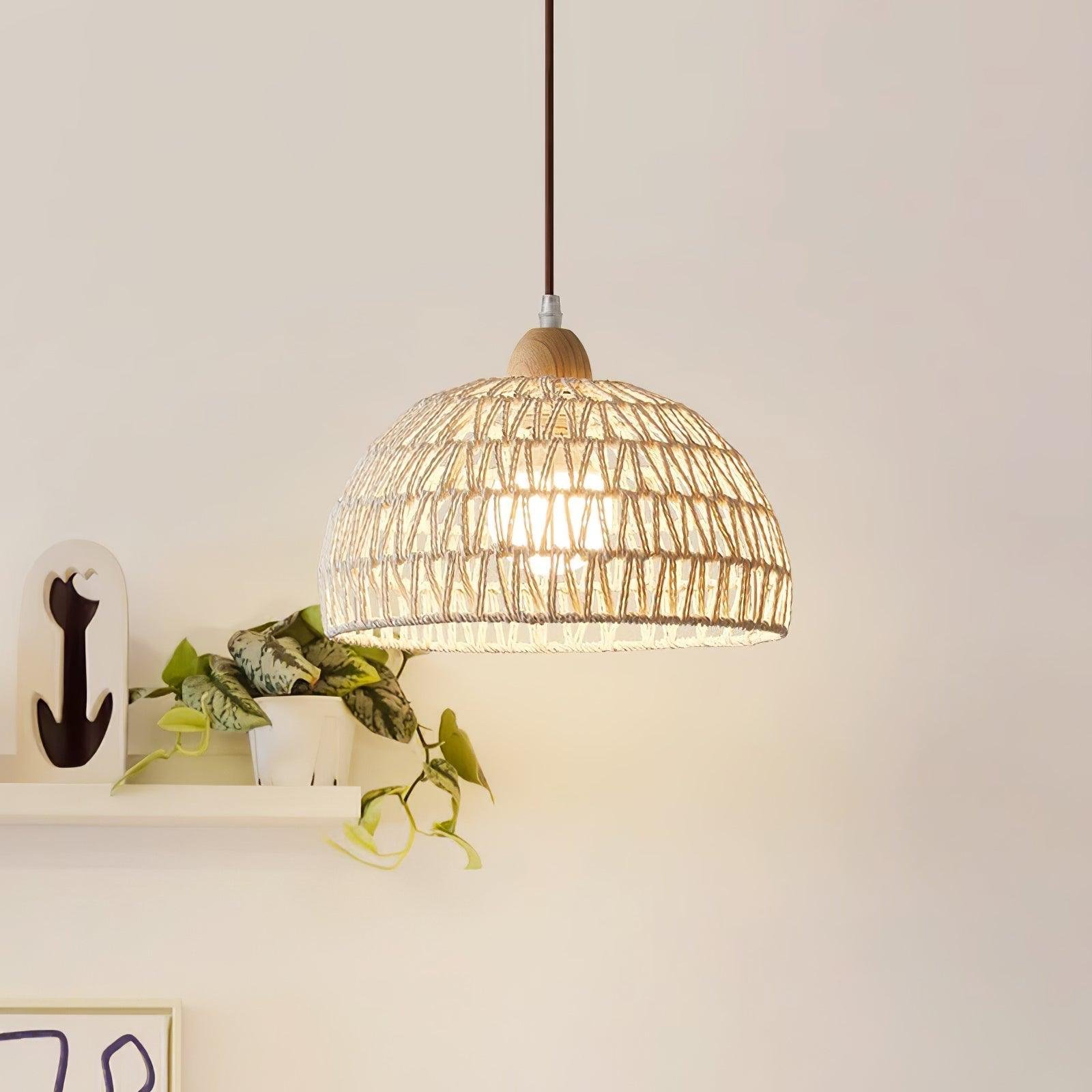
One honest note on the rattan: natural woven shades vary slightly in tone and density from piece to piece, and the manufacturer notes that color can shift a little between batches and under photography lighting. If you are matching an existing rattan chair or basket exactly, expect a close match, not an identical one.
Size options: matching the fixture to your surface
This is where most people get it wrong — usually by ordering something too small for a long table. Here are the four configurations as listed:
| Configuration | Dimensions | Typical fit |
|---|---|---|
| 1 head, small | ∅ 7.9″ (20 cm) × H 59″ (150 cm) | Small dining nooks, breakfast bars, pairing two or three in a row over an island |
| 1 head, large | ∅ 11.8″ (30 cm) × H 59″ (150 cm) | Round or square tables up to about four seats; a single statement over a small island |
| 2 heads | L 23.6″ (60 cm) × H 59″ (150 cm) | Rectangular tables for four to six; short island runs |
| 3 heads | L 27.6″ (70 cm) × H 59″ (150 cm) | Long rectangular tables for six to eight; full kitchen island runs |
A working rule for scale: the fixture’s width should land somewhere around one-third to one-half of the table or island length beneath it. A 60″ table pairs comfortably with the 23.6″ two-head; a 72–84″ table with the 27.6″ three-head. On a very long island, two separate three-head fixtures spaced apart usually look more deliberate than one stretched arrangement.
How high to hang it
Every room is different, but these are the ranges that work in most North American homes. Measure and adjust rather than trusting a fixed number.
Over a dining table
A common starting point is 30–36″ from the bottom of the shade to the tabletop. Go toward 36″ if people will be seated across from each other and you want clear sightlines; go toward 30″ for a more intimate, lower glow. If your ceiling is above the standard 8 ft, raise the fixture so the visual gap between shade and ceiling does not get too large — otherwise the light feels stranded.
Over a kitchen island
Usually 30–36″ above the countertop. Keep the bottom of the fixture clear of the average person’s eye line when standing at the counter, and check that it does not block sightlines into the kitchen from the adjacent room. On an island with seating on one side only, centering the fixture over the counter — not over the walkway — is the safer choice.
The cable
All four sizes ship with a 59″ (149.9 cm) adjustable hanging cable, and the manufacturer states the cable can be lengthened if required. In practice a 59″ cable covers most 8–9 ft ceilings with room to shorten. For vaulted spaces or very high ceilings, confirm the extra length with the supplier before ordering rather than assuming you can splice it on site.
Spacing and layout
- Multiple single-head fixtures in a row: roughly 24–30″ of clear space between shades, and keep the outer fixtures about 30″ in from the ends of the island or table so the run does not look cut off.
- Odd numbers read better than even in open sightlines — three small heads over a long island is a more forgiving composition than two.
- Align to the surface, not the ceiling. If the table or island is offset in the room, center the fixture on the furniture. The eye reads the relationship between light and table first.
- Keep rattan out of direct afternoon sun where possible. Natural fiber will fade with sustained UV exposure over years, which is normal for the material, not a defect.
Bulbs and color temperature
The fixture takes LED or Edison-style bulbs on an E26 or E27 base and runs on AC 110–240V, so it works on standard North American 120V wiring without a transformer. It is controlled by a common wall switch (not included).
- Dining rooms: 2700K warm white. Warm light makes wood and rattan read richer and is the usual choice for a room where people sit and talk for an hour.
- Kitchen islands: 3000K is the practical compromise — still warm, but enough clarity to see what you are prepping.
- Avoid 4000K and above in this fixture. Cool white through a warm rattan weave fights the material and makes the wood finish look gray.
- Edison bulbs suit the exposed-bulb look better than frosted globes if the bulb is visible through the weave, which it will be from some angles.
- Dimming: if you want dimmable output, use a dimmable bulb with a compatible dimmer. The fixture itself is switched, so the dimming capability comes from the bulb and switch combination, not the fixture.
Installation: what to plan for
This is a hardwired ceiling fixture, so it needs an existing junction box and, in most jurisdictions, a licensed electrician. A few constraints worth knowing before you buy:
- Sloped ceilings: compatible, with an adaptable angle under 30°. Steeper pitches need a different canopy solution — confirm before ordering.
- Moisture rating: IP 20, damp-rated for indoor use where the fixture is not exposed to moisture. That means dining rooms, kitchens and covered indoor areas — not bathrooms, shower zones, or exposed porches.
- Weight and mounting: multi-head versions spread load across a wider canopy, so the junction box needs to be soundly fixed. Have the electrician check the box before installation day, not during.
- Indoor only. The rattan weave is a natural fiber and is not intended for exterior exposure.
Does it fit your room? A quick checklist
Run through this before you order — five yeses means it is a straightforward fit:
- You have a ceiling junction box at or near the center of the table or island.
- Your ceiling is flat or sloped less than 30°.
- Ceiling height is roughly 8 ft or more once the fixture is hung at 30–36″ above the surface.
- The room already has wood, cane, jute or linen tones — rattan plus nature wood sits naturally with those, and contrasts pleasantly against white walls and stone counters.
- The space is indoors and not a wet zone.
If you are weighing it against a metal or glass pendant: this one is softer and more forgiving. It hides bulb glare, throws patterned light, and does not dominate a small room the way a large metal shade can. The trade-off is that a woven shade delivers less downlight for the same wattage — if you need task-level brightness directly on a countertop, plan on slightly higher output or a second light source.
Frequently asked questions
What materials is the Rattan Arch Pendant Light made of?
Metal, natural rattan and wood. The body has a nature wood finish and the shade is natural rattan, wrapped over a curved metal frame.
Can it be installed on a sloped ceiling?
Yes — it is sloped-ceiling compatible with an adaptable angle of less than 30°. It is designed for hardwired ceiling mounting. Anything steeper than 30° needs a different mounting approach, so confirm with the supplier first.
What bulb does it take?
LED or Edison bulbs on an E26 or E27 base, on AC 110–240V. It works with common wall switches, which are not included.
Can the hanging height be adjusted?
Yes. It ships with a 59″ (149.9 cm) adjustable hanging cable, and the manufacturer states the cable can be lengthened as required. Shorten it on site to set your height.
Is it suitable for a bathroom?
No. It is IP 20 and rated for indoor use where it will not be exposed to moisture. Bathrooms, shower zones and uncovered outdoor areas are out of scope.
Which size should I pick for a six-seat table?
For a rectangular table around 72–84″, the three-head 27.6″ version is the natural fit. For a table around 60″, the two-head 23.6″ version keeps the proportion right. For a round four-seat table, the single 11.8″ head is usually enough.