
A polished chrome pendant light gives an industrial silhouette a cleaner, quieter read. This hanging ceiling fixture pairs a metal body with an integrated diffuser, so the light it throws is soft and even instead of a hard pool of glare from a bare bulb — closer to a nautical glow than a warehouse lamp. It belongs over a kitchen island, a dining table, or in an entryway: places where one clear focal point lifts the room without taking it over.
See the Industrial Polished Chrome Pendant Light →
What a polished chrome finish actually does for a room
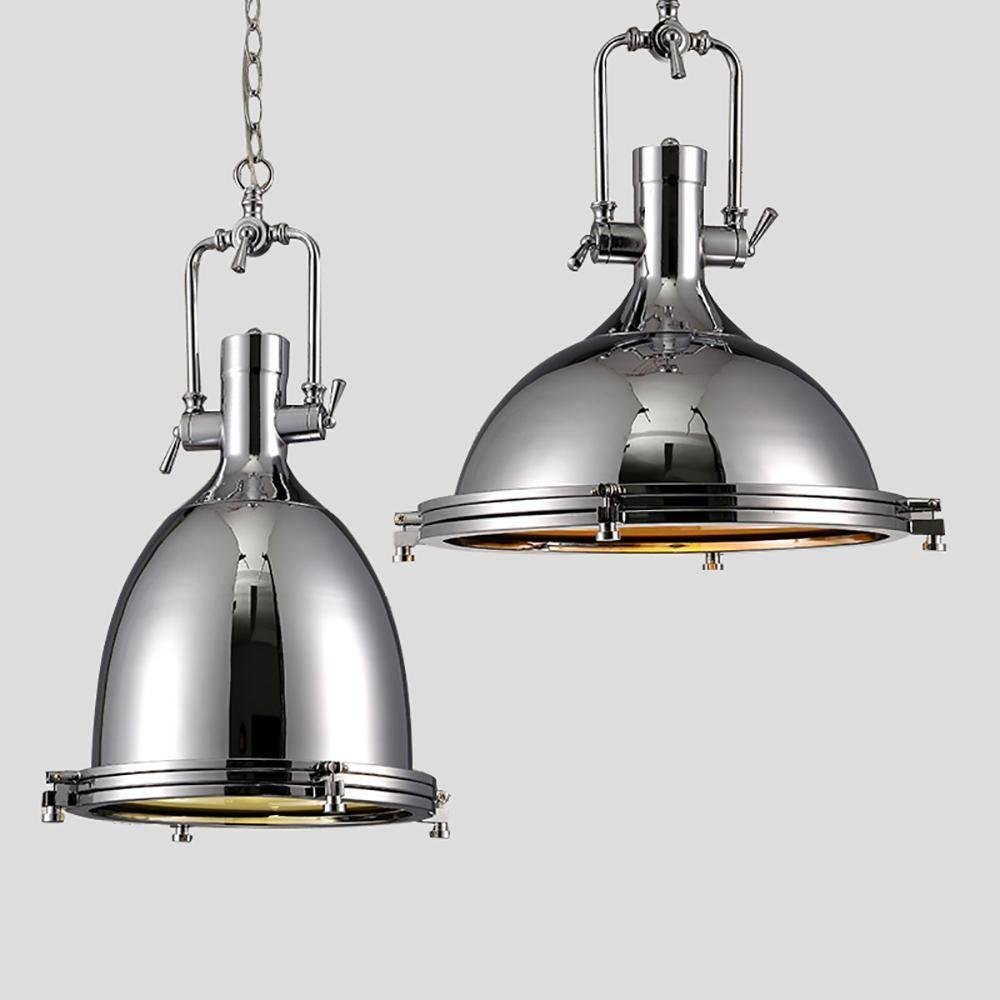
Chrome is a reflective finish, and that matters more than most buyers expect. A polished shade picks up daylight from a window and bounces it back into the space, which visually lightens the room and keeps the fixture from reading as a dark mass against a pale ceiling. It also sits naturally beside the metals most kitchens already have: stainless steel appliances, chrome faucets, polished cabinet hardware.
The trade-off is honest. Chrome shows fingerprints, dust, and water spots more readily than a matte black or a copper finish, so a pendant hung within easy reach of an island will want a wipe-down every couple of weeks. If you would rather not think about it, the same fixture comes in black and in copper, and those finishes hide handling marks far better.
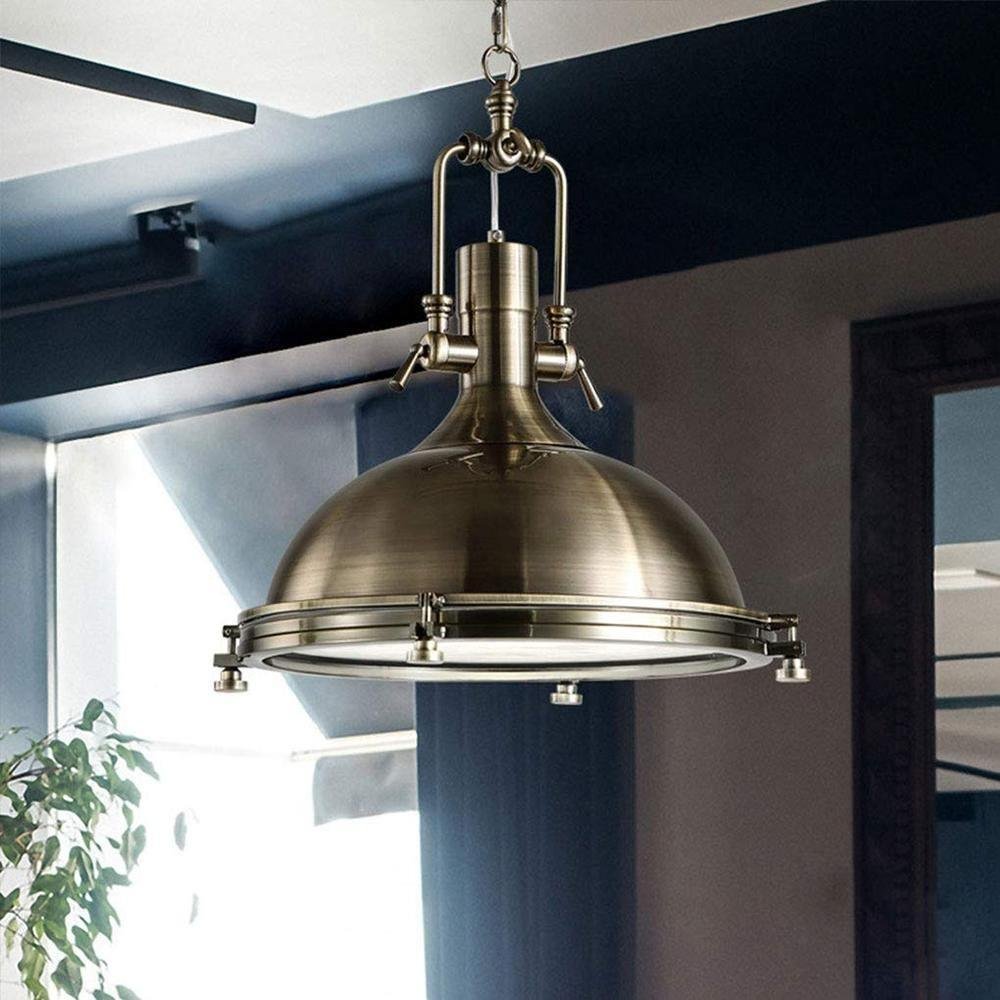
Design details: metal body, integrated diffuser
The body is metal with a polished chrome finish, and an integrated diffuser softens the output. That diffuser is the reason this reads as warm rather than clinical: you get the shape and presence of an industrial pendant without the bare-bulb glare that makes people squint across a dinner table. The silhouette is deliberately simple, which is what lets it work in a loft-style kitchen and in a more traditional dining room equally well.
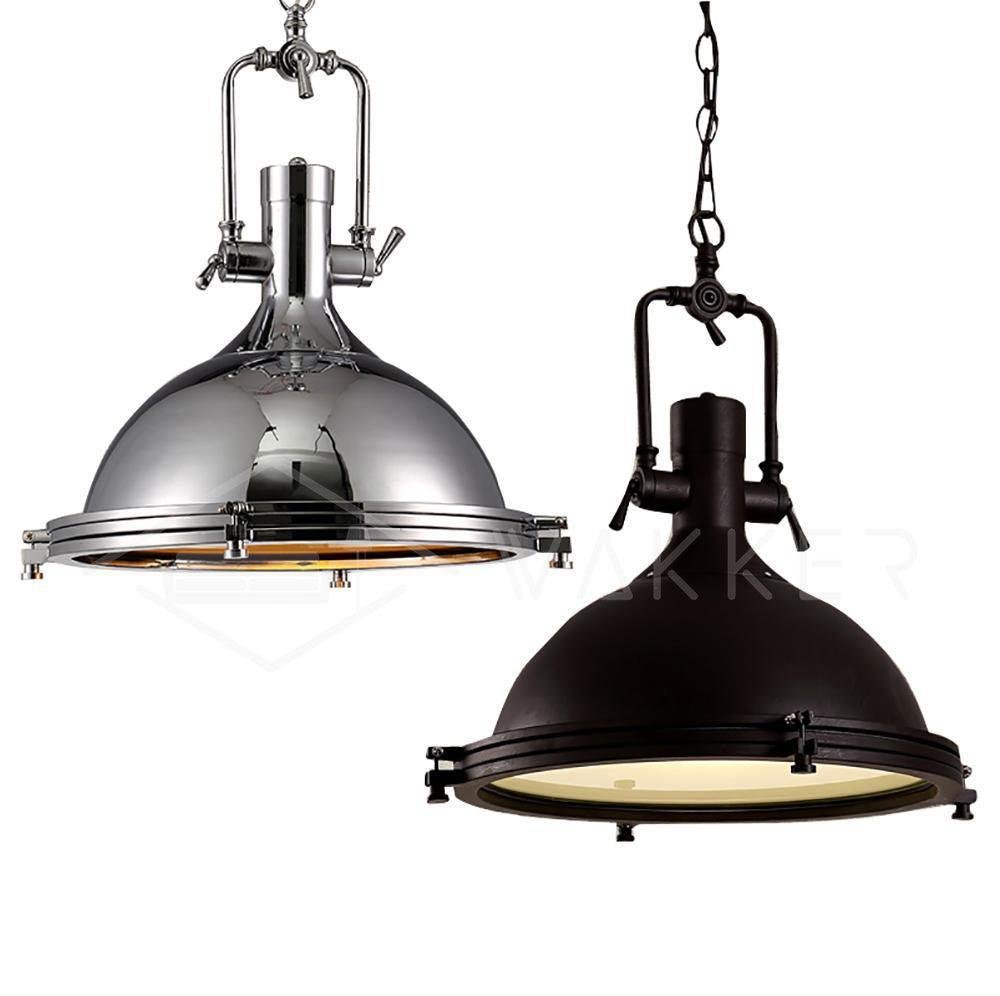
The fixture family is offered in three body-and-shade finishes — black, chrome, and copper — so one shape can read industrial, contemporary, or warm depending on the finish you pick. If your kitchen has warm wood tones and brass hardware, copper will feel more native; if it is white, grey, and stainless, polished chrome is the safer match.
Choosing the right size
This pendant is available in three sizes. The differences are modest on paper but they change how the fixture sits in a room, so match the size to the ceiling height and to what the light has to cover.
| Size | Diameter × Height | Where it works best |
|---|---|---|
| Dia 35cm × H 50cm | 13.8″ × 19.7″ | Breakfast nooks, powder rooms, or in a row of two to three over a long island |
| Dia 40cm × H 45cm | 15.7″ × 17.7″ | Dining tables and kitchen islands — the middle option, and the easiest single-pendant choice |
| Dia 36cm × H 56cm | 14.1″ × 22″ | High ceilings, entryways, stairwells — a taller drop with more visual weight |
As a starting point: one 40cm pendant suits a standard six- to eight-seat dining table or a single drop over a mid-size island; two or three 35cm pendants suit a long island better than one oversized shade. On tall ceilings, scale up the height (the 56cm option) rather than the width — a wide, shallow shade on a high ceiling tends to look undersized from the doorway.
Compare all three sizes on the product page →
Hanging height and spacing
Getting the drop right matters more than any other single decision. These are the ranges most designers work within, adjusted for ceiling height and for how much the fixture needs to light:
- Over a kitchen island or peninsula: hang the bottom of the shade 30–36 in (76–91 cm) above the countertop. With standard 36-in counters, that puts the fixture roughly 66–72 in off the floor — high enough to keep sightlines open, low enough to actually light the work surface.
- Over a dining table: 30–36 in (76–91 cm) above the tabletop. Lower than 30 in and tall guests will feel it in their eyeline; higher than 36 in and the table loses the pool of light that makes a dining room feel intentional.
- In an entryway or hallway: keep the bottom of the fixture at least 6 ft 7 in (about 80 in) from the floor so people walk under it comfortably.
- Multiple pendants: space them 24–30 in (61–76 cm) apart center to center, and leave at least 6 in between the edge of the outer shade and the end of the island. Odd numbers usually look more relaxed than even ones, especially over a long surface.
On included hardware: the fixture ships with a 60 cm + 30 cm (23.6″ + 11.8″) suspension rod and an adjustable hanging chain of up to 19.7 in (50 cm). On standard 8–9 ft ceilings that is generally enough to hit the heights above. If your ceiling is unusually high, or you are working around a beam, confirm the achievable drop with the MiniHouzz team before you order — it is a far cheaper conversation than a return.
Bulbs and light quality
Bulbs are not included, which is deliberate — it lets you decide how warm and how bright the room reads. What the fixture does specify:
- Base: E26 or E27, so both North American and European sockets are covered.
- Bulb type: LED or Edison filament. An Edison bulb shows off the shape of the shade; an LED is the practical choice for lights that stay on for hours.
- Voltage: AC 110–240V.
- Control: hardwired, compatible with common wall switches.
On color temperature, a working rule: 2700–3000K over a dining table for a warm, restaurant-like pool of light, and 3000–3500K over a kitchen island where you are actually prepping food and reading labels. Because the diffuser softens output, a slightly higher lumen count than you would pick for a bare-bulb fixture is usually the right call — somewhere around 800–1,100 lumens per pendant is a reasonable starting point over an island, then adjust for ceiling height and how much other light the room has.
If you want dimming, pair a dimmable bulb with a dimmer-rated switch. The fixture itself is not the limiting factor here; the bulb and the wall control are.
Where this pendant works — and where it doesn’t
It is built for indoor, ceiling-mounted use. The rating is IP20 and it is described as damp-rated for indoor locations where it will not be directly exposed to moisture, so treat it as a dry-room fixture: kitchens, dining rooms, entries, hallways, bedrooms. It is not the right choice for a bathroom, a covered porch, or any high-humidity space — steam will find its way into a fixture like this faster than the finish will thank you for.
Installation is hardwired, so it needs a ceiling junction box and, realistically, an electrician. On a sloped or vaulted ceiling, have the electrician confirm alignment before committing to the drop — the mounting is designed for a flat ceiling.
Certification, as listed for this fixture: UL, ETL, CE, and SAA listed, RoHS compliant, and FCC certified. If you are specifying for a rental or a commercial build, that paperwork matters, and it is worth keeping the product page on file with your order.

Black vs chrome vs copper: which finish to choose
- Polished chrome — the most reflective of the three. Best in kitchens with stainless appliances and cool-toned counters, and in rooms that need more bounce light. Highest maintenance against fingerprints.
- Black — the most overtly industrial, and the most forgiving. Good against white ceilings and in rooms with dark window frames or iron hardware.
- Copper — the warmest. Pairs with wood cabinetry, brass pulls, and terracotta or cream palettes. The finish that ages most gracefully in a traditional kitchen.
If you are buying more than one, commit to a single finish across the room. Mixed metals work when the mix is deliberate and repeated; a chrome pendant next to a copper one over the same island usually reads as an accident.
Care and keeping the finish sharp
Switch the light off and let the fixture cool, then wipe the shade with a soft dry cloth. For marks that need more than dusting, a cloth barely dampened with mild soapy water is enough — follow with a dry pass so no water sits on the chrome. Skip abrasive pads and ammonia-heavy glass cleaners; on a polished finish they leave a haze that no amount of buffing fully removes. In hard-water areas, dry the shade after cleaning rather than letting droplets air-dry into spots.
Frequently asked questions
Which size should I choose for my space?
For a breakfast nook or powder room, the Dia 35cm × H 50cm (13.8″ × 19.7″) gives a balanced presence. The Dia 40cm × H 45cm (15.7″ × 17.7″) is the natural pick over a dining table or kitchen island. The Dia 36cm × H 56cm (14.1″ × 22″) adds a taller, more dramatic focal point for high ceilings and entryways.
How high should I hang it over a kitchen island?
Aim for 30–36 in (76–91 cm) between the bottom of the shade and the countertop. If the island doubles as a bar with stools, stay at the higher end of that range; if it is a prep surface you look down at, the middle of the range usually feels right.
Can it go on a sloped ceiling?
It is designed for ceiling mounting and includes an adjustable chain plus a 60 cm + 30 cm suspension rod. For a sloped ceiling, have a professional electrician confirm the installation and alignment first — the fixture is not designed around an angled canopy.
What bulbs does it take, and are they included?
LED or Edison bulbs with an E26 or E27 base. Bulbs are not included, so you can choose brightness and color temperature to suit the room.
Can I use it in a bathroom?
No. With an IP20 rating it is intended for indoor use where it will not be directly exposed to moisture. Bathrooms, outdoor areas, and other high-humidity rooms are out of scope.
Bringing it together
The appeal of this fixture is that it does two jobs at once: it carries the visual weight of an industrial pendant, and it delivers the soft, diffused light a dining room or island actually needs. Choose the finish against the metals already in the room, size the fixture to the surface below it, and set the drop within 30–36 in of that surface — most of the way to a good result is those three decisions.
Need help with a multi-pendant layout, custom dimensions, or expedited shipping? The MiniHouzz design team handles layout advice and custom requests directly — start with the product page and ask.