
A hand-blown flower glass wall lamp is a decorative sconce whose shade is shaped from molten glass into soft petal-like curves, so the fixture reads as a small sculpture on the wall whether the light is on or off. If you are deciding whether one belongs in your bedroom, hallway, or stairwell, the short answer is: yes — provided you mount it at the right height and pair it with the right bulb. This guide covers exactly that.
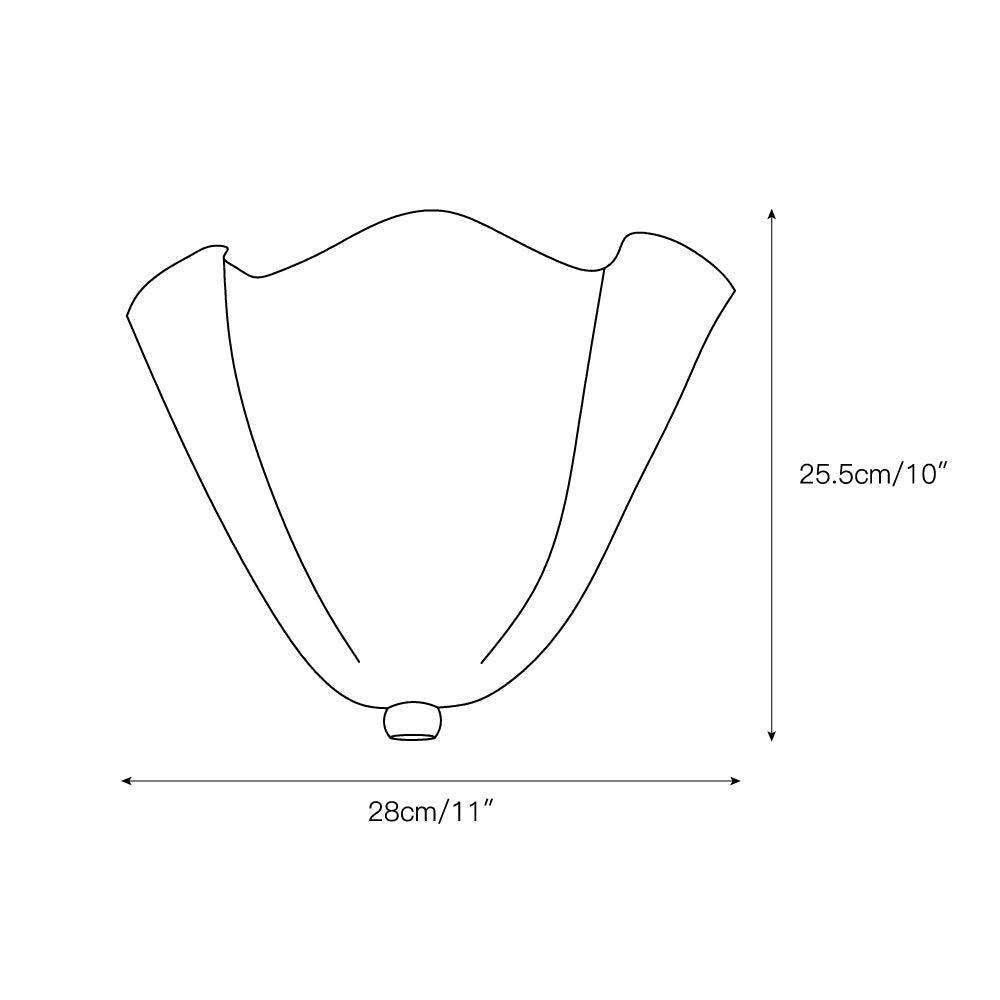
The Flower Glass Wall Lamp by MINIHOUZZ is a good reference case because its spec sheet is unusually specific: 28 cm diameter, 13 cm projection, 25.5 cm height, an E26/E27 socket, and four glass colors. Everything below is built around those real numbers.
What a petal sconce actually is
The shade is the fixture. It is hand-blown glass, shaped while hot into a flower form with layered petals and organic edges. Because the glass is blown rather than molded, each shade carries small variations in thickness and contour — MINIHOUZZ states plainly that each piece is one-of-a-kind, and that is a feature, not a defect. A molded sconce looks identical to the next one on the shelf; a blown one has a slightly different silhouette.
The lamp body is glass; the mounting hardware is metal. The socket accepts E26 or E27 bulbs, and bulbs are not included — an important detail, because the bulb you choose does more for the look than the color of the glass does.
Where this wall lamp works best
Hallways and stair landings
A hallway is the natural home for a decorative sconce. You are not lighting a task surface; you are giving a long, narrow space a rhythm. Space them evenly along the wall and keep the fixture above shoulder height so nobody brushes the shade. Because the shade projects 13 cm (5.1 in) from the wall, it stays clear of traffic in corridors around 100 cm wide and up.
Bedrooms, especially beside the bed
Wall-mounted lights free up nightstand space, which matters in smaller bedrooms. Mount one on each side of the bed for symmetry, or a single one on the side where you read. Glass diffuses light, so a warm bulb behind it gives a soft wash rather than a hard spot.
Entryways and powder-adjacent niches
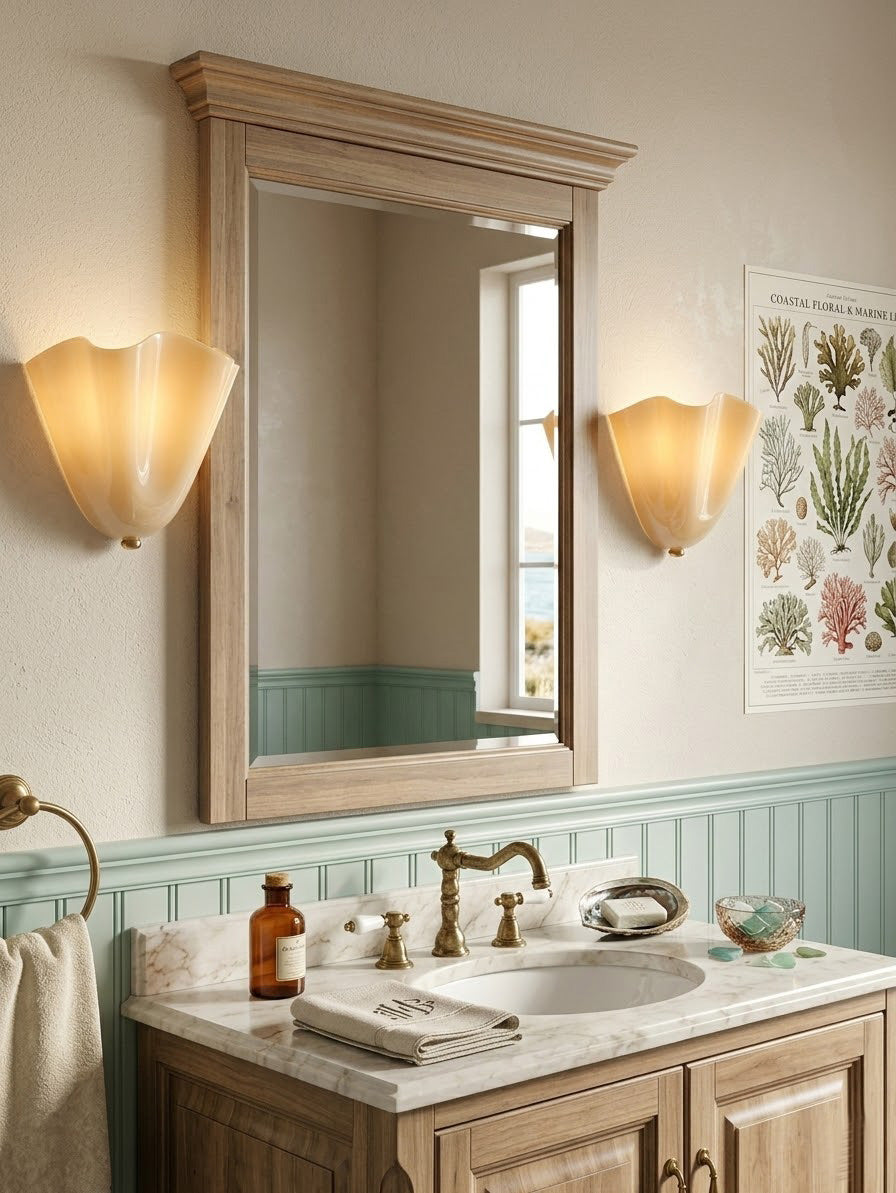
A single sconce in an entry or a niche makes a small space feel considered. Note the manufacturer’s guidance: this lamp is designed for dry indoor locations. For bathrooms or other high-humidity areas, consult a licensed electrician before installing.
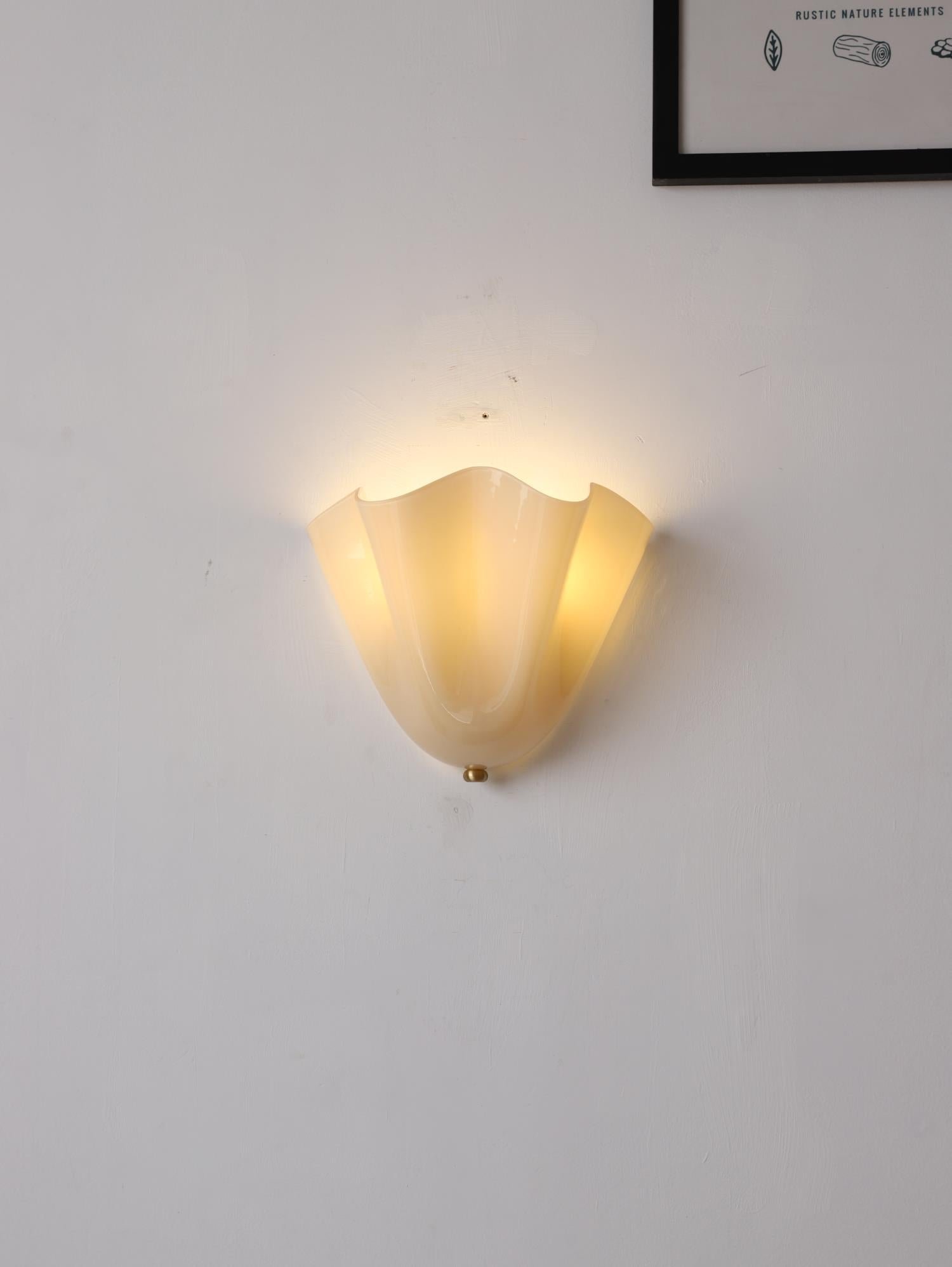
Mounting height and spacing: the numbers
These are conventional interior-design starting points, not rules handed down by code — adjust for ceiling height and sightlines.
- Bedside: center of the shade roughly 100–120 cm (40–47 in) above the floor, or 50–60 cm above the mattress top. Align it with the top third of your headboard.
- Hallway: center 170–180 cm (67–71 in) above the floor, consistent from fixture to fixture. Consistency matters more than the exact number.
- Spacing in a run: leave 150–200 cm (60–79 in) between centers so the pools of light stay distinct rather than merging into a continuous band.
- Above a console or niche: 150–170 cm above the floor, and keep at least 20 cm of clearance between the bottom of the shade and any object below it.
Because the shade is 25.5 cm (10 in) tall and 28 cm (11 in) wide, treat those as your footprint when planning around door frames, artwork, or shelving. Wall sconces are usually wired to a junction box; if there is no box where you want the light, a licensed electrician can advise on options.
Choosing the bulb: this is where the look is made
The socket takes E26 (North America) or E27 (Europe) bulbs. Bulbs are sold separately, and the fixture’s appearance depends heavily on what you put in it.
- Shape: a small globe (G25/G80 style) or a short tubular bulb sits well inside a petal shade and spreads light evenly. Very long bulbs can protrude past the glass.
- Color temperature: 2700K for bedrooms and living areas, where you want warmth; 3000K if the hallway needs a bit more clarity. Above 3500K the glass tends to look clinical rather than glowing.
- Wattage and output: with LED, 4–8 W (roughly 400–800 lumens) is plenty for a decorative sconce. Glass shades diffuse rather than focus light, so more lumens does not translate into more usable task light.
- Dimmability: if the wall is on a dimmer, confirm the bulb is dimmable and compatible with your dimmer type — mismatches cause flicker or buzzing.
Color options and how they change the room
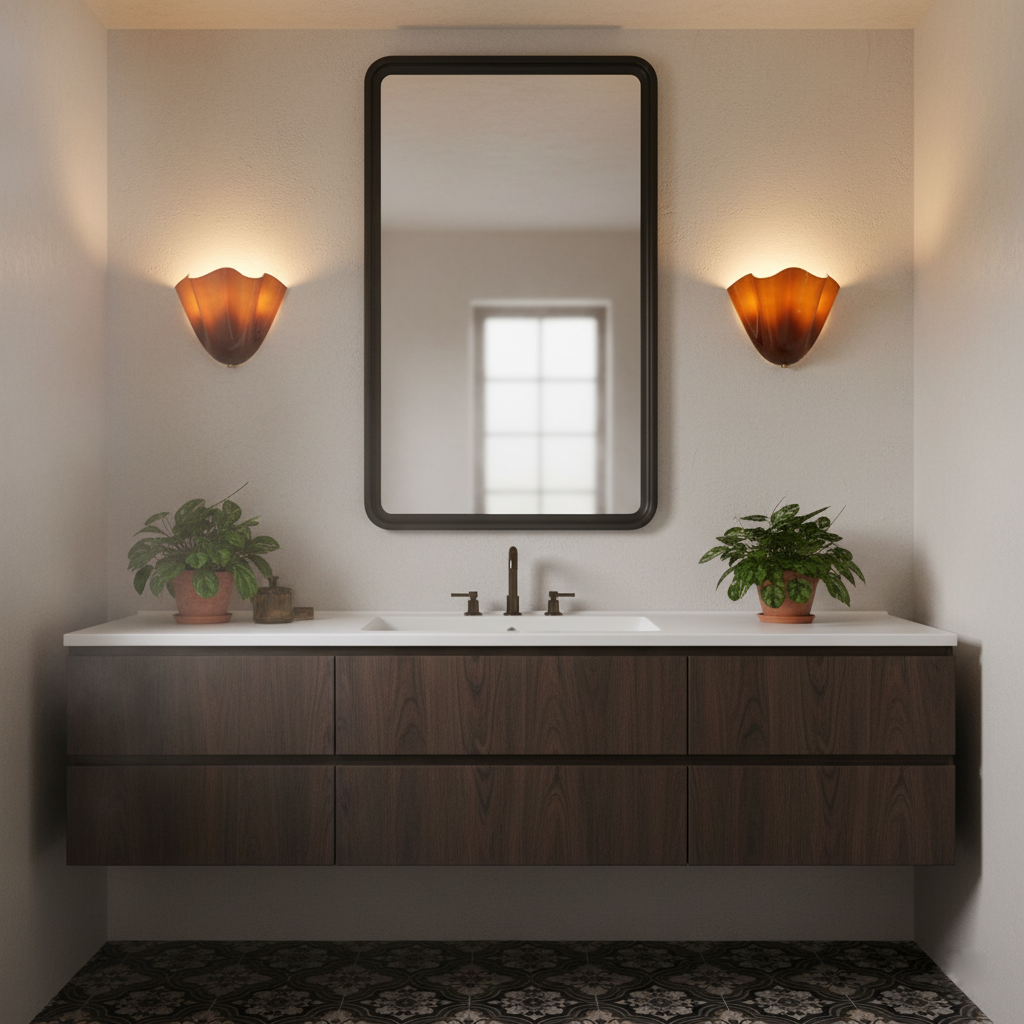
Four glass colors are offered: Beige White, Green, Brown, and Amber. The color you pick shifts the mood more than the bulb temperature does.
| Color | Effect when lit | Best fit |
|---|---|---|
| Beige White | Neutral, soft, closest to plain opal glass | Bedrooms, quiet hallways, paired sconces |
| Amber | Warm amber glow, strongest vintage feel | Reading corners, wood-heavy interiors |
| Green | Cool-green tint, more graphic and modern | Accent walls, mid-century schemes |
| Brown | Smoked, muted, low-key | Dark walls, moody entryways |
One caveat worth stating plainly: the manufacturer notes that colors and color temperatures may vary slightly due to photography lighting, monitor displays, and batch differences. If an exact match to an existing fixture matters, ask for a photo of current stock before ordering a pair.
Design and material notes
The proportions — 28 cm across, 25.5 cm tall, 13 cm deep — put this in the medium-sconce range. It is large enough to read as a deliberate design element and small enough to sit above a nightstand or beside a doorway without crowding it. The metal accessories are functional rather than decorative, so the glass stays the focus.
The mid-century influence comes through in the organic asymmetry of the glass rather than in hard geometry. That makes the fixture easy to place in interiors that are already warm and layered, and a useful counterpoint in rooms that are very rectilinear.
Specifications
- Dimensions: D 28 cm x W 13 cm x H 25.5 cm / D 11 in x W 5.1 in x H 10 in
- Materials: hand-blown glass lamp body, metal accessories
- Socket: E26 or E27 (bulbs not included)
- Colors: Beige White, Green, Brown, Amber
- SKU: RDW-083505
- Certification: the manufacturer lists UL Certification, ETL Listing, CE Approval, RoHS Compliance, and FCC Certification
- Location rating: dry indoor locations
- Notes: dimensions may vary slightly due to manual measurement
A quick checklist before you buy
- Measure the wall area: you need at least 28 cm of clear width and 25.5 cm of clear height per fixture.
- Confirm there is a junction box, or plan for an electrician visit.
- Count your fixtures — pairs read as intentional, singles read as accents.
- Buy bulbs at the same time: E26/E27, 2700K, 4–8 W LED, dimmable if you have a dimmer.
- Pick glass color against your wall color, not against a photo on a screen.
- Keep it out of bathrooms and other damp locations as specified.
FAQ
What bulb does this wall lamp use?
E26 or E27, bulbs not included. LED is recommended for efficiency and a warm glow; 2700K at 4–8 W suits most bedroom and hallway placements.
Is the glass really hand-blown?
Yes. Each glass shade is individually hand-blown, so no two are identical — expect small differences in thickness and petal shape.
Can it go in a bathroom?
The manufacturer specifies dry indoor locations. For bathrooms or high-humidity areas, consult a licensed electrician to confirm suitability and installation.
How many do I need for a hallway?
With 150–200 cm between centers, a 4 m hallway typically takes two to three fixtures. Measure wall to wall and divide evenly so the first and last sit equal distances from the corners.
Do the glass colors look the same in person?
Not exactly. The manufacturer notes that colors may differ slightly due to photography lighting, monitor displays, and batch variation. If you are matching an existing piece, request a current photo before ordering.
Where to buy
The Flower Glass Wall Lamp is available directly from MINIHOUZZ in all four glass colors, and the listing includes the full dimension and socket detail. For custom dimensions, lighting layout advice, or expedited shipping on a project timeline, the design team can be reached through the product page.