
A swing arm sconce exists to solve one specific problem: you want light exactly where a table lamp would eat up surface space and where a ceiling fixture cannot reach. This model is a hardwired iron wall light with an integrated LED, a 32 cm (12.6″) articulated arm, and a shade that both extends from the wall and rotates. Black or gold body, white shade, and a choice of 3000K, 4000K, or 6000K output. If you are replacing a bedside lamp or trying to light a reading chair without adding furniture, this is the category of fixture to look at.
What the adjustable arm actually buys you
Most wall lights are fixed. They throw light at one angle, and you arrange the room around that angle. An adjustable swing arm flips the relationship: the fixture stays put and the light moves.
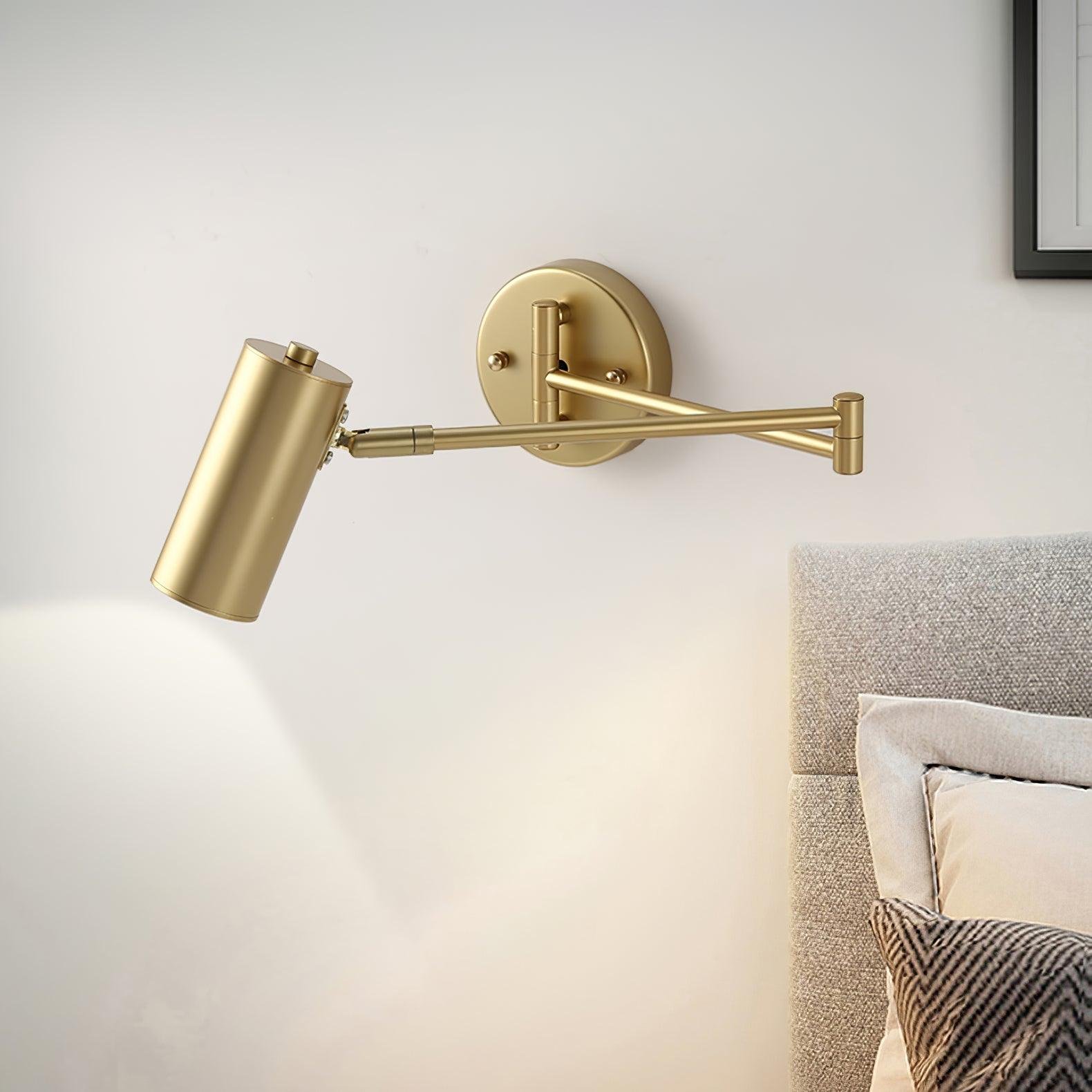
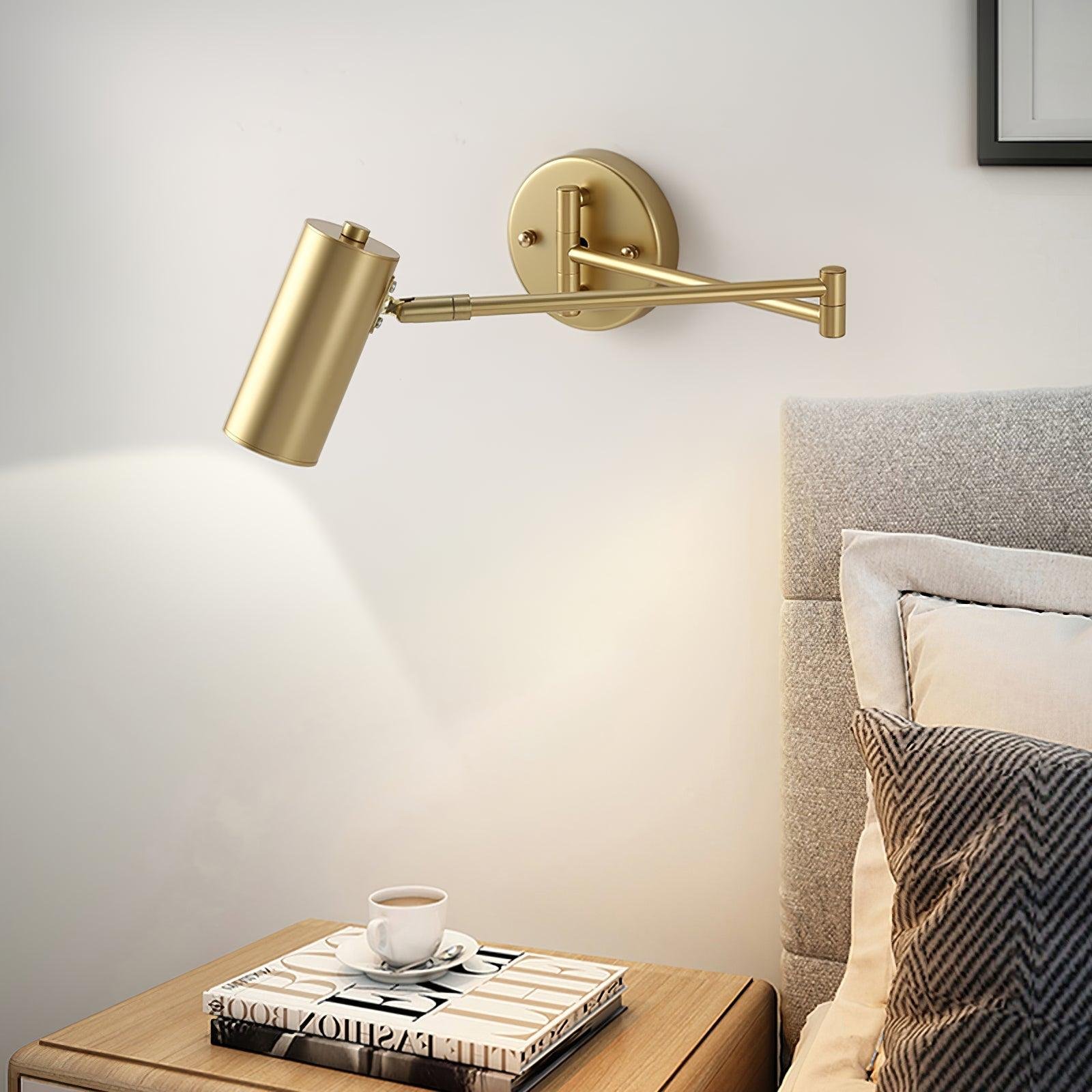
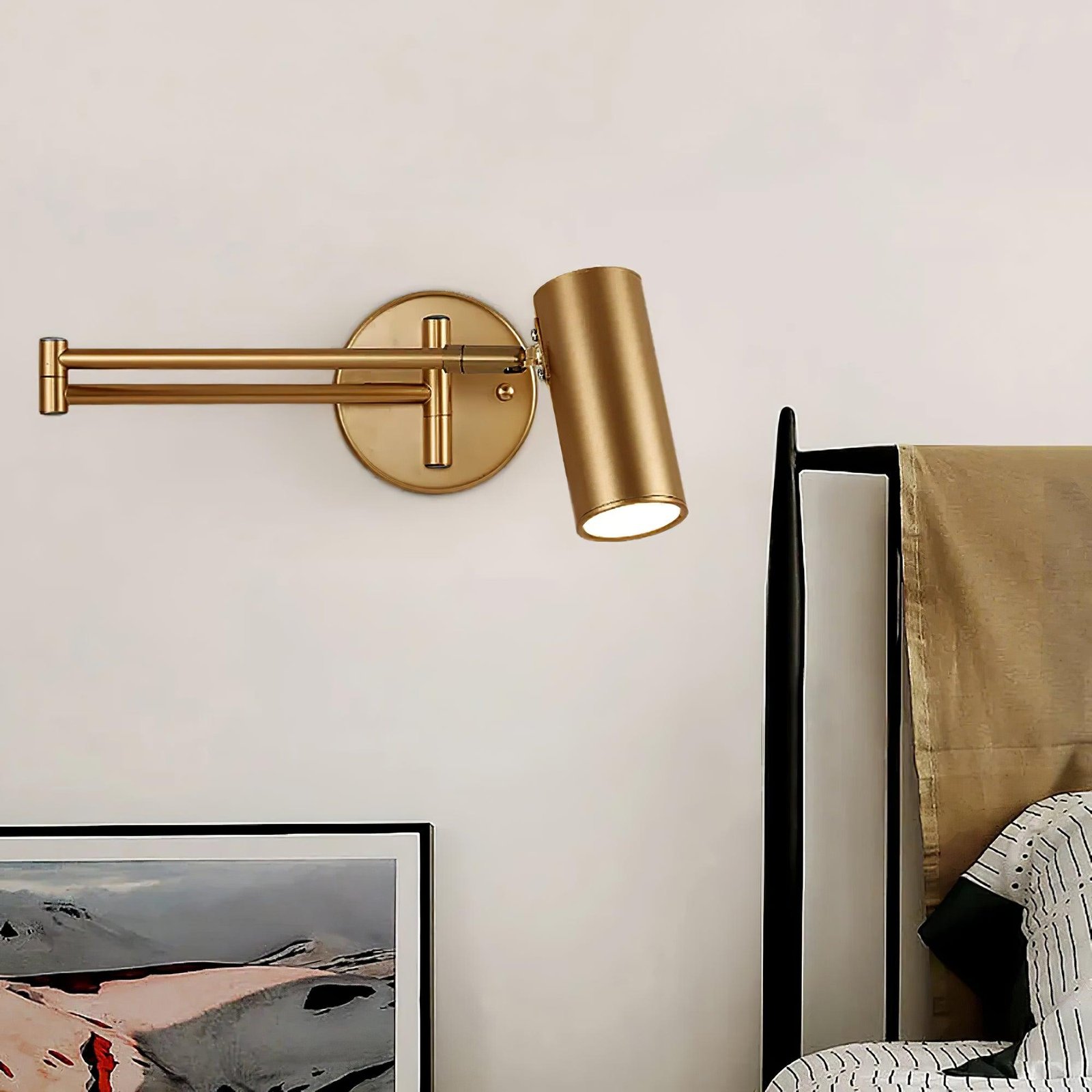
Two movements matter here. The arm extends horizontally, which changes how far the shade sits from the wall. The head rotates, which changes where the beam points. Combined, those two adjustments cover the difference between a soft wash of light across a wall and a focused pool of light on a book. In a bedroom, that means the sconce can sit high and unobtrusive during the day and swing out over the pillow at night. In a living room, it can wash a textured wall for atmosphere or drop down to light the arm of a sofa.
Practically, plan for the arm to travel a bit more than 12 inches at full extension. Two sconces flanking a bed should be mounted so the fully extended shade sits roughly above the outer third of the mattress, not directly overhead — you want light on the page, not in the eyes.
Materials, finishes, and what the light looks like
The body is iron, finished in gold or black. Iron is the right call for a swing arm: the arm is a lever, and a light-gauge steel or aluminum arm will droop over time at full extension. The shade is acrylic, white, which diffuses the integrated LED into an even surface rather than a visible point of glare. Acrylic also keeps the head light enough that the arm holds its position.
Because the LED is integrated rather than bulb-based, there is no exposed source and no bulb to buy — but also no bulb to swap. That trade is worth understanding before you commit: you get a cleaner look and predictable output for the life of the fixture, and you give up the ability to change color temperature or brightness later by changing a lamp. Choose your color temperature at purchase, not after.
The fixture is available in two finishes and carries UL, ETL, CE, and SAA listings along with RoHS and FCC compliance — worth checking if your installer or inspector asks for documentation. See the current finish options and pricing here.
How high to mount it, and how far apart
Height is where most wall sconce installations go wrong, and the answer depends entirely on the job the light is doing. These are working ranges, not rules — test with the arm extended before you drill.
- Bedside, replacing a table lamp: 48–60 inches from the floor, or roughly 20–24 inches above the top of the mattress. The shade should clear the nightstand surface by several inches so the arm can swing freely.
- Bedside with the arm extended over the pillows: mount the base 4–8 inches above the nightstand and slightly outboard of the sleeper’s shoulder, then extend inward. This keeps the base off the wall space you actually look at.
- Flanking artwork or a mirror: center the light at 60–66 inches, or about two-thirds the height of the piece. Two sconces should sit 8–12 inches outside the frame edges.
- Hallway or stairwell: 66–72 inches from the floor, spaced 6–8 feet apart along the run.
- Reading chair or sofa: 48–54 inches, positioned behind the shoulder rather than beside the head.
One constraint specific to this fixture: it is hardwired, so the mounting point has to land on an existing junction box or a new one you are willing to add. If the wall is already closed and you do not want to open it, a plug-in swing arm is the alternative — but you lose the clean look. Where a box exists, use it; where it does not, decide early whether the wall work is worth it. For a bedroom pair, this usually is.
Choosing between 3000K, 4000K, and 6000K
Color temperature does more for how a room feels than most people expect, and it is the one decision you cannot revise later on an integrated fixture.
- 3000K (warm): The default for bedrooms, living rooms, and anywhere the light is on in the evening. It reads as soft and slightly amber against white walls and flatters wood and warm metals, which makes it the natural pairing for the gold finish.
- 4000K (neutral): Brighter-feeling and more clinical. Best where the sconce is working rather than decorating — a reading light, a dressing area, a hallway where you need to see stairs clearly.
- 6000K (cool): Crisp, close to daylight, and unforgiving in a living space at night. Reserve it for utility zones, or for a space where the sconce is one of several cool-white sources.
Whatever you pick, keep it consistent within a sightline. A 3000K sconce 3 feet from a 6000K ceiling downlight will make one of them look wrong no matter which is technically better. If the room is already lit warm, stay warm.
Two switch versions, and one thing it will not do
This sconce ships in two control variants, and the difference is genuinely useful rather than cosmetic. The push-button version has a switch built into the fixture itself, so it works in a room where you have not run a switched leg to the box — or where you want local control without getting up. The wall-switch version wires to a standard external wall switch, so the fixture behaves like any other hardwired light in the room.
What it will not do is dim. The fixture is designed for standard on/off control, so if dimming is non-negotiable for your bedroom, plan a different fixture rather than a different switch. Both switch versions are listed on the product page, and it is worth confirming which one you are ordering before installation day.
Specifications
| Spec | Detail |
|---|---|
| Dimensions | Length 32 cm (12.6″), Height 12 cm (4.7″) |
| Light source | Integrated LED, not replaceable |
| Color temperature | 3000K warm / 4000K neutral / 6000K cool |
| Voltage | AC 110–240V |
| Mounting | Wall, hardwired |
| Control | External wall switch or built-in push button, not dimmable |
| Material | Metal (iron) body, acrylic shade |
| Finishes | Body: gold or black. Shade: white |
| Rating | IP20, damp-rated, indoor use only, not waterproof |
| Certification | UL, ETL, CE, SAA listed; RoHS compliant; FCC certified |
Where it fits, and where it does not
Indoor, dry-to-damp locations are the sweet spot: bedrooms, living rooms, hallways, stairwells, a home office, the wall beside a reading chair. The IP20 rating is the limit to respect. That rating means the fixture is protected against solid objects over 12 mm but not against water, so it belongs outside the splash zone — not inside a shower enclosure, not over a bathtub rim, not on an exposed porch. A bathroom works only if the sconce sits well clear of direct spray and heavy steam, and even then it is a judgment call rather than the fixture’s intended use.
The other thing to weigh is reach. At 12.6 inches, the arm is generous for a bedside or a chair, but it is not a substitute for a floor lamp across a large room. If you are lighting a 12-foot seating arrangement, two sconces plus a ceiling layer will do more than one sconce with a long arm.
Frequently asked questions
Can it go in a bathroom?
It is IP20 and intended for indoor use only, not waterproof. Keep it out of direct water exposure and heavy steam — so a bathroom is possible only in a dry zone well away from the shower or tub, and it is not what the fixture was designed for.
Can I replace the LED?
No. The LED is fully integrated into the fixture and cannot be replaced. This is why color temperature is a decision to make at purchase.
Does it work with a dimmer?
No. It is designed for standard on/off control through either the external wall switch or the built-in push button, depending on the variant.
What is the difference between the two switch versions?
The push-button version has a switch on the fixture for local control. The wall-switch version connects to an external wall switch so you can operate it from a normal switch plate.
Will it work on US 120V wiring?
Yes. The fixture is rated AC 110–240V, which covers standard North American residential voltage. Hardwired installation should be done by a qualified electrician.
The short version
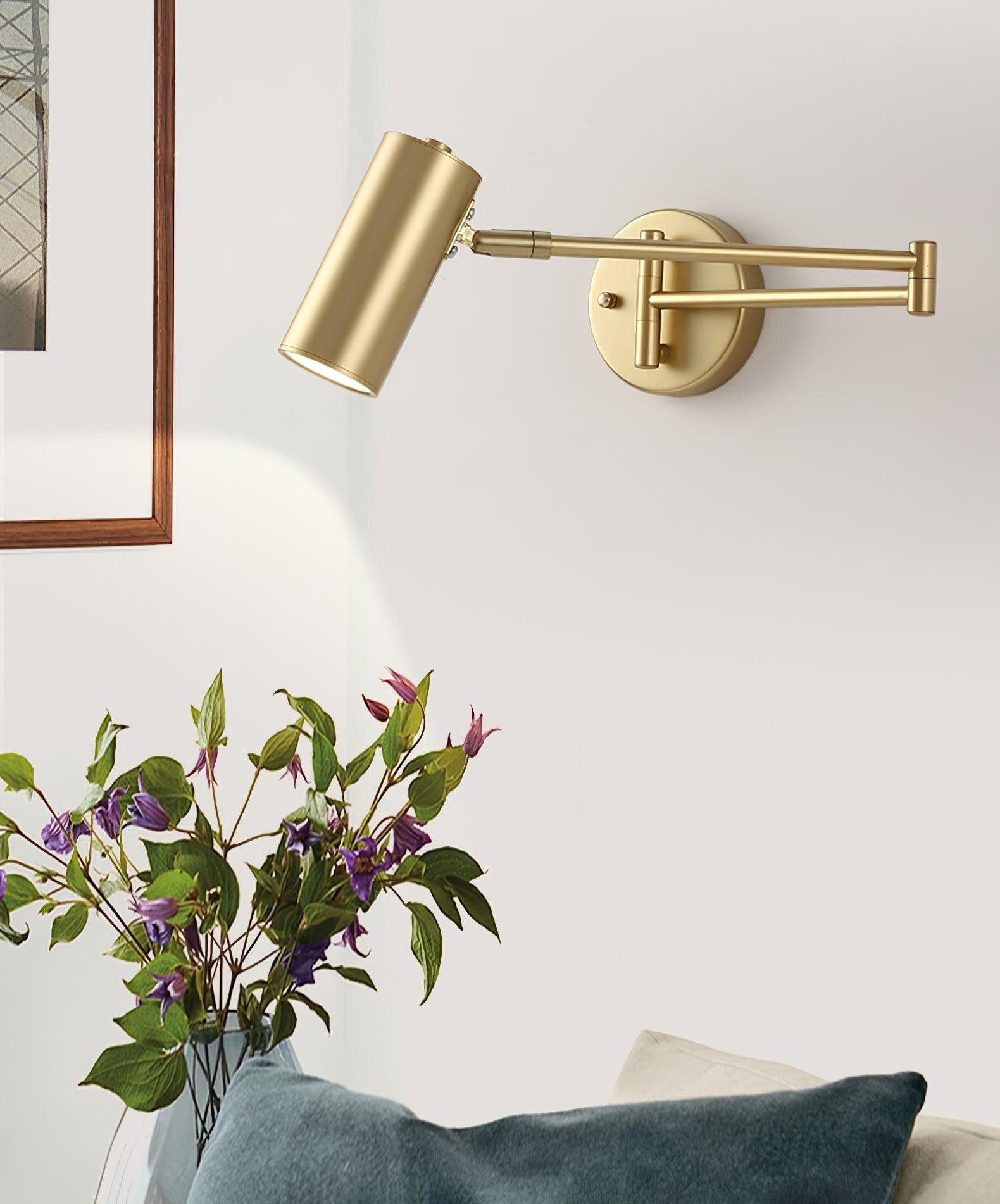
If you want light that can move, in a room where a lamp would take up space you do not have, an adjustable swing arm sconce is the honest solution. This one gives you 12.6 inches of travel, a rotating head, iron construction that holds position, and three color temperatures to choose from. Decide the color temperature first, confirm your junction box and switch variant second, and mount it at mattress height rather than eye height. Check the adjustable swing arm wall sconce in gold or black to see current availability, and browse the full product details before you commit to a finish.