
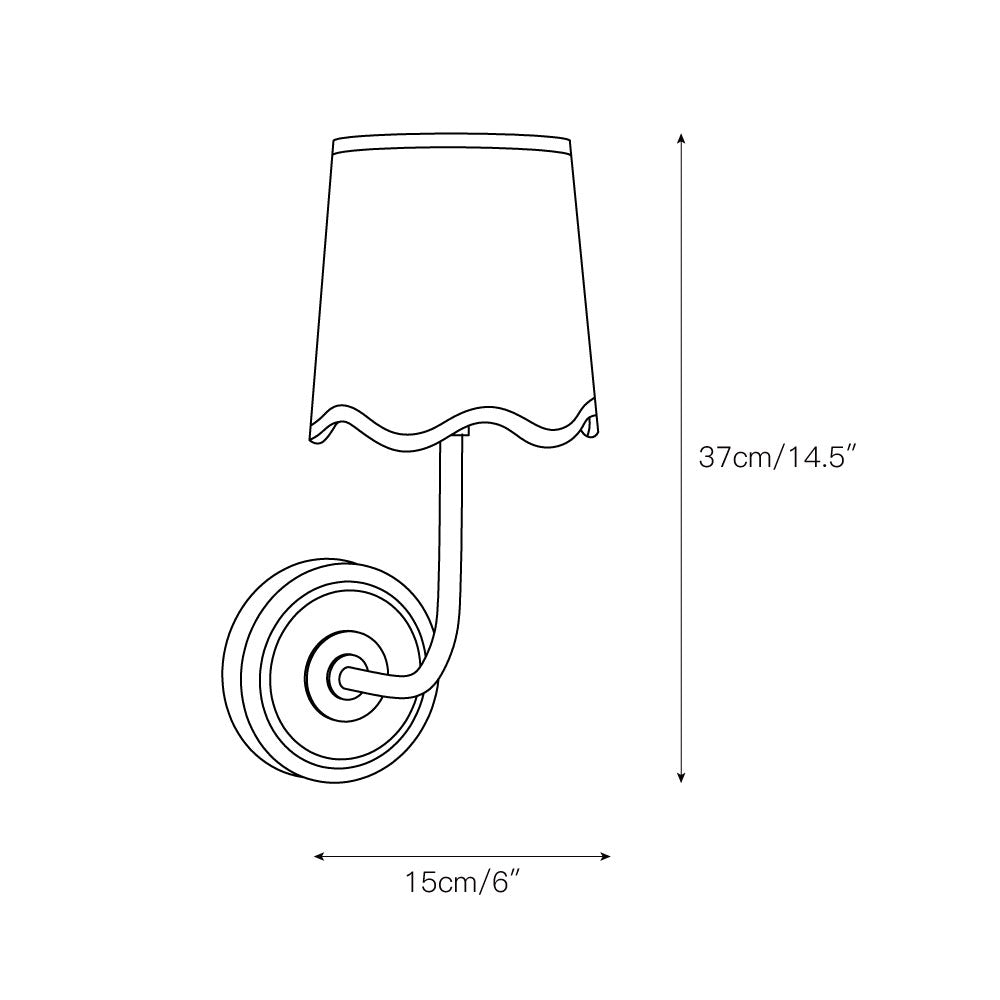
Short answer: a brass wall sconce with a woven fabric shade is what you hang when you want warm, low-glare light at eye level instead of a bright wash from the ceiling. This one — the Ariel sconce from MiniHouzz — measures 22 cm wide, 15 cm deep and 37 cm tall (W 8.7″ × D 6″ × H 14.5″), uses a single E12 bulb, and comes in brass, nickel, black or linen finish. Mount it with the shade’s center around eye level, choose a 2700K dimmable candelabra bulb at 40W-equivalent or less, and keep it in dry rooms only.
Below is how the piece is actually built, where it earns its place, and the specific numbers to use when you install it.
Why the woven shade matters more than the brass
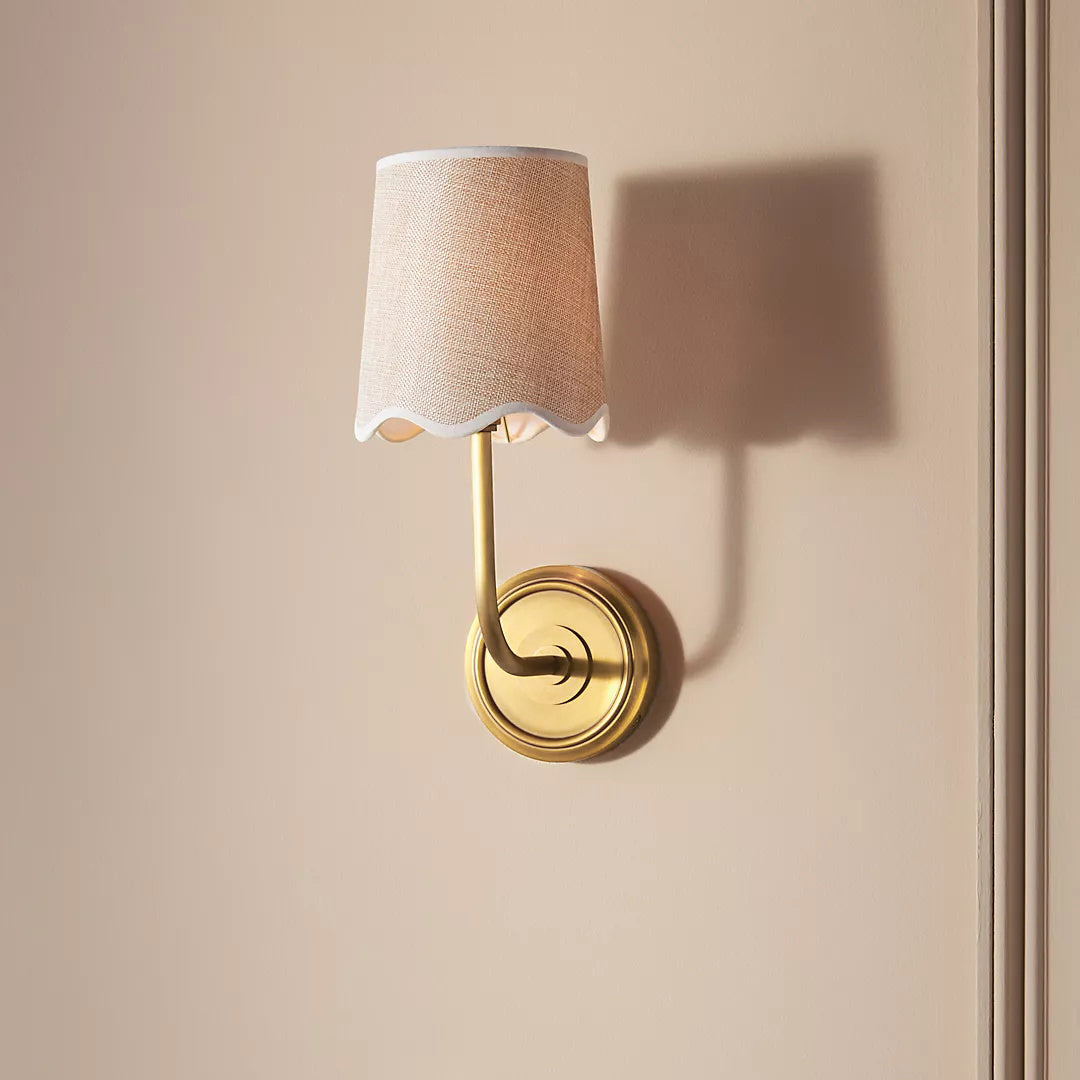
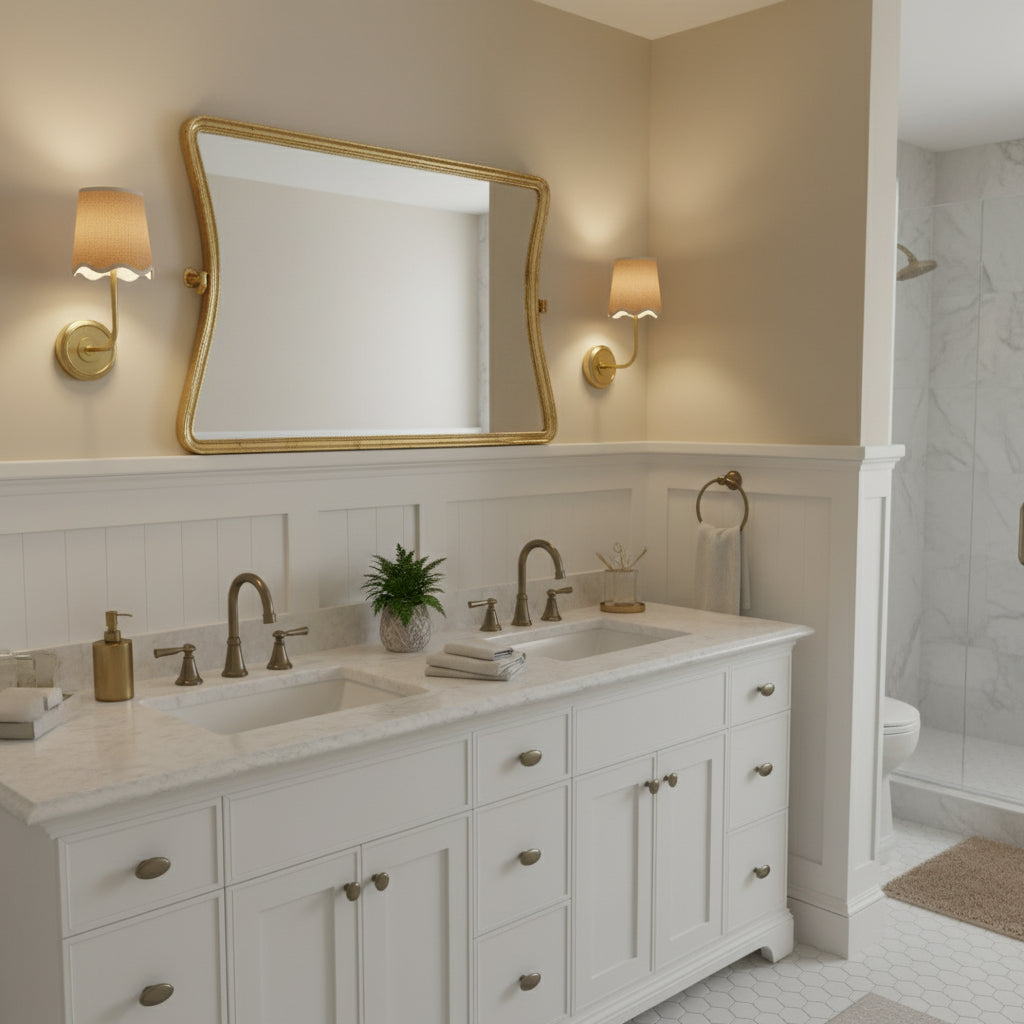
The brass body is the structure; the fabric shade is the reason this fixture feels calm instead of clinical. An exposed-bulb sconce throws a hard, directional pool of light and puts the bulb — the least attractive part of any fixture — at eye level. A woven fabric shade does three things at once:
- It diffuses. The weave scatters light in every direction, so you get a soft glow on the wall above and below the fixture instead of a hotspot.
- It cuts glare. Sitting or lying beside it, you see fabric, not a filament. That is why bedside sconces with fabric shades are far kinder than bare-bulb designs.
- It adds texture. The scalloped linen trim along the bottom edge gives the shade a hand-finished edge — the detail that separates a considered room from a furnished one.
The trade-off is honest: fabric absorbs a little light, so a shaded sconce reads softer — not dimmer — than the same wattage bare. If you need task-level brightness for reading, this fixture is a mood-and-accent layer, and you pair it with a ceiling or floor source.
Dimensions in a real room
The numbers on the listing are worth translating into how the piece behaves:
- W 22 cm / 8.7″ — the shade is wide enough to look substantial over a nightstand but narrow enough to sit between two framed prints without crowding them.
- D 15 cm / 6″ — this is the projection off the wall, and it is the number most people ignore. Six inches clears a headboard or a piece of art, and it is shallow enough for a hallway where you still need shoulder room.
- H 37 cm / 14.5″ — tall enough to read as a vertical element. On a standard 8-foot wall it fills roughly the middle third, which is exactly where the eye lands.
Measure your wall before you buy two. Sconces are usually bought in pairs, and a pair that is 22 cm wide each needs roughly 90–120 cm of wall between them to breathe — more on that below.
Where it works, room by room
Bedroom and bedside
This is the natural home for a shaded brass sconce. In place of a table lamp, a pair flanking the headboard frees the nightstands completely and gives each sleeper independent, dimmable light. In a small bedroom the wall-mounted version is often the only way to get reading light without stealing surface area.
Hallway and entry
A hallway is where a sconce does the most work per dollar: it breaks a long run of blank wall, gives the corridor a rhythm, and provides light at the height people actually look. Because the fixture projects only 6 inches, it stays out of the way in a narrow passage.
Living room and den
Flanking a fireplace, a bookshelf or a piece of art, a pair of brass sconces adds a layer of warm light at seated eye level — the layer most rooms are missing. This is also where the brass finish pays off: warm metal against warm light reads richer than a painted finish.
Bathroom — read this first
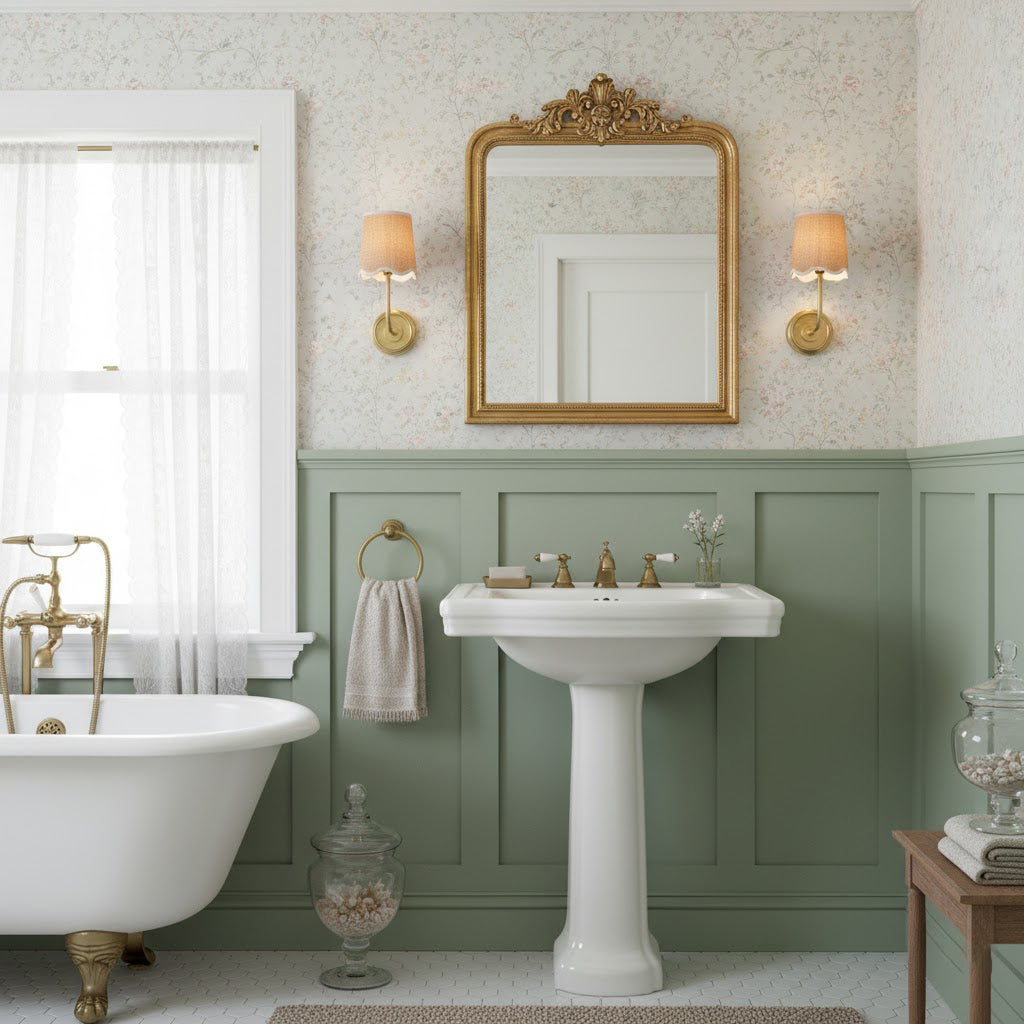
The listing is explicit: this sconce is designed for dry locations. A steamy bathroom is a damp environment, and moisture degrades fabric shades and accelerates tarnish on metal. If you want this look beside a vanity, have a licensed electrician confirm the location, the fixture rating and the GFCI protection before you install. Do not assume a dry-rated fixture is fine over a tub or shower.
Mounting height and spacing — the numbers
There is no single correct height, but there are reliable starting points. Adjust from there based on who uses the room and what the sconce is lighting.
| Placement | Center of shade, from finished floor | Notes |
|---|---|---|
| Bedside, flanking a headboard | 48–60″ (122–152 cm) | Roughly level with the top of the mattress or slightly above; you should not see the bulb from a lying position |
| Hallway, general | 60–66″ (152–168 cm) | Around eye level for most adults; keeps the glow out of direct sightlines |
| Flanking art or a mirror | Centered on the artwork | Align the shade’s midpoint with the middle of the frame, not the wall |
| Over a console or sideboard | 60–66″ (152–168 cm) | Leave at least 12″ between the shade bottom and the tallest object below |
Spacing between a pair: aim for 36–48″ (90–122 cm) between the two fixtures when they flank a bed or a fireplace, and keep each one at least 4″ from the edge of the headboard or mantel so the shade does not visually collide with it. On a long blank hallway wall, space sconces 6–8 feet apart along the run — closer than that and the wall starts to look punctuated rather than lit.
Two practical rules that save a second trip to the hardware store: mark the height with painter’s tape and live with it for a day before drilling, and confirm the wall box height matches your number — the sconce mounts to the box, so the box position, not the fixture, sets the final height.
Bulb choice: the E12 detail
The fixture takes an E12 candelabra-base socket and the bulb is not included. That is a feature, not an omission — you get to set the color temperature and brightness to the room.
- Base: E12 candelabra. A standard E26 bulb will not fit. Check the base before you buy a pack.
- Shape: a candelabra or small globe shape sits correctly inside the shade; very long decorative bulbs can poke below the trim.
- Color temperature: 2700K for a warm, residential glow in bedrooms and living rooms; 3000K if the sconce sits in a hallway or near a workspace where you want slightly cleaner light.
- Wattage: a 4–6W LED (roughly 40W incandescent equivalent) is a sensible ceiling for a single-shade accent fixture. More than that and the shade starts to glow hot and the light turns harsh.
- Dimming: if you want dimming, use a dimmable LED bulb and a compatible dimmer — mismatched pairs are the usual cause of flicker and buzz.
If you are wiring a pair on one switch, use identical bulbs in both. Two slightly different color temperatures in the same sightline is the kind of detail that reads as “unfinished” without anyone being able to name why.
Finish options: brass, nickel, black, linen
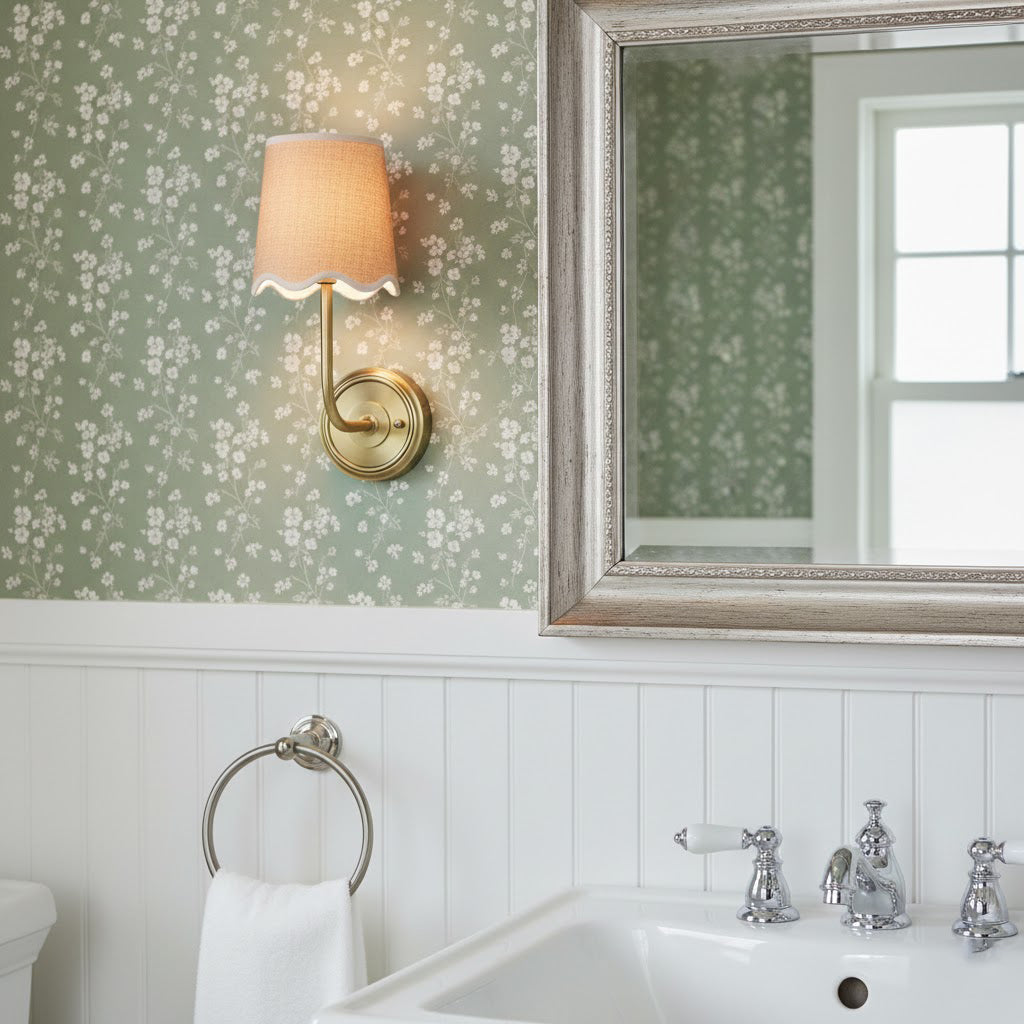
The sconce is offered in brass, nickel, black and linen. The choice is mostly about what the fixture has to sit next to:
| Finish | Reads as | Pairs well with |
|---|---|---|
| Brass | Warm, classic, a little nostalgic | Wood furniture, warm neutrals, traditional and coastal rooms |
| Nickel | Cool, crisp, contemporary | Grey and white palettes, polished hardware, modern interiors |
| Black | Graphic, high contrast | White walls, industrial and modern-farmhouse schemes, bold trim |
| Linen | Quiet, tonal, low contrast | Cream and beige rooms where the fixture should blend, not announce |
One consistency rule worth following: if the room already has a dominant metal — cabinet pulls, a mirror frame, a curtain rod — match the sconce to it. Mixing metals works, but it works best when one metal clearly leads and the second is a deliberate accent, not an accident.
Specifications
| Dimensions | D 15 cm × W 22 cm × H 37 cm (∅ 6″ × W 8.7″ × H 14.5″) |
|---|---|
| Materials | Brass lamp body, fabric lampshade with scalloped linen trim |
| Socket | E12 candelabra — bulb not included |
| Finish options | Brass, nickel, black, linen |
| Location rating | Dry locations |
| Compliance | Listing states UL Certified, ETL Listed, CE Approved, RoHS Compliant, FCC Certified |
| Price | $186 |
Measurements are taken by hand and can vary slightly between units. Fabric-dyed shades and metal finishes can also show minor batch variation, and screens render color differently — order a pair together if an exact match between two fixtures matters to you.
Care and installation notes
- Dust the shade with a vacuum brush, not a damp cloth. Water on a fabric shade can leave a water ring that never comes out.
- Handle brass with clean hands. Fingerprints on an unlacquered or polished finish show up quickly; a dry microfiber cloth is enough for routine care.
- Switch the circuit off at the breaker before wiring, and have a licensed electrician do the connection if you are not confident with the box, the ground and the box’s load rating.
- Check the wall box early. If the existing box is off-center from where you want the fixture, moving it is drywall work — worth knowing before the sconce arrives.
Frequently asked questions
How high should a wall sconce be mounted?
Start at 60–66″ (152–168 cm) to the center of the shade for hallway and general wall lighting, and 48–60″ (122–152 cm) beside a bed so the light lands on the page rather than in your eyes. Flanking art or a mirror, center the fixture on the artwork instead of the wall.
What bulb does this sconce use?
An E12 candelabra-base bulb, sold separately. A dimmable 2700K LED in the 4–6W range is a good default for a warm, low-glare glow in a bedroom or living room.
Can I use it in a bathroom?
The fixture is rated for dry locations. Bathrooms are damp environments, so moisture is a real concern for both the fabric shade and the metal finish. If you want this look near a vanity, have a licensed electrician assess the location, the fixture rating and GFCI protection first — and keep it out of tub and shower zones.
How far apart should a pair of sconces be?
For a pair flanking a bed or fireplace, 36–48″ (90–122 cm) between the two fixtures is a reliable starting point, with at least 4″ of clearance from the edge of the headboard or mantel. Along a long hallway wall, 6–8 feet between fixtures keeps the run looking intentional.
Is the sconce dimmable?
Dimming depends on the bulb and the wall dimmer, not the fixture itself. Use a dimmable LED and a dimmer rated for LED loads; if you hear buzzing or see flicker, the dimmer is almost always the culprit.
The short version
A woven-shade brass sconce is a lighting-layer purchase, not a lighting-source purchase. It is the fixture you add after the ceiling light is sorted, to put warm light where people actually sit, read and walk. At 22 cm wide and 15 cm deep it fits hallways, bedside walls and fireplace flanks without eating space, and the scalloped linen trim keeps it from looking like generic builder-grade hardware.
If you already know your mounting height and your room is dry, this one is straightforward: see the full specs and finish options for the Ariel brass wall sconce. Buying a pair? Order both fixtures together so the shades come from the same batch, and check current pricing and shipping options at checkout — expedited shipping is available if you are working to a deadline. Need custom dimensions or a lighting layout reviewed before you commit? The MiniHouzz design team takes those requests directly.