
An IP65 outdoor wall light is the practical answer for exterior walls that take rain, dust, and direct spray but still need a clean architectural look. This model is a 24W integrated LED spotlight in die-cast aluminum with tempered glass, hardwired at 110–220V, measuring 5.9″ wide × 4.4″ deep × 3.5″ high (15.0 × 11.2 × 8.9 cm) and weighing 2.20 lb. It throws a focused wash of light roughly 1–10 meters, which is why it works on entryway walls, patio columns, garage facades, and hotel exteriors rather than as broad area lighting.
If you are deciding whether this is the right fixture for a specific wall, the short version: choose it when you want a defined beam aimed at a surface or feature, you have a hardwired circuit, and you accept a fixed-brightness fixture. Skip it if you need dimming or a wide flood of ambient light.
What IP65 actually means on an exterior wall light
IP65 breaks into two numbers. The 6 means dust-tight — no dust ingress into the housing. The 5 means protected against water jets from any direction, not just rain falling vertically. For a wall fixture that faces weather head-on and gets hit by gutter runoff, hose spray, or wind-driven rain, that second digit matters more than the first.
What IP65 does not mean: it is not submersible, and it is not a license to mount the fixture where water will pool against the glass. Fixtures fail at the gasket and the wire entry, not at the aluminum. Seal the supply hole with exterior-grade sealant and keep the bottom fixing bracket screws snug — this model uses a bottom bracket for a reason, since it lets the housing sit flat and drain.
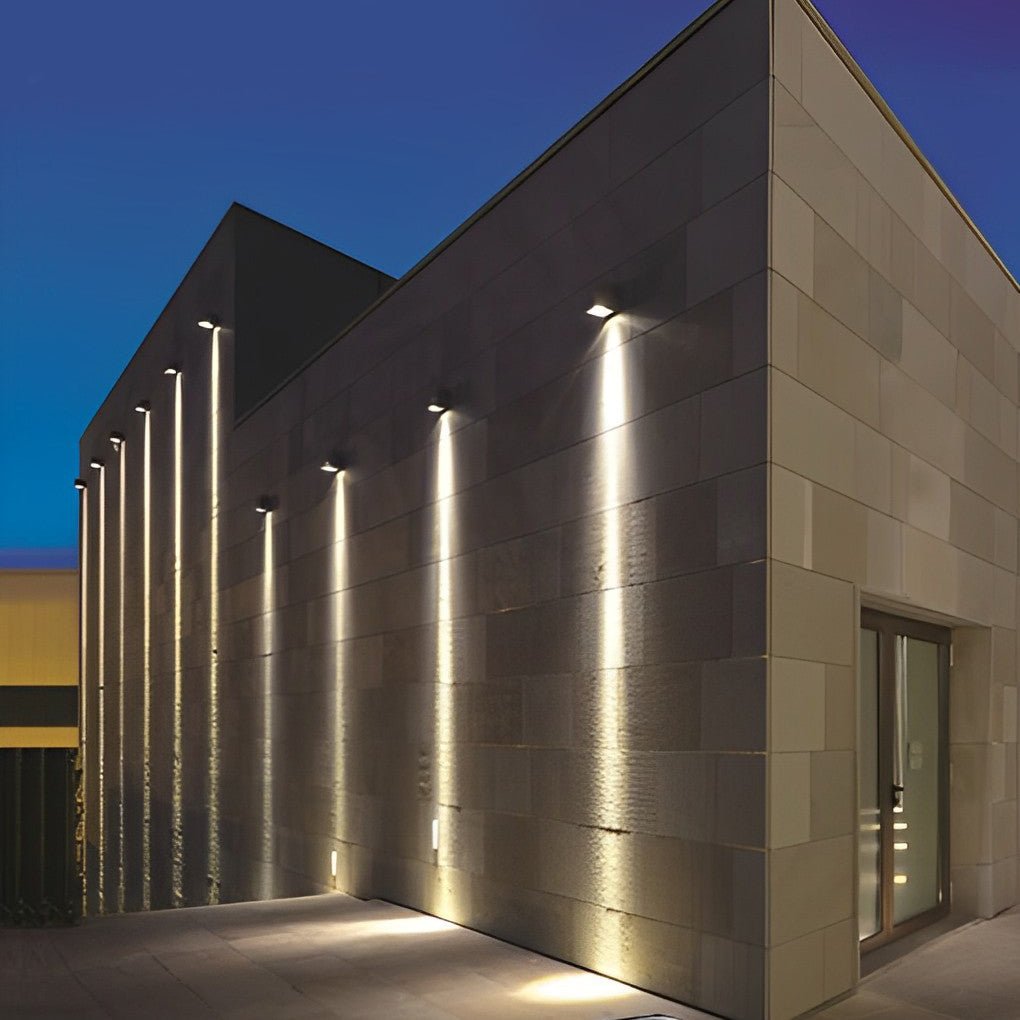
Design and materials: why die-cast aluminum and tempered glass matter
The housing is die-cast aluminum with a gray finish, polished and ground rather than painted over a stamped steel shell. Die-cast aluminum holds shape under thermal cycling and resists rust, which is the difference between a fixture that looks the same in year five and one that has bubbled at the edges. The lens is tempered glass — it handles heat from a 24W LED and impact without hazing the way thin acrylic does.
Inside, an optical lens shapes the beam instead of relying on a bare LED board. That is what gives the fixture its longer throw and defined edge, and it is also why the light reads as a deliberate wash on a wall rather than a scatter of glare. The trade-off is honest: a lensed spotlight is more directional. Aim it, don’t just mount it.
Certifications and what they cover
The fixture is listed as UL Certified, ETL Listed, CE Approved, RoHS Compliant, and FCC Certified. In plain terms: the UL/ETL listings address electrical safety for the North American market, CE covers the EU, RoHS restricts hazardous substances, and FCC addresses electromagnetic interference. For a hardwired exterior fixture, the UL/ETL listing is the one an inspector or electrician will look for first.
Where this fixture earns its place
Because the recommended lighting distance is 1–10 meters, this is a surface-grazing and feature-accent light. Good applications:
- Entryway side walls — aimed down or across the door reveal to define the threshold without blinding anyone approaching it.
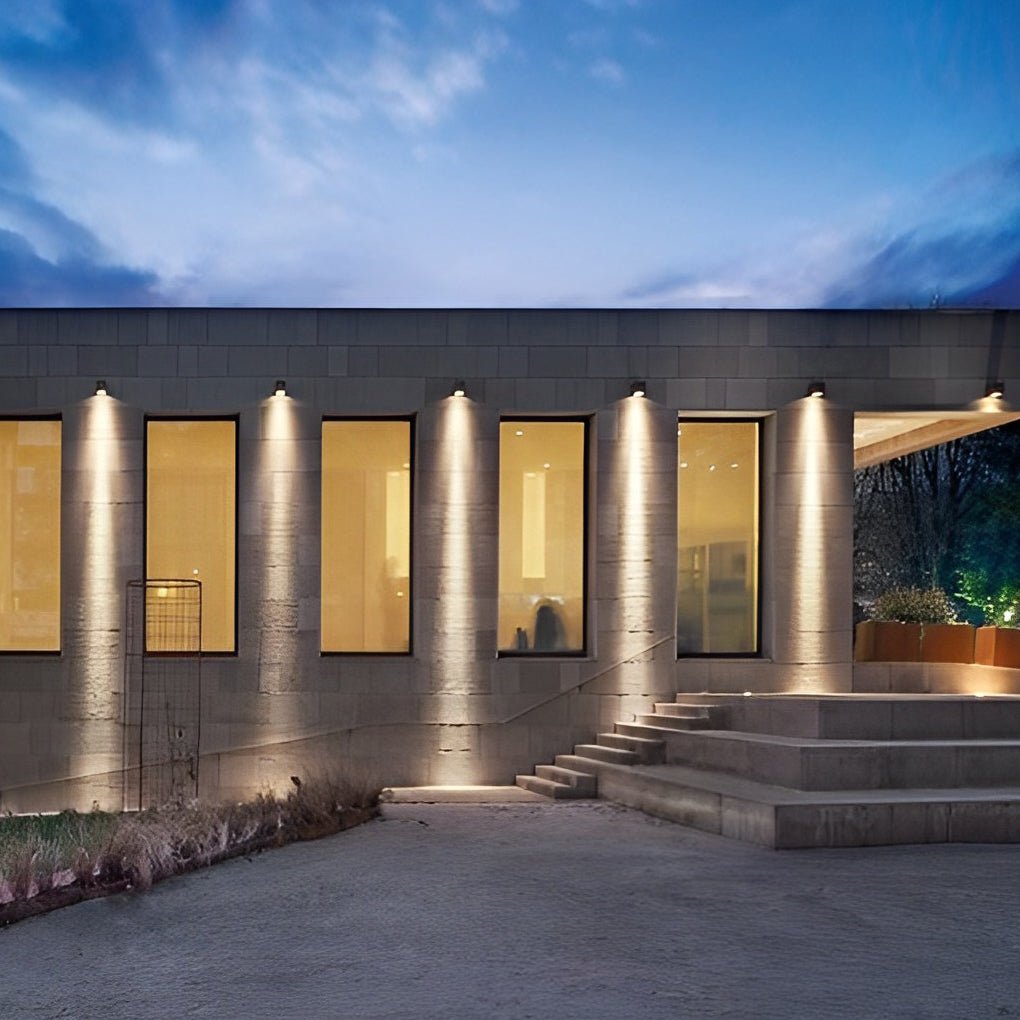
- Patio and porch columns — one fixture per column face reads as architecture; two on the same face reads as a mistake.
- Garage and drive-side facades — a pair spaced wide creates a wash that marks the building edge at night.
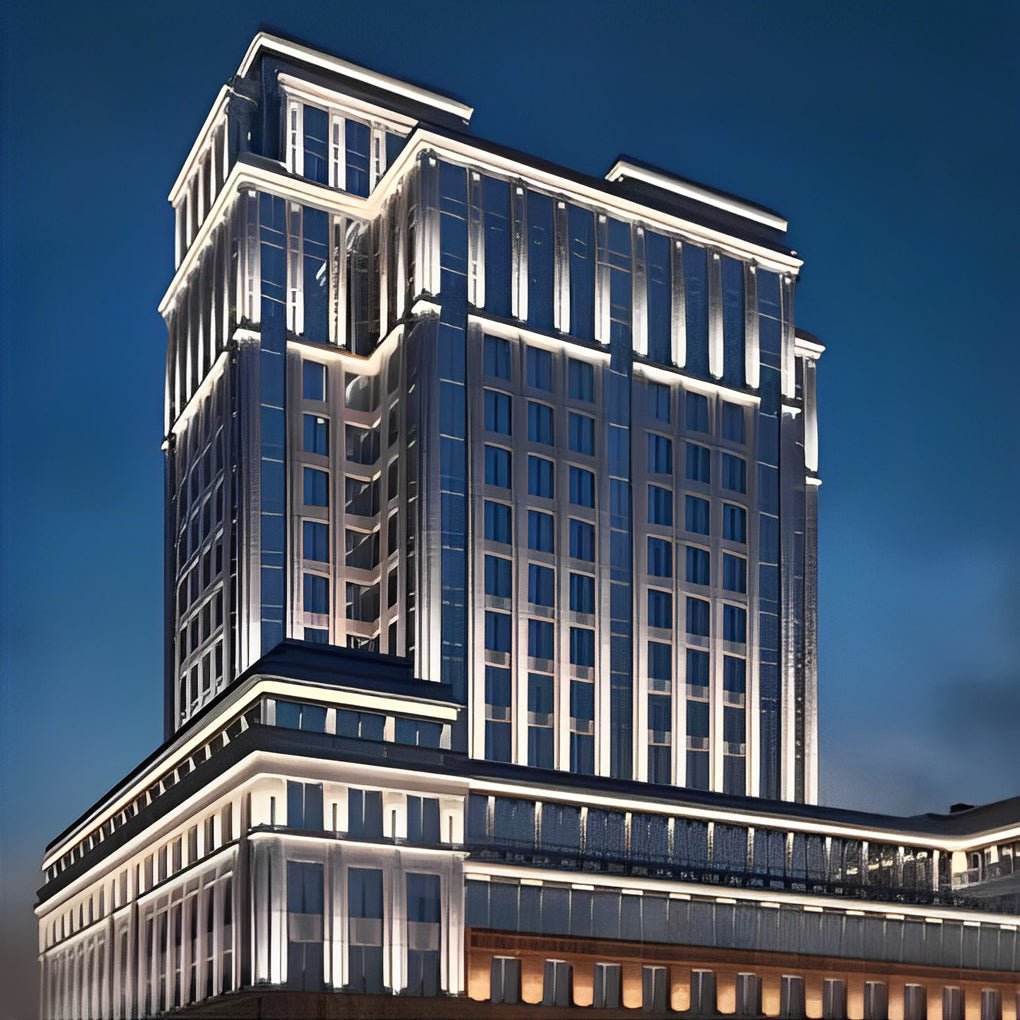
- Hotel and commercial exteriors — the gray aluminum body disappears against stone and stucco, which is usually what a facade wants.
- Textured walls — stone, brick, and slatted wood look dramatically better under a raking beam than under a flood.
It is not the right tool for lighting a whole yard, a long driveway, or a large deck. That is a spread problem, and a lensed 24W spotlight will leave dark gaps.
If your wall is textured or you are lighting a facade feature, this is the pairing the fixture was designed for — see the gray 24W aluminum wall spotlight for the full finish and color options.

Installation: height, spacing, and aiming
These are starting points, not code requirements — always follow local electrical code and the fixture’s instructions, and have a licensed electrician make the connections.
Mounting height
For a downward wash on a wall, mount the fixture 6.5–7.5 ft (2.0–2.3 m) above the surface you want lit. Lower than 6 ft and the beam hits people in the face; higher than 8 ft on a single-story wall and the pool of light thins out before it reaches the ground. On a two-story facade, treat each level as its own lighting problem rather than trying to reach the ground from 20 ft up.
Spacing
Space fixtures so their beams just overlap at the target surface — typically 4–6 ft apart for wall washing, or 8–10 ft apart when you only need to mark corners and openings. Resistance here is wasted effort: too close and you get hot spots and visible scalloping, too far and you get dark gaps that look like a maintenance failure.
Aiming
Because the lens is directional, aim the fixture before you tighten the bracket. Point it 15–30° off perpendicular to graze a textured wall — that angle is what produces shadow and depth instead of a flat bright patch. For lighting a plant, a sign, or a house number, aim the beam center slightly below the object’s midpoint. And never point a 24W spotlight at eye level along a walking path or toward a neighbor’s window.
Choosing the light color
This model is available in white, warm white, and golden yellow. There is no single correct answer, but there is a defensible rule:
- Warm white — the default for homes, patios, and hospitality exteriors. It flatters wood, brick, and stone and reads as welcoming rather than institutional.
- White — better where the wall is white or gray render and you want a crisp, modern, architectural look, or where the light serves a security purpose.
- Golden yellow — use it sparingly and deliberately: heritage facades, warm-toned stone, or a specific design intent. It is a strong choice that can look dated if applied everywhere.
Keep one color temperature across the visible facade. Mixed colors on the same wall is the single most common exterior lighting error, and it is visible from the street.
Because the housing is gray and compact at 5.9″ wide, it tends to disappear against stone, stucco, and painted siding. Compare the finish against your material in daylight — the product page photos show it on both light and dark walls.
Specifications
| Power | 24W integrated LED |
| Voltage | 110–220V, hardwired |
| Ingress protection | IP65 (dust-tight, jet-water resistant) |
| Materials | Die-cast aluminum, tempered glass |
| Finish | Gray, polished and ground |
| Dimensions | 5.9″ W × 4.4″ D × 3.5″ H (15.0 × 11.2 × 8.9 cm) |
| Weight | 2.20 lb (1.00 kg) |
| Light colors | White, warm white, golden yellow |
| Dimmable | No — fixed brightness |
Pre-purchase checklist
- Is there a hardwired circuit at the mounting point? This fixture is hardwired; there is no plug option. If you do not have a switched exterior circuit, price an electrician before you buy.
- Do you need dimming? If yes, this is the wrong fixture — it is not dimmable. Do not buy it and add a dimmer switch afterward.
- Will the wall carry the weight? At 2.20 lb the fixture is light, but the bracket still needs solid anchoring. On siding or drywall-only exteriors, add blocking.
- Is the beam aimed at something worth lighting? A lensed spotlight on a blank wall is a bright blob. Plan the target first.
- Do adjacent fixtures match? Order the full run at once rather than adding fixtures a season later — batch ordering on the IP65 outdoor wall light listing keeps the finish consistent.
One more consideration for coastal or humid climates: the die-cast aluminum body is described as rustproof and corrosion-resistant, which makes it suitable for coastal environments. That does not make the fasteners immortal — check the bracket screws annually and replace any that show corrosion, since that is where coastal installations typically fail first.
Frequently asked questions
Can this outdoor wall light be dimmed?
No. It provides consistent illumination at a fixed brightness. If a dimmable wall fixture is a hard requirement, choose a different model rather than adding a dimmer to this one.
What does IP65 protect against?
IP65 means the housing is dust-tight and protected against water jets from any direction. It is suitable for exposed exterior walls. It does not mean submersible, and it does not remove the need to seal the wire entry point.
Is it suitable for a coastal home?
Yes — the die-cast aluminum body is rustproof and corrosion-resistant, making it suitable for coastal environments. Inspect and refresh the mounting hardware periodically, since salt air attacks fasteners before it attacks a coated housing.
Can I install it on a 120V US circuit?
The fixture is rated 110–220V, so it is compatible with standard North American residential voltage. It must be hardwired by someone qualified to do so under local code.
Do I need to replace a bulb?
No. The light source is integrated LED, so there is no user-replaceable bulb in this fixture.
The bottom line
This is a fixture you buy for a specific job: washing a wall, marking an entry, defining a column, or putting a controlled pool of light exactly where you want it on an exterior facade. At 24W with a 1–10 meter throw, IP65 sealing, die-cast aluminum construction, and a gray finish that recedes against most building materials, it does that job without drawing attention to itself. The constraints are equally clear — hardwired only, not dimmable, directional by design.
If that matches your wall, you can see the full spec sheet, color options, and current pricing on the IP65 waterproof LED outdoor wall light product page. For layout questions, custom dimension needs, or help matching a facade, MiniHouzz’s design consultants can review the plan before you order — get in touch here.