
Short answer: this MiniHouzz gold LED pendant light is a hardwired 110V fixture built from aluminum, hardware, and acrylic, sold in three silhouettes — oval, round, and water drop — in both one-light and two-light versions. Its “3-step dimming” does not change brightness. It cycles the light color between 3000K, 4500K, and 6000K from a standard wall switch. If you want a warm, low-glare pool of light over a dining table or a soft glow beside a bed, that is exactly the right trade-off. If you want a dimmer slider, it is the wrong fixture.
Below is what the specifications actually say, how to pick the right size and shape for your room, how high to hang it, and where this fixture competes well against alternatives.
What you actually get: design and materials
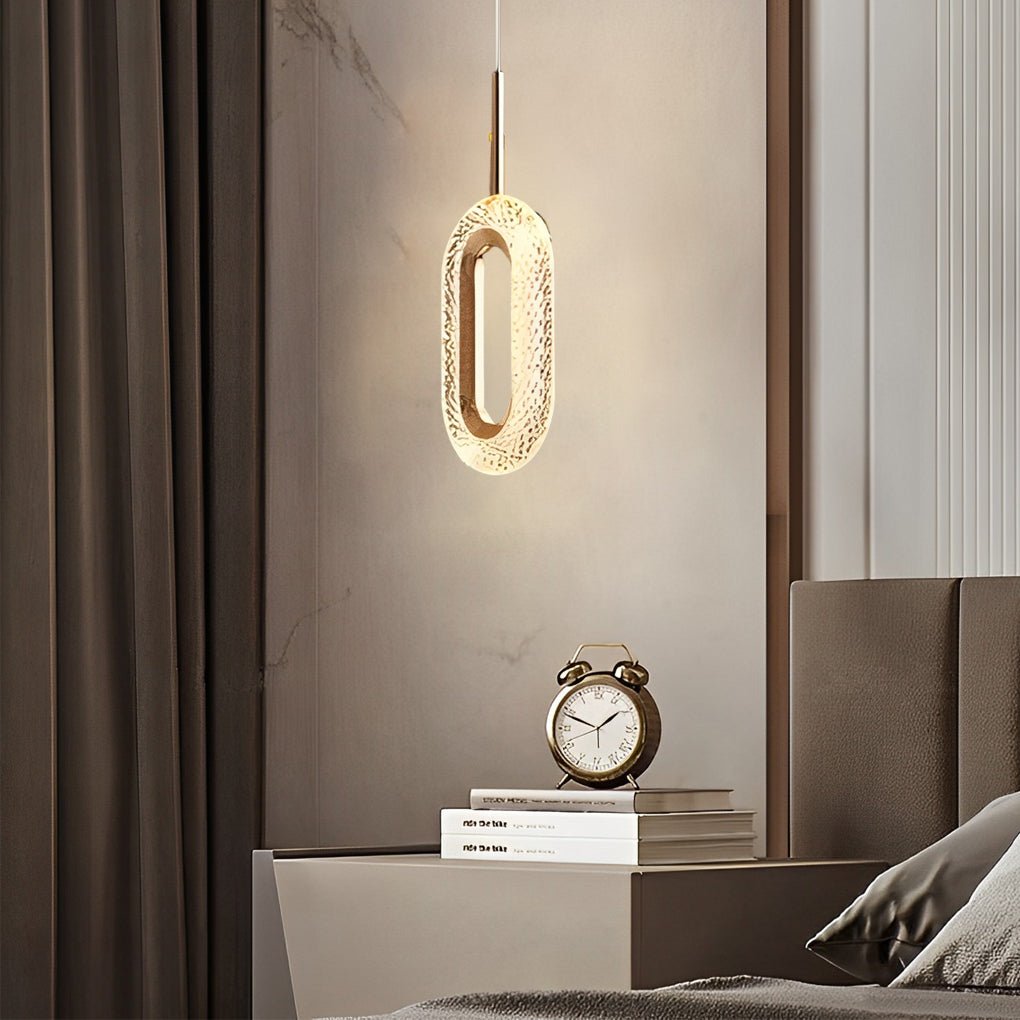
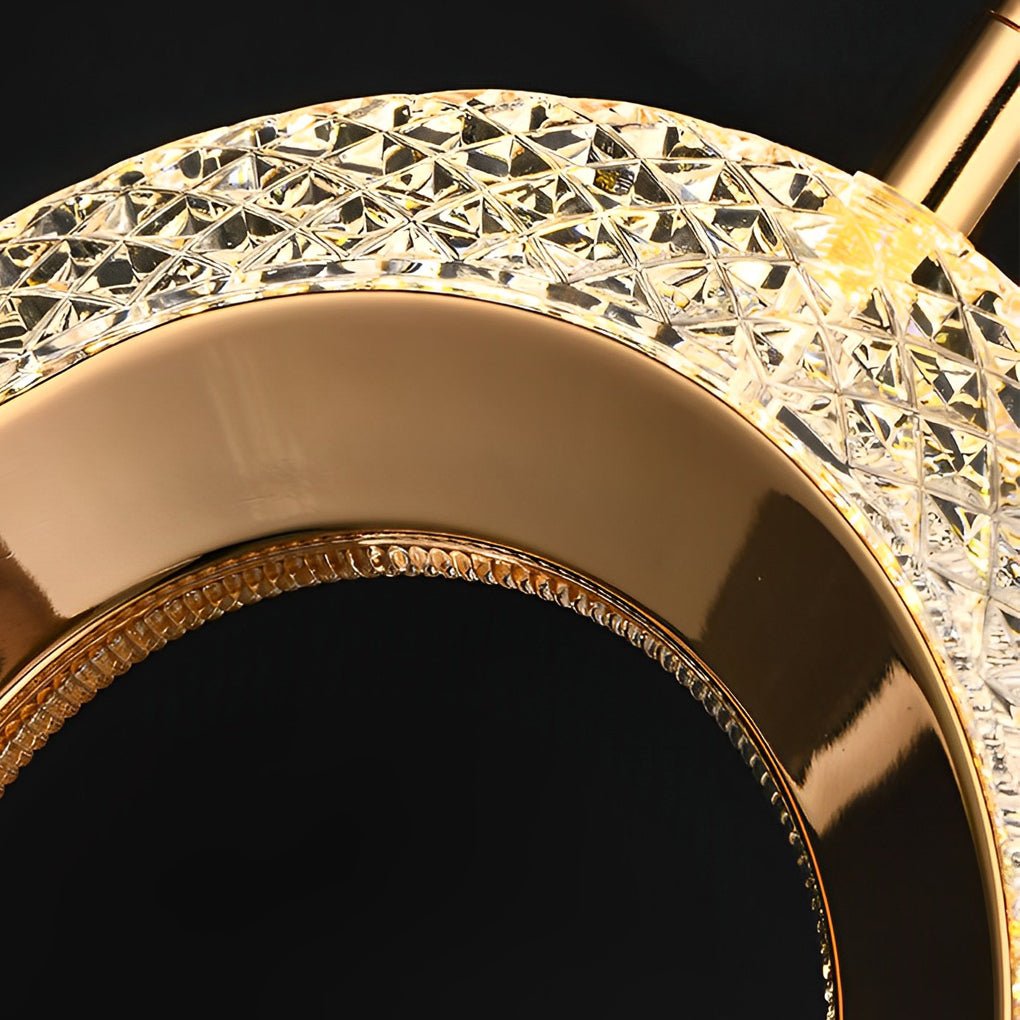
The fixture is a modern gold pendant with an acrylic diffuser over an integrated LED source. The body is aluminum and hardware, which is the combination you want in a hanging fixture: aluminum resists rust and does not add unnecessary weight, and the acrylic shade spreads the LED output so you are not staring at a raw point of light.
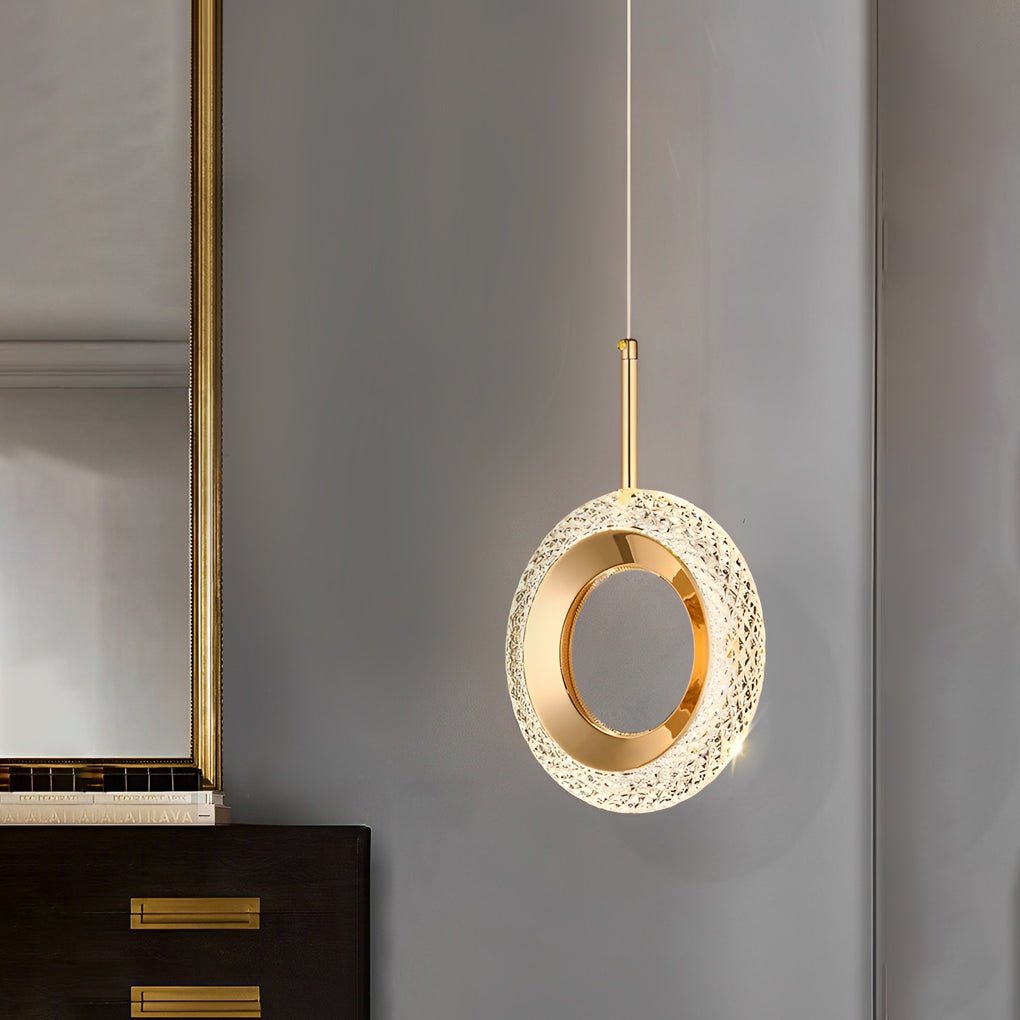
The design language is restrained rather than ornate. Gold is the only finish offered, and the shape does the decorating — an elongated oval, a clean circle, or a cascading water drop silhouette. That is a useful distinction, because gold fixtures often fail by being too busy. Here the metal is a thin frame, so the fixture reads as a light shape first and a gold object second.
Two structural details matter more than the styling:
- Integrated LED. There is no bulb to buy or match. That removes the most common source of disappointment with pendant lighting — a beautiful fixture with a bulb that looks wrong inside it.
- Adjustable cord, 78.7 in (200 cm), across all versions. This is generous. It covers a standard 8 ft ceiling and still leaves room to shorten for a 9–10 ft room or a sloped ceiling installation.
The 3-step dimming explained honestly
This is the part worth reading twice, because the name invites a wrong assumption.
What it does: each flick of the wall switch steps the light color through three settings — 3000K warm white, 4500K neutral white, and 6000K cool white — then cycles back. One switch controls it. No remote, no app, no extra wiring.
What it does not do: it does not lower the light output. The fixture is not compatible with a traditional wall dimmer for brightness control, and the manufacturer states this explicitly. “3-step” refers to three color states, not three brightness levels.
That distinction is genuinely useful in practice, because color temperature often solves the problem people are trying to solve with a dimmer. A 3000K setting over a dining table feels warm and intimate; the same fixture at 6000K in the same room feels clinical. Being able to switch that by walking to the wall switch is a real feature — it is just a different feature than a dimmer.
Where to use each step:
- 3000K — dinner, bedrooms, evening ambient light. The default for anything residential.
- 4500K — neutral. Good for a dining room that doubles as a work table, or a kitchen island used for prep.
- 6000K — cool and crisp. Entryways, stairwells, utility aisles, or anywhere you want the space to read as clean and bright.
One caveat on the switch itself: because the fixture steps on every toggle, a room with two switches on the same circuit can land on an unexpected color. If that bothers you, put this fixture on a single-pole switch.
Pick the right shape and size for your room
All six versions share the same materials, the same LED source, the same 110V hardwired supply, and the same 78.7 in cord. What changes is footprint and weight. The stated illumination area for the line is 54–161 sq ft (5–15 m²), so this is a fixture for a defined zone — a table, an island, a bedside, a hallway — not a whole-room light.
| Version | Dimensions (W × D × H) | Weight | Best fit |
|---|---|---|---|
| Oval, 1-light | 4.7 × — × 13.8 in (11.9 × 35.1 cm) | 3.31 lb (1.5 kg) | Narrow dining nook, side table, tight hallway |
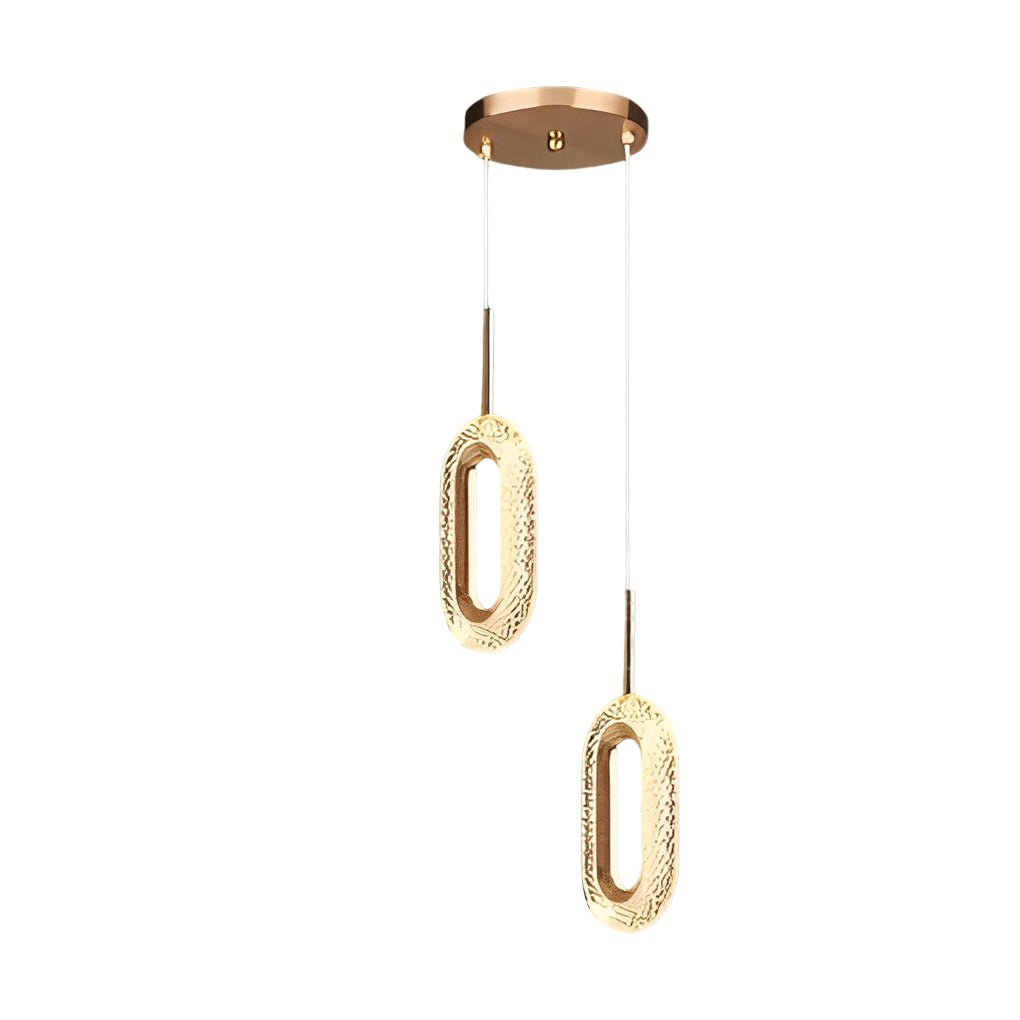
| Oval, 2-light | 9.4 × 5.9 × 14.2 in (23.9 × 15.0 × 36.1 cm) | 6.61 lb (3.0 kg) | Standard dining table, longer island run |
| Round, 1-light | 7.9 × — × 12.2 in (20.1 × 31.0 cm) | 3.31 lb (1.5 kg) | Bedside, reading corner, small entry |
| Round, 2-light | 12.2 × 5.9 × 12.2 in (31.0 × 15.0 × 31.0 cm) | 6.61 lb (3.0 kg) | Square or round dining tables, larger foyers |
| Water drop, 1-light | 5.1 × — × 13.0 in (13.0 × 33.0 cm) | 3.31 lb (1.5 kg) | Bedroom accent, pair flanking a bed |
| Water drop, 2-light | 10.2 × 5.9 × 12.2 in (25.9 × 15.0 × 31.0 cm) | 6.61 lb (3.0 kg) | Dining room centerpiece, vaulted entry |
The practical rule: the one-light versions are vertical and compact — under 5.1 in wide — so they work where a wide fixture would crowd sightlines. The two-light versions add a 5.9 in depth and roughly double the visual mass, which is what you want over a surface that needs light spread rather than a single hotspot.
Every version in the range is listed on one page, so you can compare dimensions directly rather than guessing from photos: browse the gold pendant light collection.
Matching fixture to table: a common guideline is to keep the fixture width at roughly one-half to two-thirds of the table width, and no more. A 36 in wide dining table pairs comfortably with the 12.2 in round two-light or the 10.2 in water drop two-light; the 4.7 in oval one-light over that same table will read as undersized. Over a narrow console or a 24 in bistro table, the one-light versions are the correct choice.
How high to hang it (the numbers that matter)
Height is where most pendant installs go wrong, and it is fully fixable before you drill.
- Over a dining table: bottom of the fixture 30–36 in above the tabletop. Lower end of that range reads more intimate; the upper end is safer if people stand up into it.
- Over a kitchen island: 30–36 in above the counter for the same reason, with the higher end preferred if the island is also a serving surface.
- Bedside: 24–30 in above the nightstand top, hung slightly toward the outer edge of the table so the light falls on the bed rather than behind your shoulder.
- Entryway or stairwell: measure from the floor, not the ceiling — a minimum of 80 in of clear headroom below the fixture, more on a staircase where people are already elevated.
With an 8 ft ceiling and a 30 in dining table, the math usually settles the cord at roughly 20–26 in of visible drop, which leaves plenty of the 78.7 in cord coiled inside the canopy. Trim the cord to your final height, not to a guess — the adjustable design exists so you can set it precisely.
Pairing two or three: over an island or a long table, space pendants 24–30 in apart center to center and keep at least 12 in clear from each end of the surface. If you are using the one-light versions in a row of three, the tight footprints make spacing forgiving; a row of two-light versions is better suited to a single central position or a pair flanking.
Specifications at a glance
- Brand: MiniHouzz Pendant Lights
- Style: Modern, gold finish
- Materials: Aluminum, hardware, acrylic
- Light source: LED, integrated
- Color temperature: 3000K warm white; 3-step cycle 3000K / 4500K / 6000K
- Control: wall switch only — no remote, no brightness adjustment
- Voltage: 110V, hardwired
- Illumination area: 54–161 sq ft (5–15 m²)
- Hanging cord: 78.7 in (200 cm), adjustable, all versions
- Recommended rooms: bedroom, dining room, entrance, aisle
- Compliance listed by the manufacturer: UL Certified, ETL Listed, CE Approved, RoHS Compliant, FCC Certified
Two honest notes. First, dimensions are manual measurements and the manufacturer flags slight variation, so confirm against the physical fixture before you cut ceiling holes for a multi-pendant run. Second, the listing does not state whether the LED module is field-replaceable, so plan on this being a fixture-level unit rather than a bulb-swap item.
Where this fixture makes sense — and where it doesn’t
Strong fit: a dining room or bedroom where the priority is atmosphere and the switch is in easy reach. The 3000K default is the right residential setting, and the 4500K/6000K steps cover the times you need more clarity without adding a second fixture. The gold finish holds up against warm wood, cream plaster, and dark green or navy walls — it is a warm metal, so it flatters warm palettes.
Weaker fit: a room where you genuinely need variable brightness. If your evening routine is “bright for homework, low for dinner,” a fixture with an actual dimmer is the honest answer, and no amount of color-temperature switching fully replaces it. Likewise, a very large open-plan room is outside the stated 161 sq ft coverage — treat this as one light layer among several rather than the only source.
Against the alternatives: compared with a fabric-shade pendant, acrylic and aluminum are easier to dust and do not yellow. Compared with an exposed-bulb fixture, the diffuser cuts glare at eye level, which matters most over a dining table where people sit facing each other. Compared with a chandelier, it delivers a single clean silhouette at a fraction of the visual weight — usually the better call in a room with a low ceiling.
Installation checklist
- Confirm a 110V hardwired supply at the ceiling point. This fixture is not plug-in.
- Switch the circuit off at the breaker, not just at the wall switch.
- Mount the canopy to the junction box, then hang the fixture and set the drop before final tightening.
- Trim the cord to your measured height, leaving a small service loop.
- Set your preferred color step, then note which switch position gives it so the next person knows.
- Wipe the acrylic with a dry microfiber cloth — no solvent cleaners.
FAQ
Does the 3-step dimming change brightness?
No. It changes color temperature between 3000K, 4500K, and 6000K. Brightness stays constant, and the fixture is not compatible with a traditional wall dimmer for output control.
Can I shorten the hanging cord?
Yes. The cord is 78.7 in (200 cm) and adjustable on every version, so you can set the drop for your ceiling height and table.
Is there a remote control?
No. Control is through a standard wall switch — each toggle advances to the next color step.
Which version should I choose for a 36 in dining table?
The 12.2 in round two-light or the 10.2 in water drop two-light. Both sit in the comfortable one-half to two-thirds ratio against a 36 in tabletop. The one-light versions are better suited to narrower surfaces or to pairs.
How many square feet will one fixture light?
The manufacturer states 54–161 sq ft (5–15 m²). In practice, treat the lower end as comfortable ambient lighting for a dining zone and the upper end as the realistic limit for a single fixture.
What voltage does it need?
110V, hardwired. It is designed for standard North American residential supply.
The bottom line
This is a well-specified pendant for the money: aluminum body, acrylic diffuser, integrated LED, a genuinely long adjustable cord, and a gold finish that does its work through silhouette rather than ornament. The one thing to go in clear-eyed about is the control scheme — three color temperatures from a wall switch, not a brightness dimmer. Buy it for a dining room, a bedroom, or an entry where warm ambient light and the option to go neutral or cool covers your actual needs. See the full specification and all six versions here.