
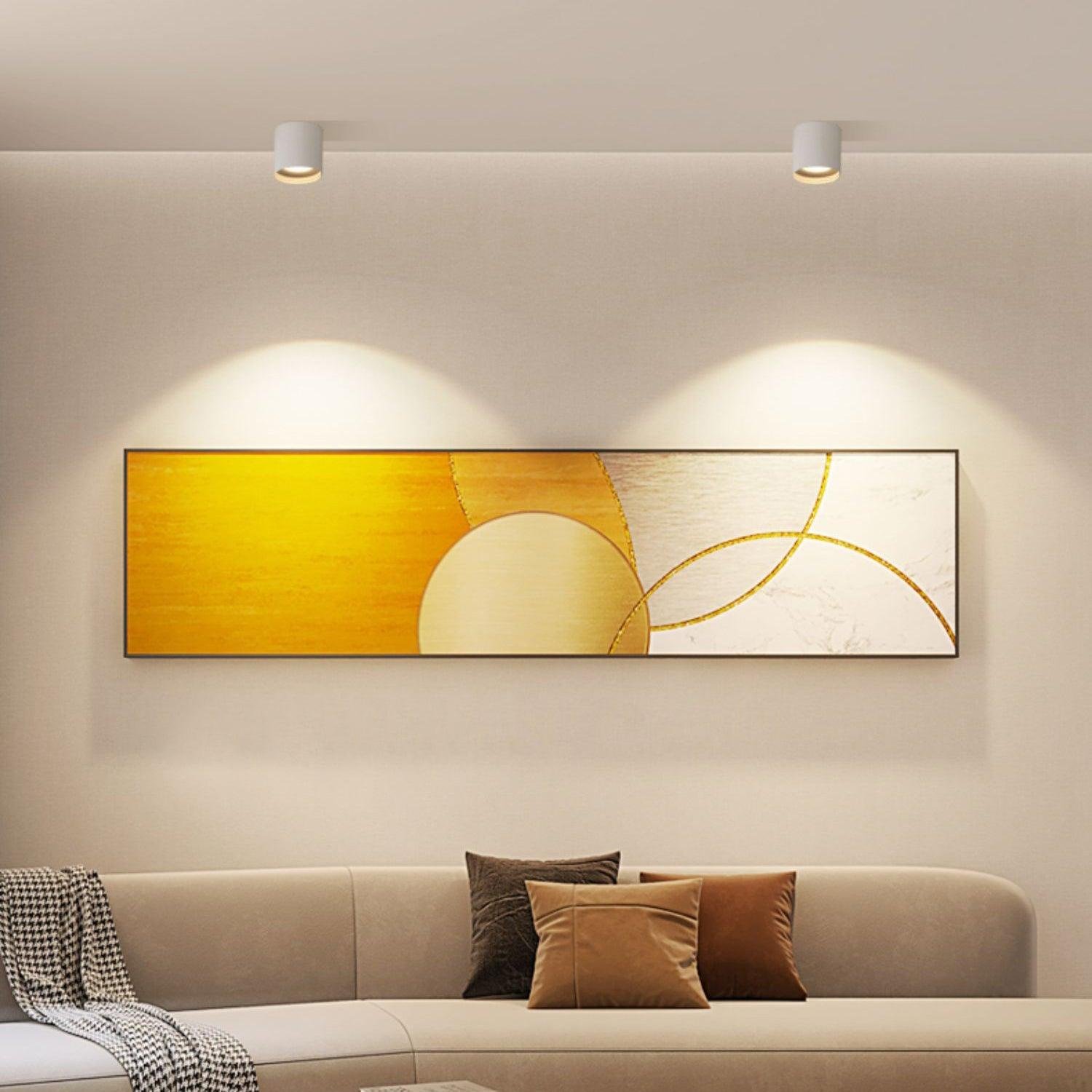
A cylinder ceiling light is a short tube-shaped fixture that mounts flush to the ceiling or the wall and hides its light source behind a flat lens. This one measures 8 cm (3.1″) in diameter and 8.5 cm (3.3″) in height, runs an integrated LED on 110–240V, and is available in white or black aluminum with a clear acrylic shade. Because it sits almost flat against the mounting surface, it suits the places where a pendant or a wide builder-grade flush mount crowds the space: hallways, entryways, stair landings, small bedrooms, and bathrooms. The acrylic lens is set deep inside the body, which is what keeps the output even instead of a bright dot on the ceiling.
What a narrow cylinder does that a wide flush mount doesn’t
Most standard flush mounts are 12 to 15 inches across and about 3 inches deep. They light a hallway adequately, but from below they read as an afterthought — a flat white disc. A cylinder inverts those proportions: small footprint, longer vertical profile, and an extra-deep rim with a subtle ridged accent that throws a fine shadow line. That detail is why it still looks deliberate when the light is switched off, which matters more than most people expect in a hallway you walk through a dozen times a day.
The trade-off is honest: a 3.1-inch lens on an integrated LED is a circulation and accent fixture, not a room-filler. It is the right choice for even light along a path, for framing a doorway, or for layering over ambient light. Where you need broad coverage, you install multiples rather than one bigger unit — see the spacing notes below.
See the Modern Long Cylinder Ceiling Light →
Materials: aluminum body, clear acrylic lens
The body is aluminum and the shade is clear acrylic. Aluminum holds its shape and finish better than stamped steel in interior air that swings between heated and humid, and it is what allows the profile to stay this slim without visible seams. The lens is flat and clear rather than frosted white, so the fixture reads closer to glass than to milky plastic, and the light stays crisp at the edges of the beam.
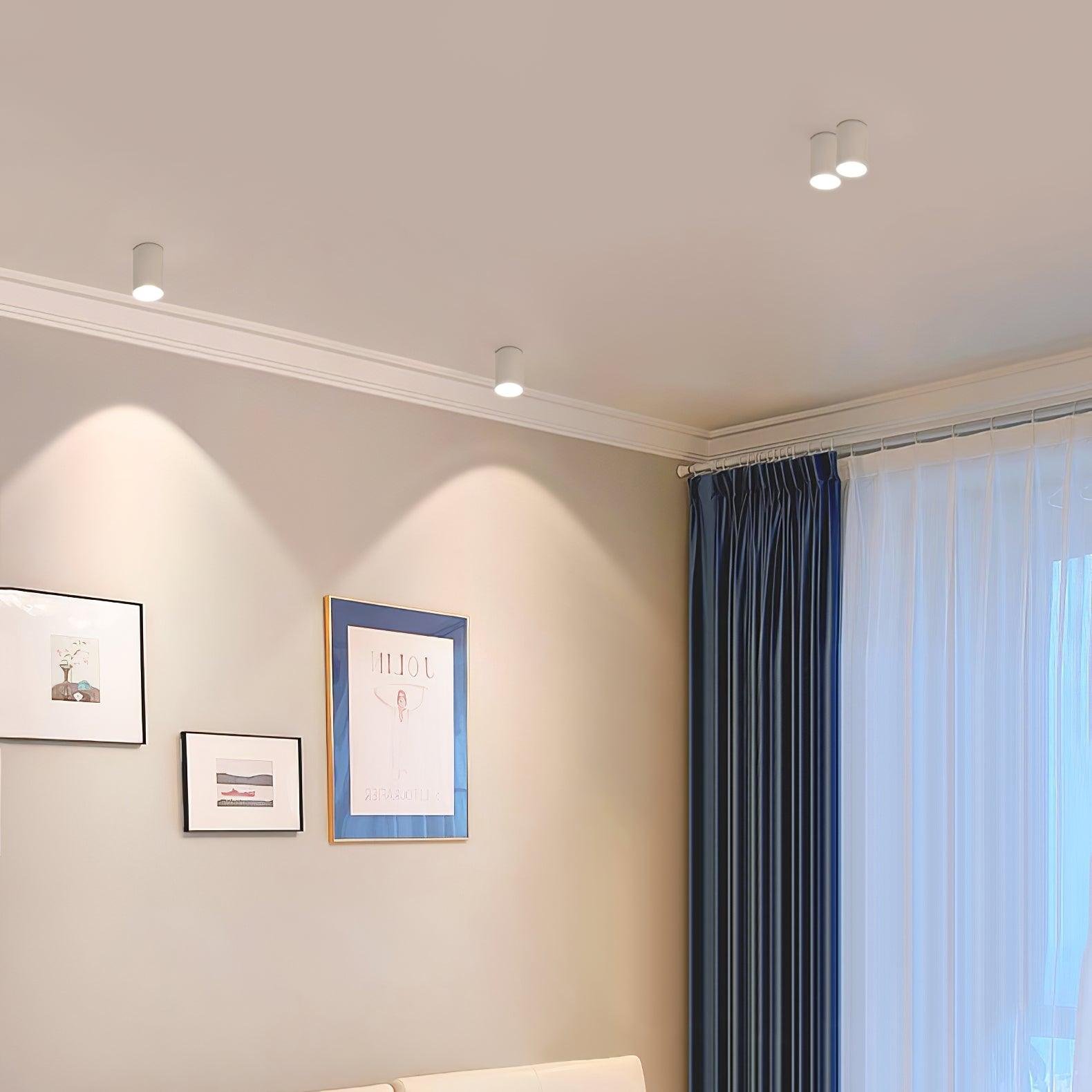
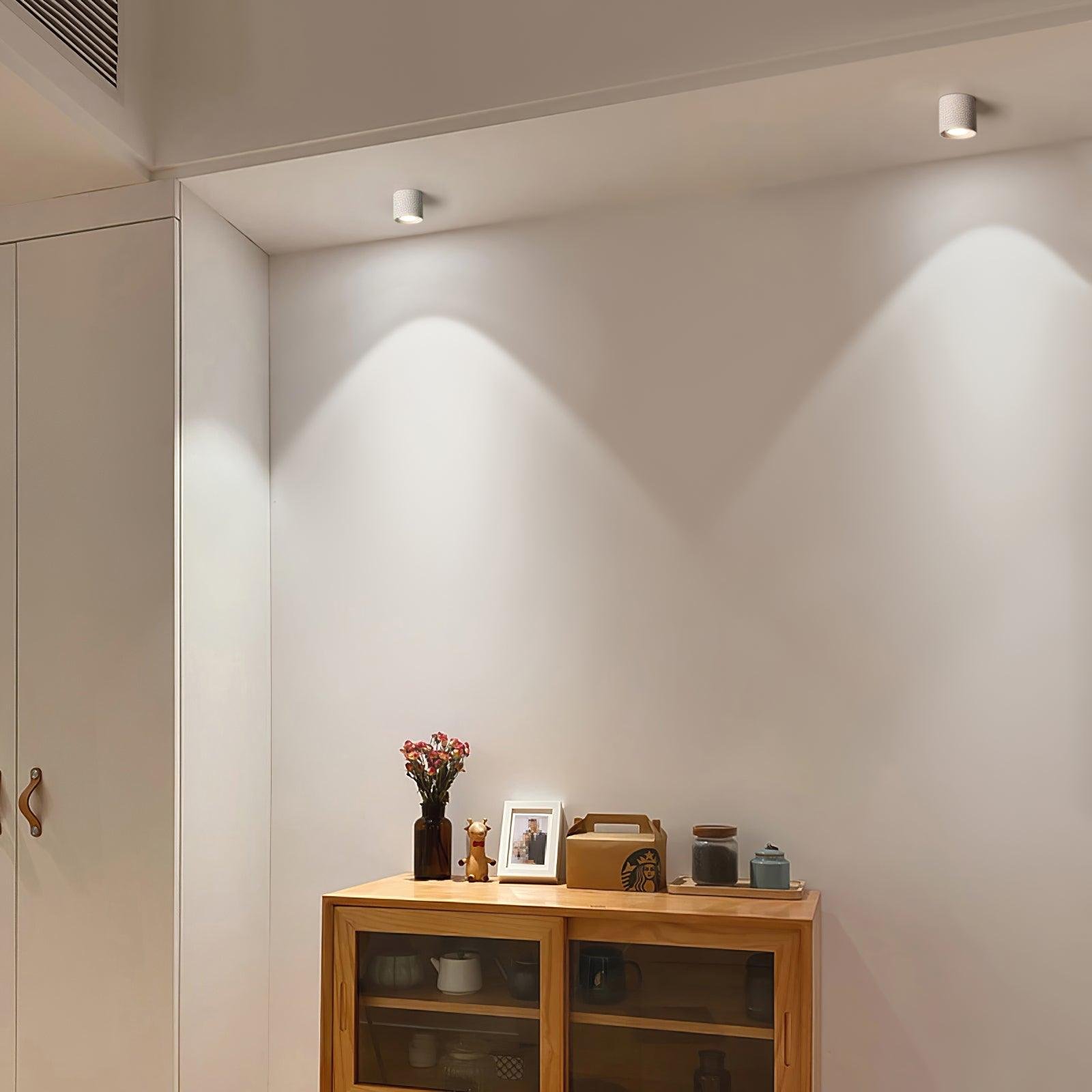
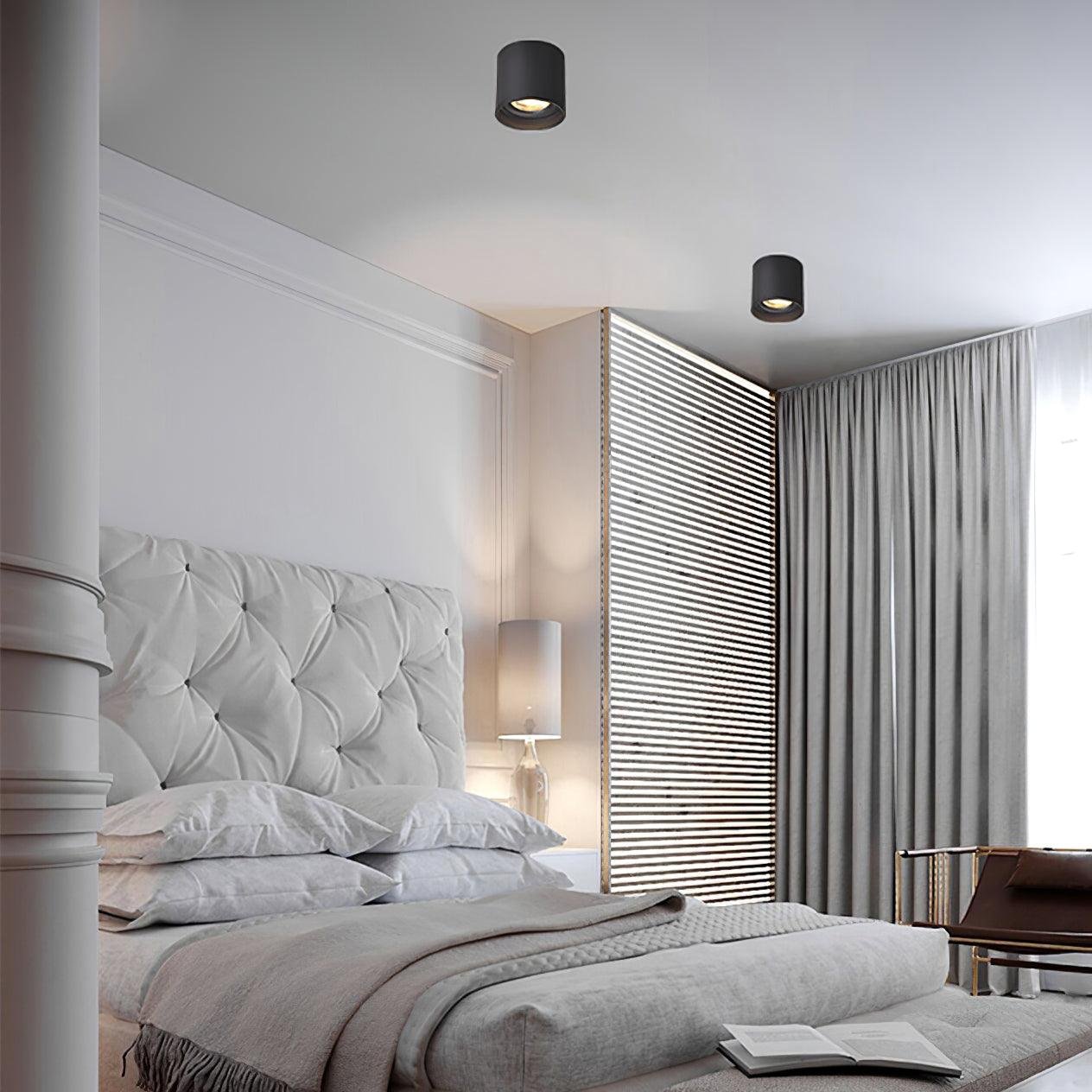
Two finishes are offered, white and black. White disappears into light ceilings and pale walls — the right call in a bright Scandinavian-style hallway where you want the light and not the hardware. Black reads as a deliberate punctuation mark against white plaster, and it holds up visually in industrial and modern-rustic interiors where white fixtures look fussy.
Because the LED is integrated, there is no bulb and no socket. There is nothing to swap and nothing to accidentally over-watt. The manufacturer states the LED is permanently built in and does not require replacement under normal conditions. If you are retrofitting a hallway with a row of mismatched fixtures, that consistency is the point: every unit in the run will render the same color, indefinitely, with no lamp drift. Check current finish and color-temperature options.
Where it works: room by room
Hallways and entryways
This is the fixture’s natural habitat. A long corridor with 8- to 9-foot ceilings benefits from a series of small, evenly spaced sources far more than from two large ones — the light stays flat and consistent along the whole run instead of pooling under each fixture. In an entryway, one centered unit at the door plus one deeper into the space gives you a clear arrival sequence and no dark pocket where you drop your keys.
Bedrooms and small rooms
In a small bedroom or a converted attic room, headroom is the constraint. At 3.3 inches total height, this fixture sits above the sight line and never becomes an obstacle. Choose the warm option here — see the color-temperature section.
Bathrooms
The fixture is rated IP20 and listed by the manufacturer for indoor use, including bathrooms. Treat that as a location guide, not a license: IP20 is not splash-protected, so keep it out of the immediate shower and tub zone and follow your local electrical code for wet and damp locations. Used over a vanity area or in a powder room, it is a clean alternative to a strip light.
Stairs and utility corridors
Stairwells and back corridors are where glare is most annoying, because you look up into the fixture as you climb. The deep-set lens is doing real work here: the light source sits recessed, so you see the illuminated lens rather than the LED itself.
Installation: height, spacing, and wiring
This is a hardwired fixture. It needs a junction box and a wall switch (not included), and it should be installed by a licensed electrician — the wiring itself is not a place to learn on the job. The decisions you actually control are placement and spacing, and those are what determine whether the result looks planned.
Ceiling mount. The fixture hangs about 3.3 inches below the ceiling surface, so plan for at least 6.5 feet of clear height beneath it in circulation areas. Center it on the corridor’s width, not on the nearest joist, and confirm joist or box position before you commit — a 3-inch offset is visible in a narrow hallway.
Wall mount. Used as a small sconce, the usual range is 60 to 72 inches from the finished floor, or aligned to the top of the door trim so the fixture and the opening share a line. Over a vanity, center it on the mirror rather than on the sink. In a stairwell, align all fixtures to the same height on each landing so the eye reads a rhythm instead of a stagger.
Spacing. A practical rule of thumb for small flush fixtures in a corridor is one unit every 6 to 8 feet along the centerline, with the run starting and ending about half that distance from each wall. In a hallway shorter than about 8 feet, a single centered fixture is almost always better than two squeezed in. Measure the run first, then divide — do not buy first and space later.
Switching. The manufacturer lists compatibility with a common wall switch. Dimming is not stated in the published specifications, so if dimming matters to you, confirm with support before ordering rather than assuming.
Specifications at a glance
| Diameter | 8 cm (3.1″) |
| Height | 8.5 cm (3.3″) |
| Material | Aluminum body, clear acrylic shade |
| Light source | Integrated LED (permanently built in, not replaceable) |
| Color temperature | 3000K warm / 4000K neutral / 6000K cool |
| Voltage | AC 110–240V |
| Mounting | Ceiling or wall, hardwired |
| Rating | IP20, indoor use |
| Finishes | White, black |
| Control | Standard wall switch (not included) |
| Listings | UL, ETL, CE, SAA; RoHS and FCC compliant |
Choosing a color temperature: 3000K, 4000K, or 6000K
Color temperature is the one decision buyers most often get wrong, because it is hard to judge from a photo. All three options are offered; pick based on the room’s job, not on the trend.
- 3000K (warm). Closest to traditional incandescent. Best for bedrooms, living areas, and any hallway that connects to a warm-toned room — a warm corridor opening into a cool-lit kitchen looks like two different houses.
- 4000K (neutral). The safe middle for entryways, bathrooms, and hallways where you want visibility without a clinical edge. If you are only buying one fixture and cannot decide, this is the option that rarely disappoints.
- 6000K (cool). Crisp and slightly blue. Good for utility corridors, laundry areas, and modern white-on-white interiors where you want the light to feel architectural. In a bedroom it tends to read cold.
A useful test: match the color temperature of the fixture to the nearest existing light in the same sight line. Consistency between adjacent fixtures is more noticeable than the absolute value you choose.
White or black? A quick decision rule
Choose white if the ceiling is white or off-white and you want the fixture to recede — the standard choice for hallways, rentals, and resale-friendly interiors. Choose black if the ceiling is white but the room has black window frames, dark hardware, or exposed structure to echo; the fixture becomes part of a material story instead of a hole in the ceiling. In a room with dark walls, black disappears and white pops — invert the rule when the wall is the darkest surface in the room.
Whichever you pick, buy the whole run at once. Finish batches can vary slightly, and a corridor with two subtly different whites is a detail you will notice every day.
How many fixtures do you actually need?
- Hallway under 8 ft: one, centered.
- Hallway 8–16 ft: two, spaced evenly, roughly 6–8 ft apart.
- Hallway over 16 ft: three or more, evenly divided — measure the run, divide by the count, then confirm each position has a box or joist.
- Entryway: one at the door, one further in if the space runs deeper than about 8 ft.
- Stairwell: one per landing, aligned vertically.
Multiples of the same fixture beat one larger unit in almost every narrow space: the light is more even, the shadow pattern is more regular, and the hardware reads as a considered installation rather than a single purchase.
Frequently asked questions
Can it be mounted on both the ceiling and the wall?
Yes. The fixture is designed for either surface and is hardwired in both cases. It is compatible with a standard wall switch, which is not included.
Is the LED replaceable?
No — the LED is integrated, permanently built into the fixture. The manufacturer states it does not require replacement under normal conditions. This is normal for slim architectural fixtures; the upside is a seamless lens with no socket or visible lamp.
Which color temperature should I choose for a hallway?
4000K is the safest default for a hallway or entryway, and 3000K if the hallway opens into warm-lit living space. Reserve 6000K for utility corridors and modern white interiors.
Can it be used in a bathroom?
The manufacturer lists bathrooms among its intended spaces and rates the fixture IP20 for indoor use. Since IP20 is not splash-protected, keep it outside the shower and tub zone and follow local code for damp and wet locations.
Does it work with a dimmer?
Dimming is not listed in the published specifications, so it should not be assumed. If dimming is a requirement, confirm with support before ordering.
What do I need before installation?
A junction box at the mounting position, a wall switch, and a licensed electrician. The fixture itself is hardwired and does not include the switch.
The short version
If you need a hallway or entryway fixture that stays out of the way, throws even glare-free light, and looks intentional rather than default, a compact cylinder is the efficient answer. Choose 4000K for circulation space, white to blend or black to accent, and plan the run before you order — spacing is what separates a scheme that works from a row of lights that almost works. The 8 cm by 8.5 cm aluminum body, integrated LED, and UL, ETL, CE, and SAA listings cover the practical requirements; the deep-set acrylic lens is what makes it look better than the price suggests.
Shop the Modern Long Cylinder Ceiling Light — $65.99 →
Need a layout opinion before you buy, custom dimensions, or expedited shipping? The MiniHouzz design team takes requests directly through the product page.