
A glass petal pendant light is a small, sculptural ceiling fixture built from a brass body and hand-stitched glass petals. This one measures 7.9 inches in diameter and 7.9 inches in height — roughly the footprint of a dinner plate — which makes it a natural fit for kitchen islands, breakfast bars, entryways and dining rooms where a full-size chandelier would overwhelm the space. It takes a standard E26 or E27 bulb, hangs from a 59-inch adjustable cable, and is hardwired to a normal wall switch.
If you are weighing it against a bare-bulb pendant or a fabric drum shade, the short answer is this: choose the petal design when you want the fixture itself to read as decoration, and choose a plain shade when you need the light source to disappear. See the full product details and finish options here.
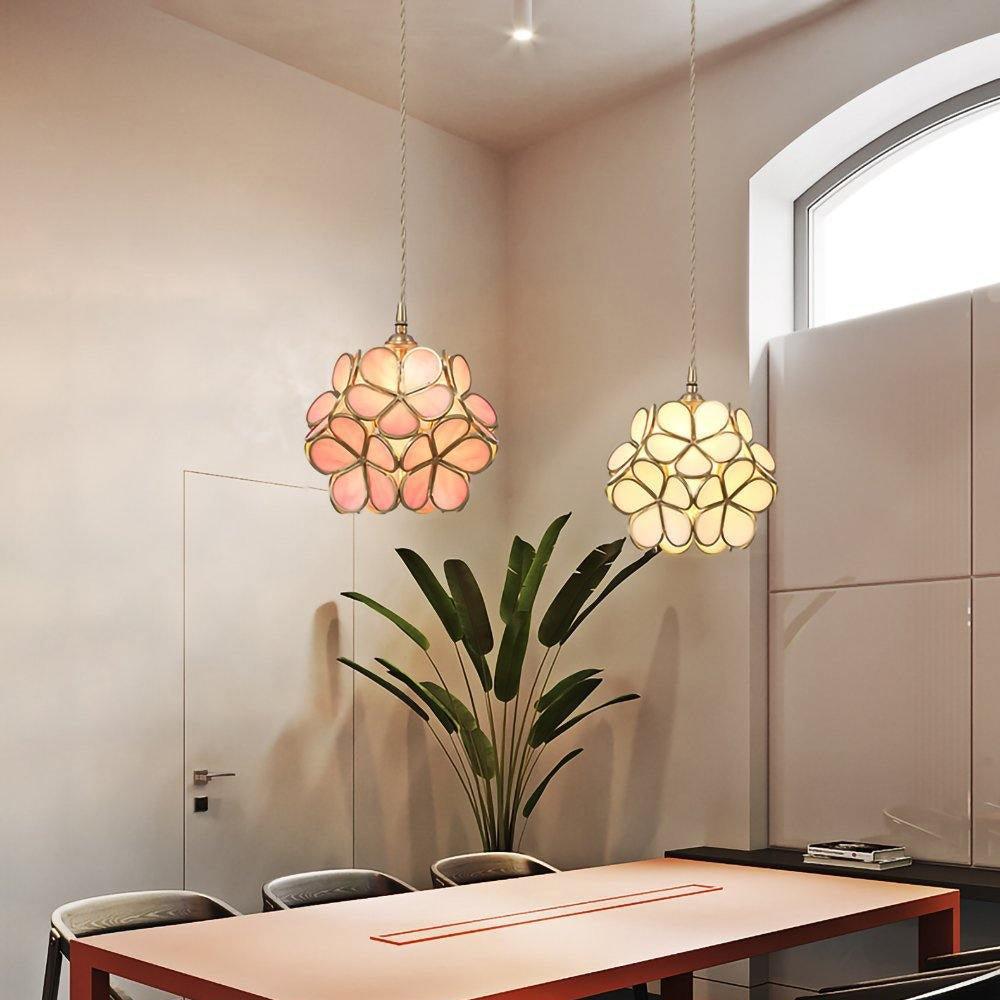
Design and materials: what the glass petals actually do
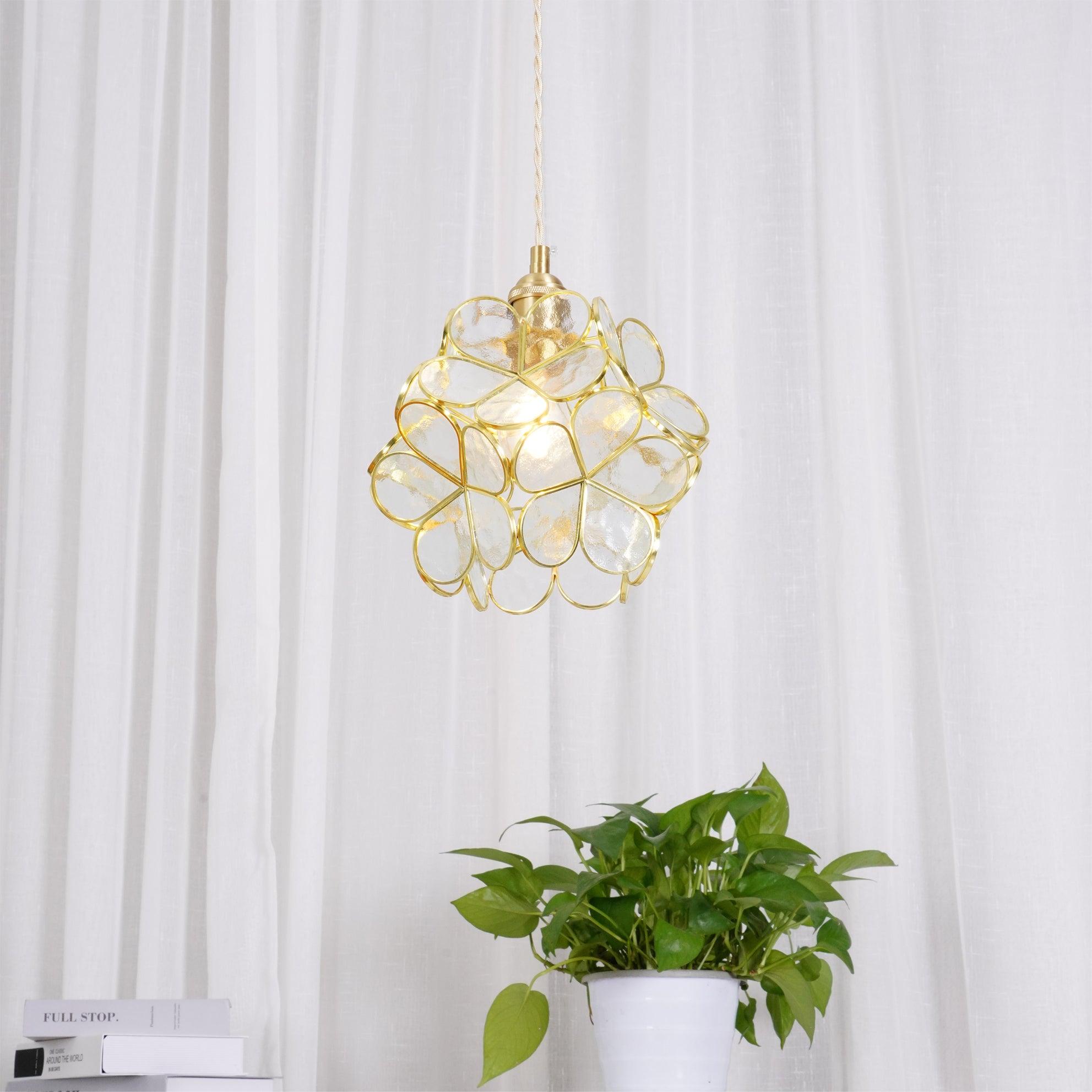
The body is brass and the shade is glass. Each petal is hand-stitched, which is why the silhouette has a slightly irregular, flower-like rhythm rather than the mechanical symmetry of a molded shade. That detail matters in two practical ways.
First, glass throws light differently than fabric or metal. A clear or transparent petal spreads light in visible directions and casts soft caustics on the ceiling and countertop; an opaque white, yellow, blue or pink petal diffuses it into a softer, more even glow. If you want the fixture to act as a focal point, transparent finishes do more of that work. If you want calm, glare-free light over a work surface, an opaque finish is the safer call.
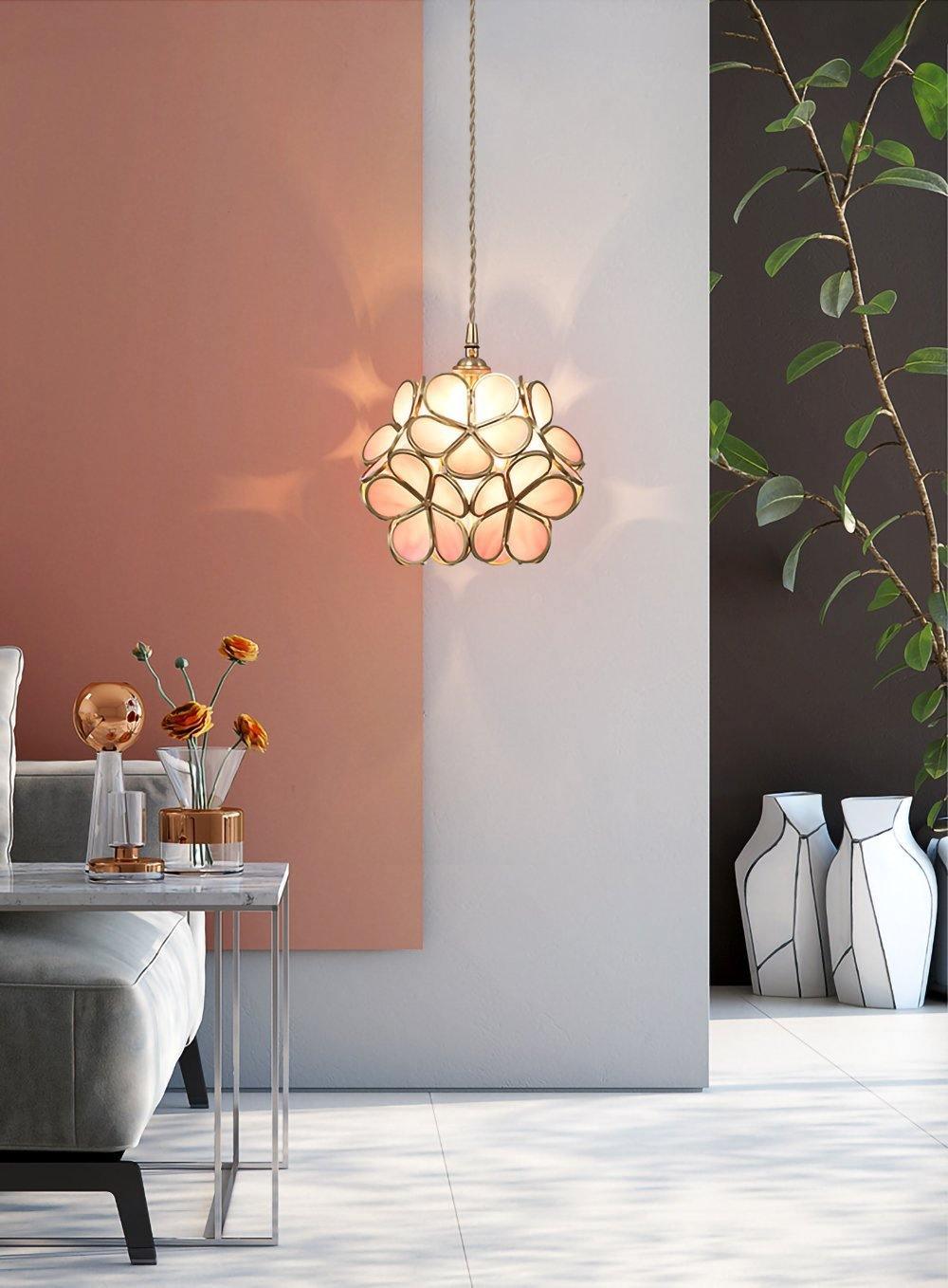
Second, brass ages honestly. Unlacquered brass deepens over time; the fixture is available in a single brass body finish, so the color decision happens in the glass: White, Yellow, Blue, Pink, and three transparent variants (Transparent A, B and C). In a kitchen with warm wood and stone, white or transparent petal glass keeps the palette quiet. In a white-walled entry, a blue or yellow shade gives the room its one deliberate accent.
Where it works — and where it doesn’t
Kitchen island and breakfast bar
At 7.9 inches across, this is a genuinely small pendant, so it is usually installed in pairs or threes rather than alone. Two practical rules of thumb for a kitchen island:
- Hanging height: set the bottom of the shade 30–36 inches above the countertop. If the people using the island are tall, or the room has tall ceilings that make the fixture feel low, go toward 36 inches.
- Spacing: space multiple pendants 24–30 inches apart on center, and leave at least 6 inches between the outer edge of the shade and the edge of the island.
- Count: a 6-foot island generally carries two; an 8-foot island generally carries three. Below about 4 feet of island, one centered fixture reads better than two crowded ones.
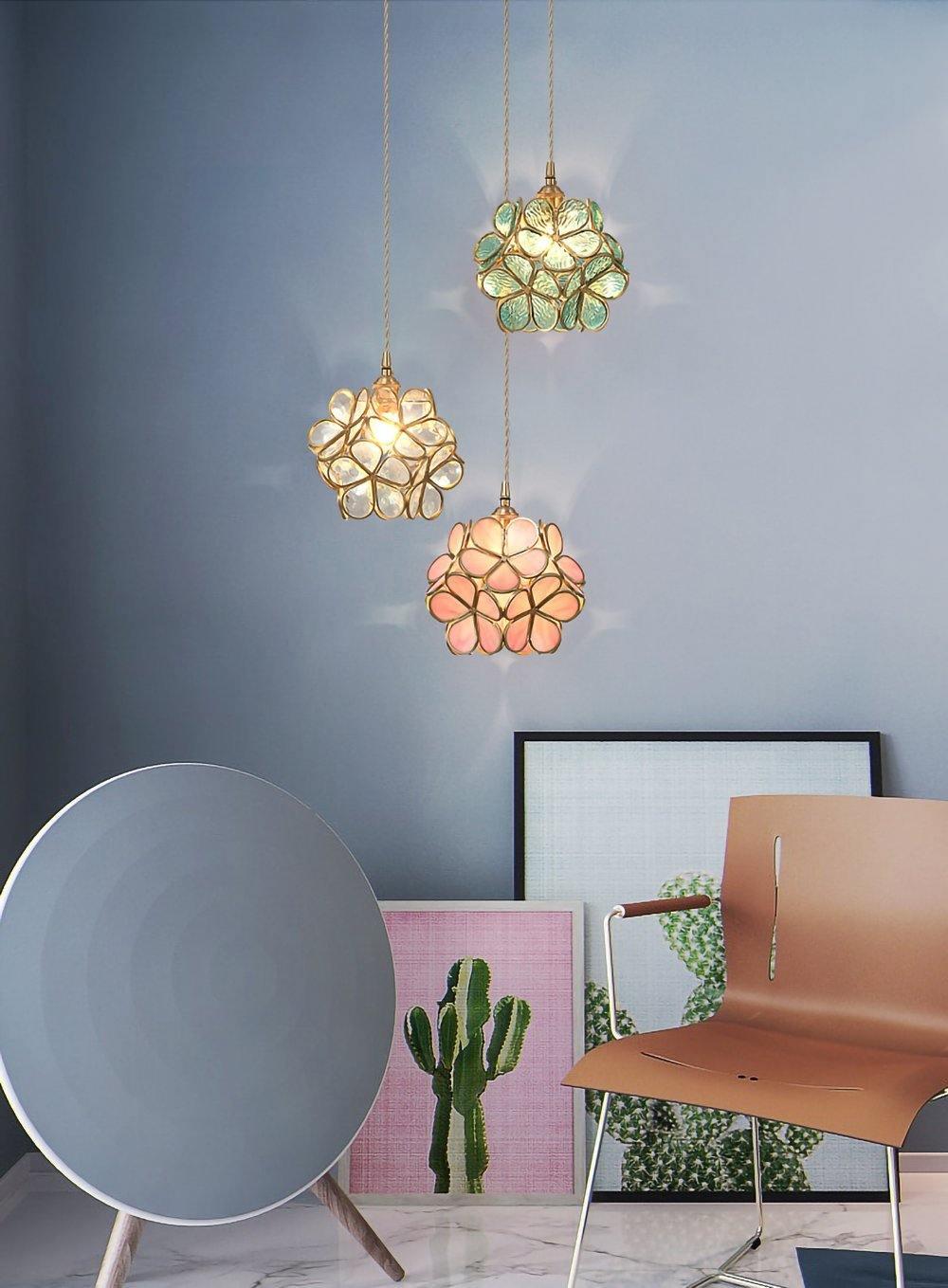
Entryway, foyer and hallway
In an entry, the fixture is usually the first thing a visitor sees, so the height rule changes: keep at least 7 feet of clear space beneath the shade so no one walks into it. On a standard 8-foot ceiling, that leaves under a foot of drop — the 59-inch cable can simply be shortened at installation, which is why the adjustable cable matters more here than in a kitchen.
Dining room and restaurant settings
Over a dining table, hang the shade 30–34 inches above the tabletop. Because the petals expose the bulb from the sides, this is a fixture that looks best when the bulb is a decorative one rather than a plain A-lamp; otherwise the visible bulb competes with the glass.
Where to avoid it
The fixture is rated IP20 and damp-rated for indoor use where it cannot be exposed to moisture. It is not the right choice for a shower, above a bathtub, in a covered but wet outdoor porch, or anywhere steam and spray reach the glass. For those locations, look for a wet-rated outdoor fixture instead.
Specifications
| Dimensions | ⌀ 7.9″ × H 7.9″ (20 cm × 20 cm) |
| Materials | Brass body, glass petals (hand-stitched) |
| Shade finishes | White, Yellow, Blue, Pink, Transparent A / B / C |
| Bulb | LED or Edison bulb, E26 / E27 base (bulb not included) |
| Voltage | AC 110–240V |
| Cable | 59″ (149.9 cm), adjustable, can be lengthened as required |
| Mounting | Ceiling mount, hardwired, standard wall switch (switch not included) |
| Rating | IP20, damp-rated, indoor use |
| Certification | UL, ETL, CE and SAA listed; RoHS compliant; FCC certified |
| In the box | Fixture with screw hardware for installation |
Bulb and color temperature guidance
The fixture does not ship with a bulb, and because the glass is transparent or translucent in places, bulb choice is visible. Three practical combinations:
- Warm and residential (2700K–3000K): the default for a dining room or bedroom-adjacent hallway. It flatters brass and keeps glass from looking clinical.
- Neutral task light (3500K–4000K): reasonable over a kitchen island where the pendant contributes to work-surface light. Above 4000K, brass starts to look cooler and the glass can read gray.
- Decorative filament (Edison-style): best if the bulb is visible through the petals. Choose an LED filament version so the output stays in a reasonable range.
If you are matching several pendants on one switch, use identical bulbs across all of them — mixing wattages or color temperatures across a row is the most common reason a multi-pendant installation looks unfinished.
Installation checklist
- Confirm the ceiling box is rated for a fixture of this weight and is on a switch you actually use.
- Decide the finished drop before wiring: countertop height plus 30–36 inches for an island; floor plus 7 feet of clearance for an entry.
- Trim the cable to length, then lock the adjustment before hanging the shade.
- Use the included screw hardware; the fixture is hardwired, so plan for a wall switch rather than a pull chain.
- Install the bulb last, once the fixture is hung — glass petals are easier to handle without a bulb in the way.
How it compares
Against a metal dome pendant, this fixture trades downward task light for decorative ambient light. Against a fabric drum shade, it gives you a smaller footprint and a much more visible material story, but less diffusion — you will see the bulb. Against a large chandelier over an island, it wins on scale: at under 8 inches wide, it suits narrow islands and low ceilings where a chandelier would crowd the room. Check current pricing and finishes before you settle on a quantity, since multi-pendant rows are the usual way this fixture is used.
Frequently asked questions
What size room is this pendant light best for?
Because the shade is 7.9 inches in diameter and 7.9 inches tall, it suits small to medium spaces — kitchen islands, breakfast bars, entries, powder-adjacent hallways and dining rooms — and it is typically installed in multiples rather than as a single large centerpiece.
Can it be used in a bathroom or outdoors?
No. It is IP20 and damp-rated for indoor use where it cannot be exposed to moisture. Bathrooms with showers, uncovered porches and any exterior location call for a wet-rated fixture instead.
What bulb should I buy?
Any LED or Edison-style bulb with an E26 or E27 base. The fixture runs on AC 110–240V, so standard US bulbs work. For a warm residential look, 2700K–3000K is the safest starting point.
Can I shorten the hanging height?
Yes. The cable is 59 inches (149.9 cm) and adjustable, and it can be lengthened as required. On an 8-foot ceiling in an entry, you will usually shorten it so there is at least 7 feet of clearance below the shade.
How many do I need over an island?
As a working rule: two for a 6-foot island, three for an 8-foot island, spaced 24–30 inches apart on center and hung 30–36 inches above the countertop. Anything under about 4 feet of island generally looks better with one centered fixture.
Shop the Glass Petal Pendant Light — brass body, hand-stitched glass petals, seven glass finishes, E26/E27 socket, 59-inch adjustable cable, UL / ETL / CE / SAA listed.