
A nautical outdoor wall sconce is a wall-mounted exterior light built like a ship’s bulkhead fixture: a metal frame, a glass shade, and an enclosure that keeps the bulb behind glass instead of exposing it. If you are choosing one for a porch, patio, garage wall or coastal facade, the practical answer is this — pick the silhouette by the wall area you are lighting, mount the center of the fixture at roughly eye level beside a door or just above the door frame, and pair it with a warm LED bulb around 2700–3000K. The rest is detail.
This guide walks through the fixture itself, how the ten available silhouettes differ, where to mount them, which bulb to use, and what to confirm before you order.
Design and materials: why the enclosure matters
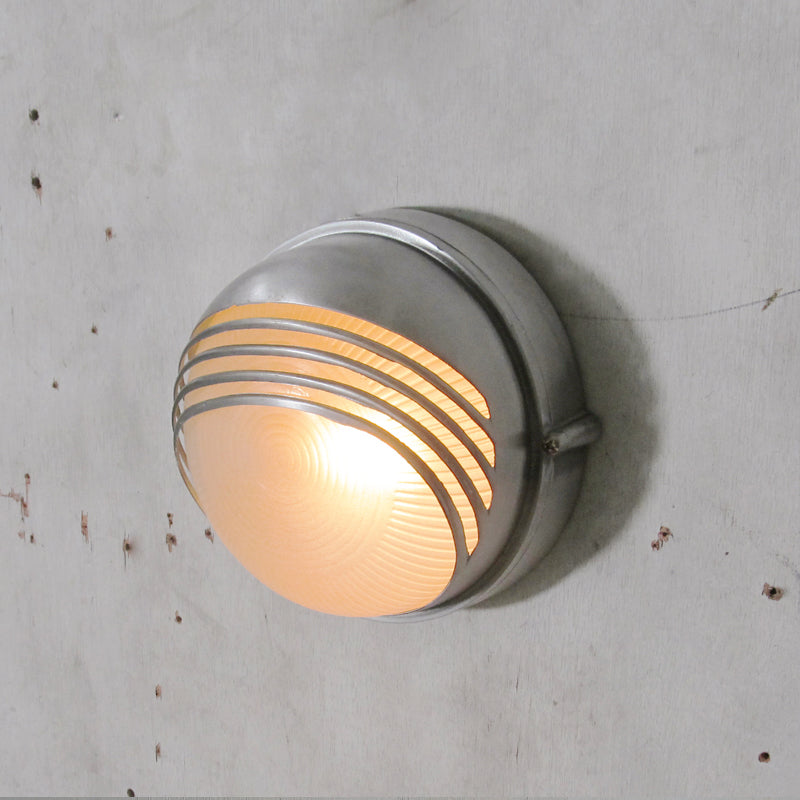
The body is aluminum and the shade is glass. Both are specified in the product details, and both matter for an exterior fixture: aluminum is the structural frame that carries the mount and the socket, while the glass is the diffuser. Because the fixture is fully enclosed, the bulb sits behind glass rather than hanging in open air.
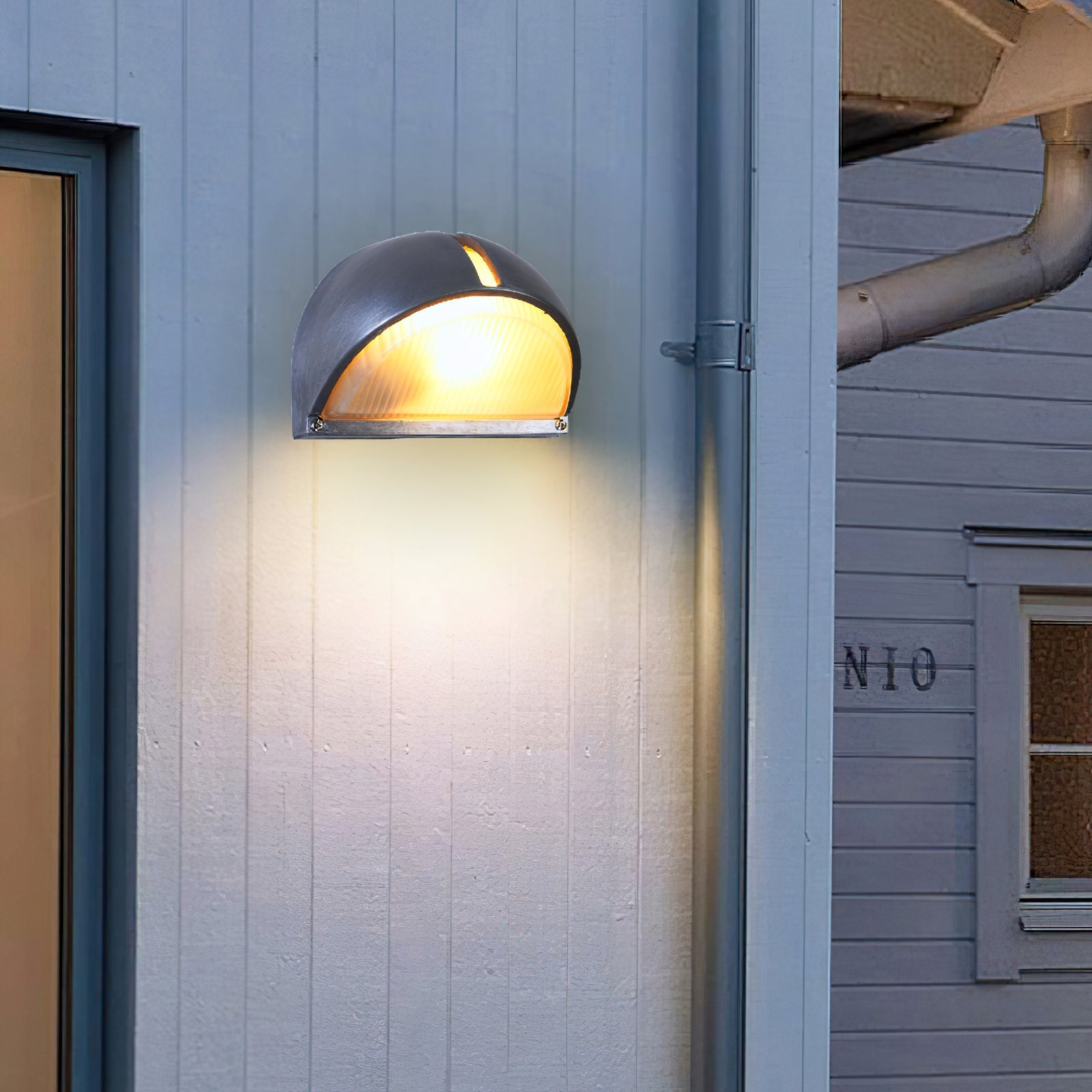
That single design decision changes the light. A fully enclosed glass shade softens output into diffused light, so you get an even wash on the wall and less of a hot spot than an open cage fixture produces. It also means the lamp is physically shielded from direct rain exposure by the glass and frame, which is exactly what the bulkhead form was originally developed for on ships.
The styling is deliberately restrained. There is a top brow accent over the glass and a centered metal accent strip across the face — two details that read as maritime without tipping into theme-park. Against painted siding, brick, stucco or board-and-batten, that restraint is what lets the fixture sit comfortably on a transitional house as well as a coastal one.
Aluminum frame, glass shade — the practical trade-offs
An aluminum body is a sensible choice for exterior walls because it does not carry the rust risk of a steel frame left unpainted outdoors. It is not a maintenance-free material — no exterior metal is — but it holds finish well and keeps the fixture’s weight reasonable, which matters when you are mounting into siding rather than masonry.
Glass gives you the diffused look, but it is a surface you will want to wipe down a few times a year, particularly on a coastal wall where salt film dulls output faster than inland dust does. The color options include metallic finishes, white and black, plus an opaque glass option. If the fixture faces salt spray or heavy weather, an opaque glass shade reduces visible buildup on the interior of the diffuser and produces a softer, more uniform glow than clear glass.
Choosing among the ten silhouettes
Every style in this collection shares the same marine vocabulary and the same E26/E27 socket. What changes is proportion — and proportion is what decides whether the fixture looks scaled to the wall or lost on it.
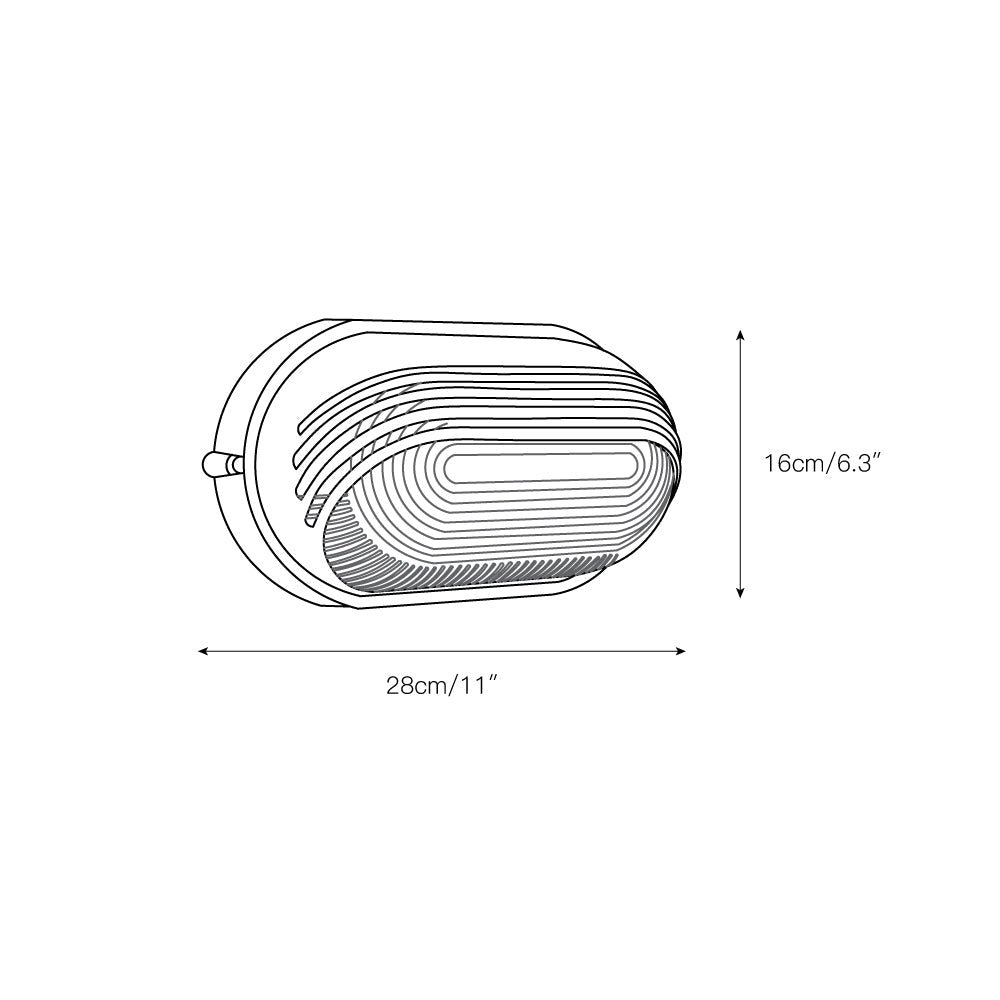
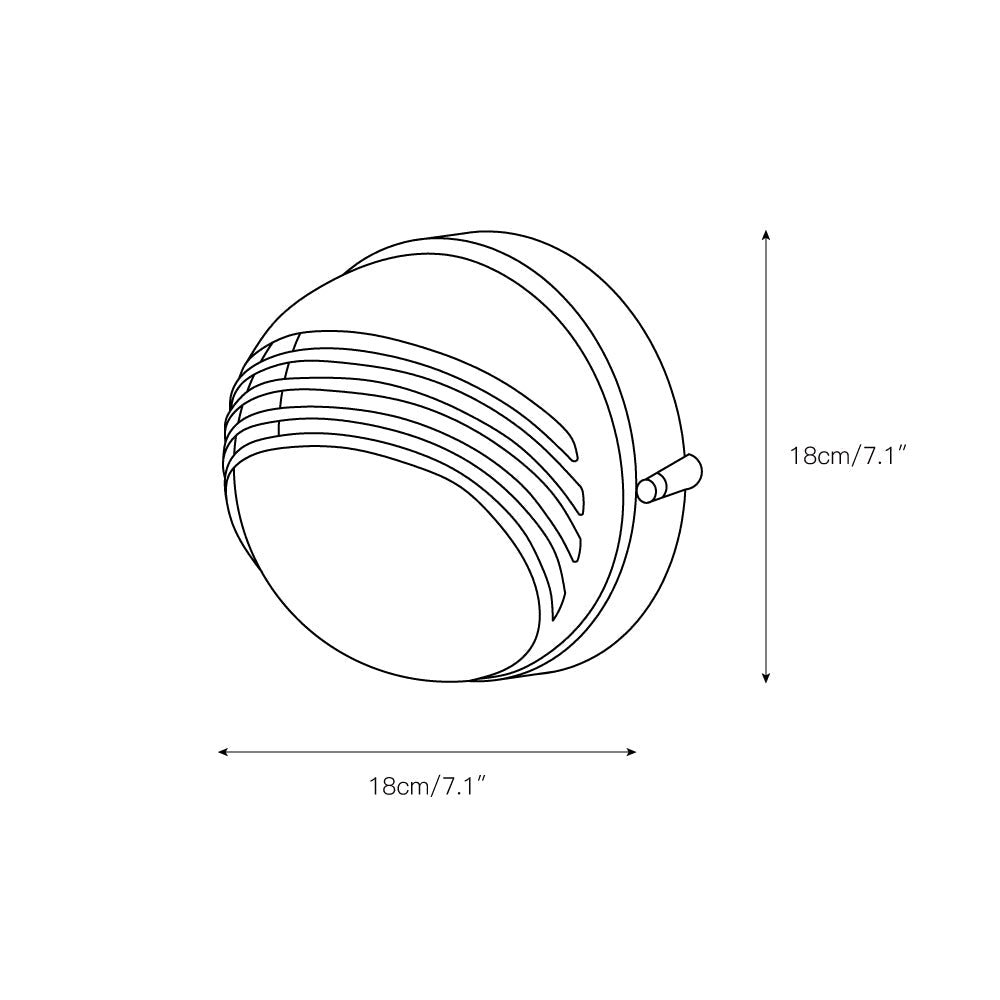
The range runs from compact squares at 18cm × 10cm × 18cm (7.1″ × 3.9″ × 7.1″) up to taller rectangular forms at 16cm × 9cm × 25cm (6.3″ × 3.5″ × 9.8″). The wider horizontal bodies sit at 25cm to 28cm long (about 9.8″ to 11″), and those are the ones that suit a broad blank wall or a pair flanking a garage door.
As a working rule:
- Compact square bodies (around 18 × 10 × 18 cm) — single doors, narrow sidelight walls, powder rooms with an exterior wall.
- Tall narrow bodies (around 16 × 9 × 25 cm) — beside a tall front door, between windows where width is tight but height is available.
- Wide horizontal bodies (25–28 cm long) — garage walls, patios, long facades where fixtures are spaced in a row.
Sizing principle: a wall sconce beside a door should read as roughly one-quarter to one-third the height of the door itself. Below that it looks undersized; well above it, the fixture starts to dominate the entry.
Where to mount it: heights, spacing and layout
Mounting height is where most exterior sconce installs go wrong, and it is easy to get right if you work from the fixture’s center rather than its top edge.
Beside an entry door
Center the fixture at about 66–70 inches (168–178 cm) above the walking surface. That puts the light at eye level for most adults, which is where it flatters faces and avoids glare into the eyes of someone approaching. On a taller door with transom, you can push toward the upper end of that range; on a low porch ceiling, stay at the lower end.
Above a door
If you have only one fixture rather than a pair, mount it above the door with the center roughly 6–8 inches (15–20 cm) above the door frame, or centered in the space between the door head and the porch ceiling — provided that gap is at least about 12 inches. A wide body works better here than a tall one, because the horizontal proportions fill the gap instead of stretching it.
Do not mount a sconce directly above a door if the porch ceiling is closer than about 30 inches to the door head; the fixture ends up crowding the trim.
Rows and spacing
For a run of fixtures along a facade or patio wall, space centers about 8–10 feet (2.5–3 m) apart. That interval keeps pools of light overlapping at the wall while leaving enough dark between them that the rhythm reads as intentional rather than as a runway. If the wall is very long, increase the count rather than the spacing — gaps beyond about 10 feet start to look like dead zones at night.
Patio and covered outdoor space
On a covered patio, mount the fixture on the wall or post at 66–72 inches and check that no ceiling fan blade or beam sits within about 24 inches of the glass. With a fully enclosed shade the light spreads rather than throws, so these fixtures work best as ambient wash on the wall — not as task lighting over a grill or a step.
Bulbs: what to put in an E26/E27 socket
The socket is E26 or E27, and bulbs are not included. That is standard, and it is also an advantage: the fixture’s final character is decided by the bulb you choose rather than fixed at the factory.
A few practical guidelines for an enclosed exterior fixture:
- Color temperature: 2700–3000K for a warm, residential feel that matches most entry and porch lighting. 3500–4000K reads cooler and cleaner, which suits modern facades and white siding.
- Output: an LED rated around 450–800 lumens per fixture is usually enough beside a door. For a row along a facade, small and many beats bright and few.
- Shape: because the bulb sits behind glass inside a compact enclosure, a standard A-shape LED or a small globe usually fits more comfortably than an oversized decorative bulb. Check the interior clearance against your chosen style before ordering a large-format lamp.
- Heat: an enclosed glass shade traps some heat, so LED is the sensible default over incandescent for long evening run times.
- Dimming: if the fixtures will run on a dimmer, confirm the bulb is rated dimmable and that the dimmer is compatible with it. The fixture itself is a socket and a shade — the dimming behavior comes from the bulb and switch.
Specifications at a glance
| Specification | Detail |
|---|---|
| Body material | Aluminum |
| Shade material | Glass |
| Socket | E26 or E27 |
| Bulbs | Not included |
| Mounting | Wall-mounted, flush to wall |
| Color options | Metallic finishes, white, black, opaque glass |
| Style A / G / J | 25 × 9 × 16 cm (9.8″ × 3.5″ × 6.3″) |
| Style B / C | 28 × 10 × 16 cm (11″ × 3.9″ × 6.3″) |
| Style D / H | 18 × 10 × 18 cm (7.1″ × 3.9″ × 7.1″) |
| Style E | 22 × 10 × 15 cm (8.7″ × 3.9″ × 5.9″) |
| Style F / I | 16 × 9 × 25 cm (6.3″ × 3.5″ × 9.8″) |
| Compliance listed | UL Certified, ETL Listed, CE Approved, RoHS Compliant, FCC Certified |
| SKU | RDW-155829 |
One note on dimensions: these are manual measurements, so expect slight variation between units and between styles with the same nominal size. If the fixture has to fit a tight recess or between shutters, measure the actual gap and leave a margin rather than ordering to the exact millimeter.
Bulkhead sconce vs. open cage lantern
Both are classic exterior choices, and the decision comes down to how you want the light to behave.
| Enclosed bulkhead sconce | Open cage lantern | |
|---|---|---|
| Light character | Diffused, even wall wash | Directional, more contrast and shadow |
| Bulb protection | Shielded by glass and frame | Exposed, relies on bulb rating |
| Upkeep | Wipe glass occasionally | Dust and insect buildup inside the cage |
| Visual weight | Solid, architectural | Lighter, more decorative |
| Best for | Coastal and transitional facades, patio walls, tight sightlines | Formal entries, large porches with exaggerated scale |
If your house already has heavy trim, shutters and layered detail, the calm surface of an enclosed glass shade keeps the facade from getting busy. If it is a plain wall that needs a focal point, an open lantern earns its place. On a coastal wall specifically, the enclosed form is the lower-maintenance answer.
Before you order: a short checklist
- Measure the wall area — height available above the door, width between shutters or windows, and the drop to the porch ceiling.
- Pick the silhouette for that space — compact square for tight walls, tall narrow for vertical gaps, wide horizontal for broad walls and garage elevations.
- Count the fixtures — one centered above the door, or a symmetric pair beside it. Avoid mixing a pair of different sizes on the same door.
- Confirm your electrical box — the fixture mounts flush to the wall, so check that an existing junction box is present and reachable at your intended mounting height.
- Choose the finish against the wall color — black reads crisp on white and stucco, white disappears into pale siding, metallic finishes add depth on brick and dark cladding.
- Order bulbs at the same time — E26/E27, LED, 2700–3000K, dimmable only if the circuit is.
- Match heights across the facade — measure from the ground, not from the door head, so fixtures on different walls still align.
You can see every silhouette, finish and price for this fixture on the nautical outdoor wall sconce product page, and compare sizes side by side before committing to a layout.
Frequently asked questions
Is this sconce suitable for coastal or marine environments?
The body is aluminum with a glass shade, and the nautical bulkhead form is designed for exterior use, which makes it a reasonable fit for coastal homes, dockside settings and facades that want a maritime reference. Aluminum avoids the rust risk of bare steel outdoors. It is still an exterior metal fixture, so expect routine cleaning of the glass in salt air.
What is the difference between the style options?
Each style is a different silhouette and proportion — from compact squares around 18cm on each face to taller rectangular forms at 25cm high and wide horizontal bodies up to 28cm long. They share the same marine aesthetic, top brow accent and centered metal strip, so you can match scale to the wall instead of compromising on look.
What type of bulb does it take?
An E26 or E27 socket, with bulbs not included. That lets you set brightness and color temperature yourself; 2700–3000K LED in the 450–800 lumen range is a sensible starting point for entry lighting.
Can I use it on a patio or covered porch?
Yes — a wall or post mount at 66–72 inches works well under a porch roof or patio wall, used as ambient wash rather than task light. Keep the glass clear of ceiling fans and beams by about 24 inches.
Will the light be harsh?
No. The fully enclosed glass shade diffuses the bulb, so output spreads across the wall rather than throwing a hard beam. At night that reads as a soft glow with a visible, evenly lit shade.
Questions about dimensions, finish matching for a specific facade, or a multi-fixture layout along a wall? The MiniHouzz team handles sizing and layout advice — start from the product page and reach out with your wall measurements.
Shop the fixture: Nautical Outdoor Wall Sconce — enclosed bulkhead light with glass shade, available in ten silhouettes and multiple finishes from $135.