
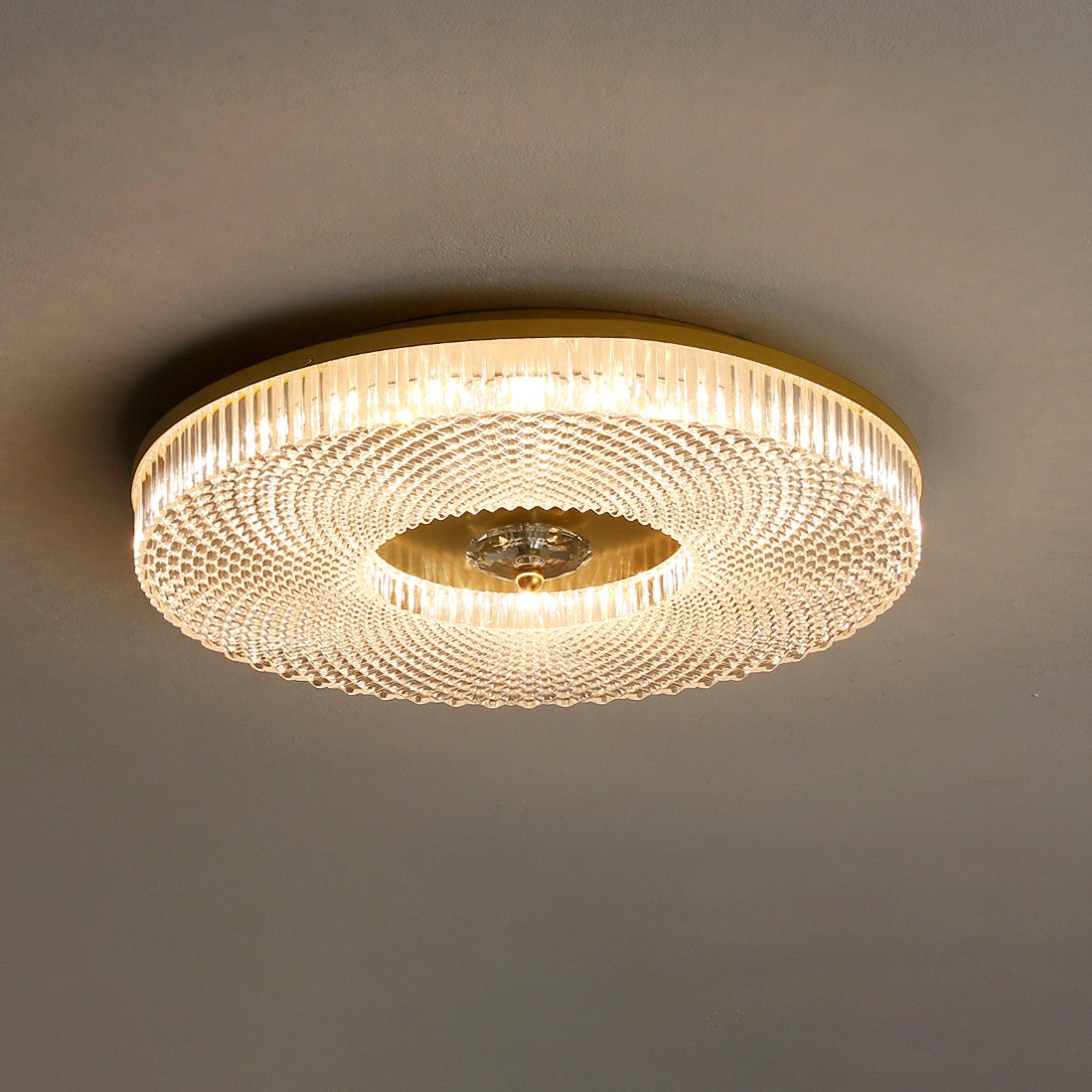
A low-profile LED flush mount ceiling light is the right answer for rooms with standard 8–9 ft ceilings: it delivers even, glare-controlled light without a pendant dropping into the sightline. The Minihouzz round metal-and-acrylic fixture stands only 2.7 in tall in both sizes, runs on an integrated LED engine, and comes in black, white, or gold — which is precisely the combination bedrooms, hallways, and other circulation spaces need, where headroom and clean lines matter more than decorative drama.
See the Minihouzz LED flush mount ceiling light →
What a Flush Mount Actually Solves
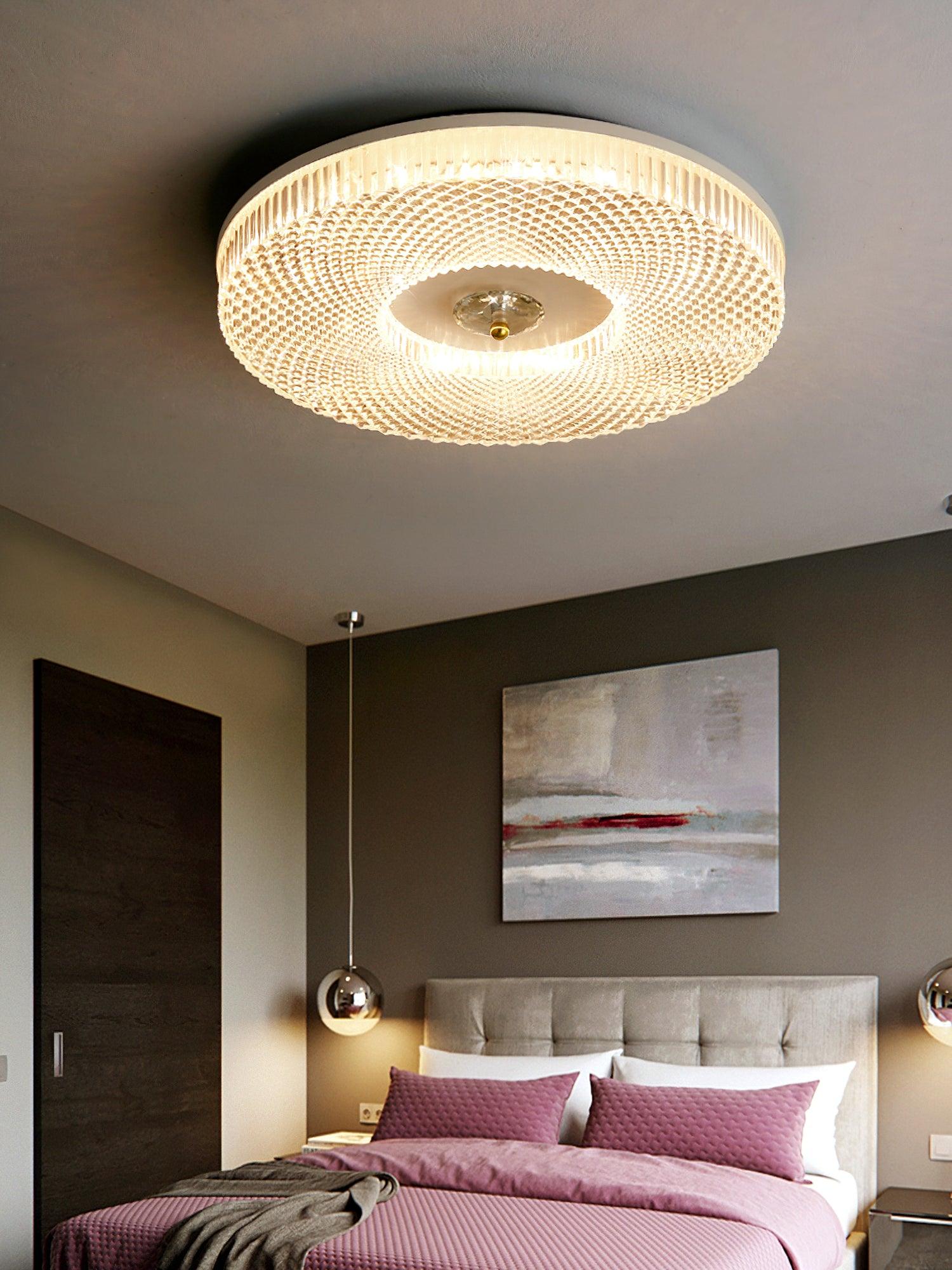
A flush mount sits tight to the ceiling instead of hanging below it. That single decision fixes three recurring problems at once: it keeps walking paths clear in hallways, it prevents a fixture from blocking sightlines in a bedroom, and it avoids the visual clutter of a bare bulb or a builder-grade dome. Because the diffuser is opaque acrylic, the light reads as a soft, even panel rather than a bright point source — useful in rooms where someone is lying in bed or walking past at eye level.
Where it does not fit: rooms with cathedral ceilings that want a statement piece, or spaces where you need directional task light. A flush mount is ambient light. It lights the room, not a specific surface.
Design and Materials: Iron Frame, Acrylic Diffuser
The construction is straightforward and honest: an iron and metal body holding a white acrylic diffuser, with the LED engine integrated behind it. Metal gives the round frame its rigidity and a crisp edge; acrylic does the optical work, spreading the LED output evenly and hiding the diodes from view. The shade is opaque, so you get a uniform glow instead of visible LED dots.
Two practical consequences follow from that build. First, the fixture is a single sealed unit — the LED source is non-replaceable, which is standard for this category and means no lamp shopping later. Second, the acrylic diffuser is the part that benefits most from care: dust it with a dry microfiber cloth rather than spraying cleaner directly onto it.
Picking the Right Diameter for the Room
Two sizes are offered, and the choice is mostly about room footprint and how much of the ceiling you want the fixture to occupy:
- ∅ 15.7 in (40 cm) × 2.7 in tall — hallways, entryways, small bedrooms, studies, and secondary rooms up to roughly 10 × 10 ft.
- ∅ 19.7 in (50 cm) × 2.7 in tall — primary bedrooms, living rooms, kitchens, and open rooms from about 12 × 12 ft upward.
If you are between sizes, go smaller in a hallway — a fixture that is too wide for a narrow corridor reads as heavy overhead — and go larger in a bedroom, where a small disc in a big ceiling looks like an afterthought.
Height, Spacing, and Placement
Because the fixture is 2.7 in deep, an 8 ft ceiling leaves roughly 93 in of clearance below it. That is the whole point of the low-profile form: nothing to duck under.
- Hallways: center the fixture on the corridor width, and space repeats roughly every 8–10 ft along a long run so the pools of light overlap rather than leaving dark bands.
- Bedrooms: center it on the room, or shift it toward the foot of the bed if a ceiling fan or beam dictates otherwise. Avoid placing it directly over the pillow line if anyone reads in bed — the light will fall behind the reader.
- Entryways: center on the door swing zone so the light greets you on arrival rather than pooling in a corner.
Check current sizing and finish options →
Three Color Temperatures — Where Each One Belongs
The fixture is ordered in one of three color temperatures, so this is a decision to make at checkout rather than something you adjust later:
- 3000K warm white — bedrooms, living rooms, dining areas. Relaxed and flattering to wood tones and skin; the default for rooms where you unwind.
- 4000K neutral white — hallways, kitchens, studies. Clean without feeling clinical; the safest all-round choice for circulation space and multi-use rooms.
- 6000K cool white — utility areas, laundry rooms, garages, work zones. Maximum apparent brightness and contrast for detail work, but harsh in a room where you sit at night.
If you are lighting a connected hallway and bedroom with the same fixture, 4000K in the hall and 3000K in the bedroom is a combination that reads as deliberate rather than mismatched.
Black, White, or Gold: Choosing a Finish
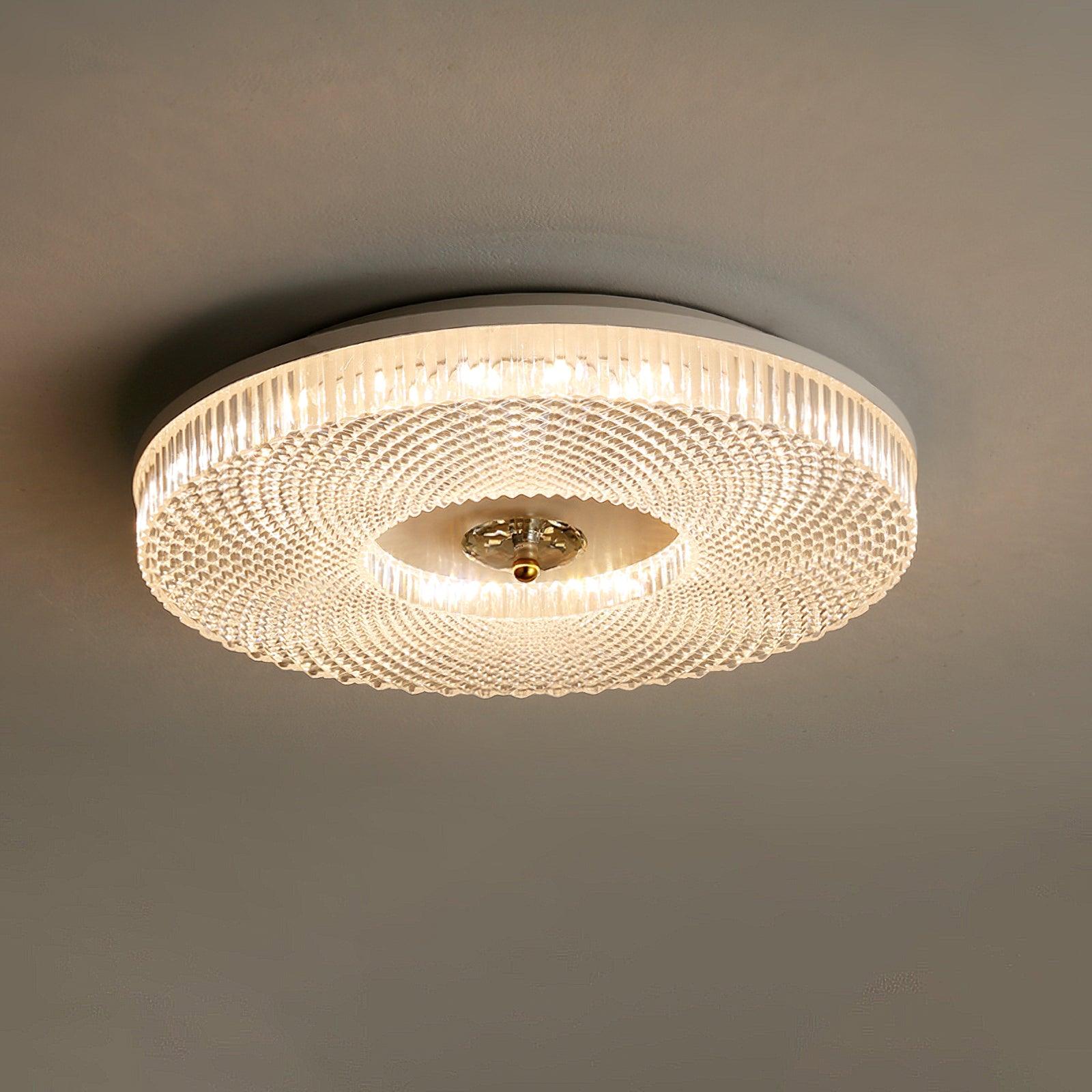
The body finish is the only strongly visible decision, since the diffuser stays white in every version.
- White disappears into a white ceiling — the quietest option, and the one that makes a small room feel taller.
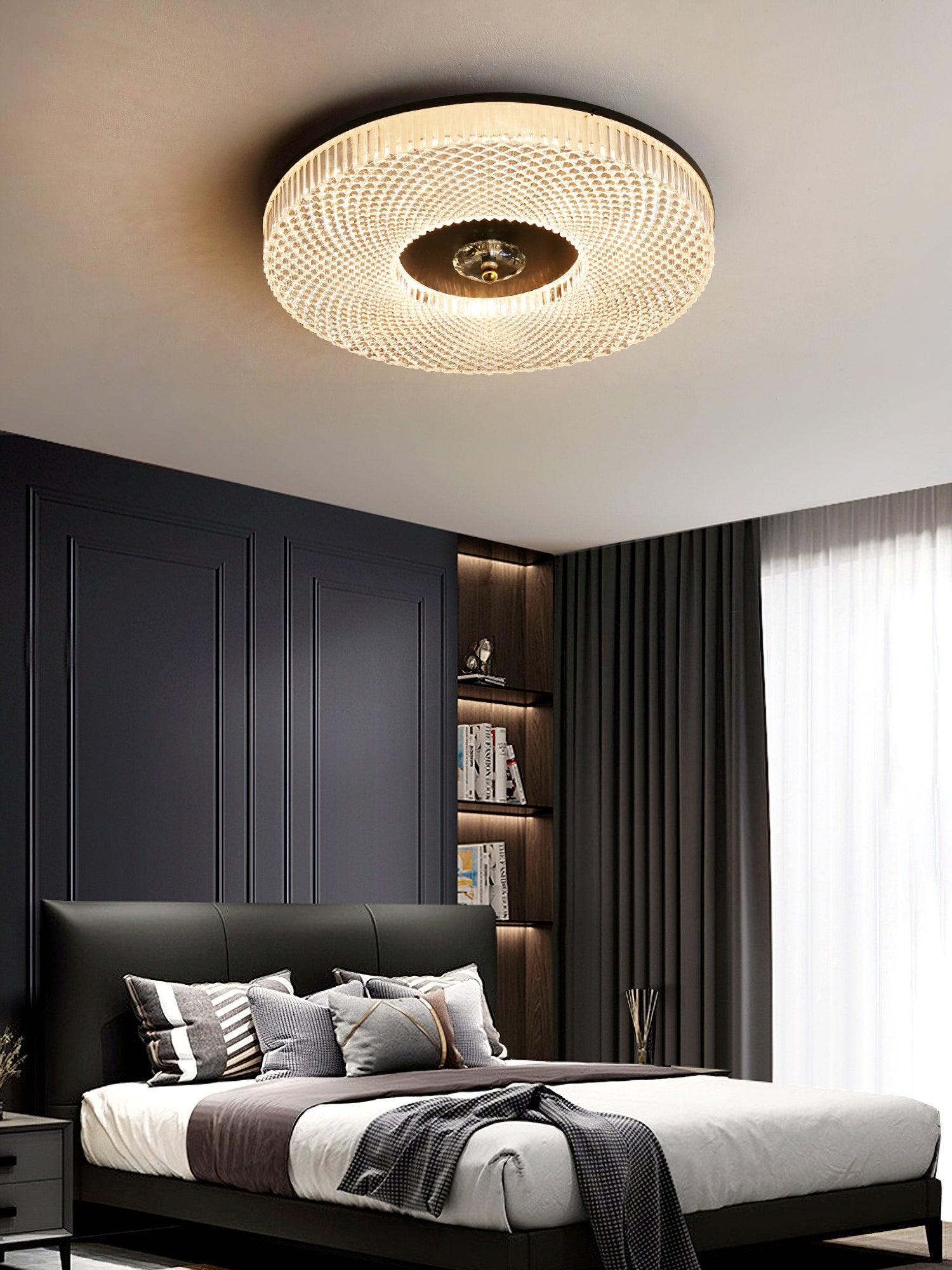
- Black draws a deliberate circle against the ceiling; it suits industrial, modern farmhouse, and high-contrast interiors, and hides dust lines better than white.
- Gold is the warm accent choice — it pairs with brass hardware, warm wood, and painted millwork, and works best when there is at least one other warm metal in the room to answer it.
Browse black, white, and gold finishes →
Installation and Control
The fixture mounts directly to the ceiling and is rated for AC 110–240V. Wiring should be handled by a licensed electrician — a ceiling light is a permanent connection, and in older homes the junction box is frequently the weak point. Two installation notes worth flagging before the electrician arrives:
- Confirm the ceiling box is rated to carry the fixture; flush mounts are light but still need a secure anchor.
- Decide on the dimmer in advance. The manufacturer lists the fixture as compatible with standard wall switches and remote-control dimmer switches.
On moisture: the rating is IP 20, listed for indoor use only and not recommended for areas with direct water contact. That makes it a good fit for a hallway outside a bathroom, and not a fit inside a shower zone or directly over a tub.
Specifications at a Glance
| Attribute | Detail |
|---|---|
| Dimensions | ∅ 15.7 in × 2.7 in (40 × 7 cm) or ∅ 19.7 in × 2.7 in (50 × 7 cm) |
| Materials | Iron, metal, acrylic |
| Light source | Integrated LED, non-replaceable |
| Color temperature | 3000K warm / 4000K neutral / 6000K cool — selected at order |
| Voltage | AC 110–240V |
| Mounting | Ceiling, flush |
| Rating | IP 20 — indoor use only, no direct water contact |
| Finishes | Black, white, gold |
| Shade | Opaque acrylic diffuser |
| Control | Standard wall switch or remote-control dimmer switch |
| Certifications | UL, ETL, CE, SAA listed; RoHS compliant; FCC certified |
View full specifications and order →
Frequently Asked Questions
Is this flush mount dimmable?
Yes — the manufacturer lists it as compatible with standard wall switches and remote-control dimmer switches, so brightness can be adjusted to suit the room. Confirm your dimmer is compatible with integrated LED loads before installing.
Can the LED be replaced?
No. The LED engine is integrated and non-replaceable, which is typical for sealed flush mounts and means there is no bulb to source later.
Can it go in a bathroom?
Not in wet zones. The IP 20 rating is for indoor use only and the manufacturer advises against areas with direct water contact. Hallways, closets, and dry rooms are the intended applications.
Which size for a bedroom?
The 15.7 in version suits rooms up to roughly 10 × 10 ft; the 19.7 in version is the better fit from about 12 × 12 ft upward.
Can I mix finishes in one house?
You can, and it usually looks intentional when the metals are consistent family to family. Keeping the same finish across one sightline — hallway to bedroom, for example — is the safer rule.
The Short Version
If you need even ambient light in a room with a standard ceiling and no room for a hanging fixture, a low-profile flush mount is the correct tool — 2.7 in deep, 15.7 or 19.7 in across, with an iron frame and an opaque acrylic diffuser that keeps the LED out of sight. Choose 3000K for bedrooms, 4000K for halls and kitchens, 6000K for utility space, and pick the finish based on whether you want the fixture to disappear (white) or announce itself (black, gold).