
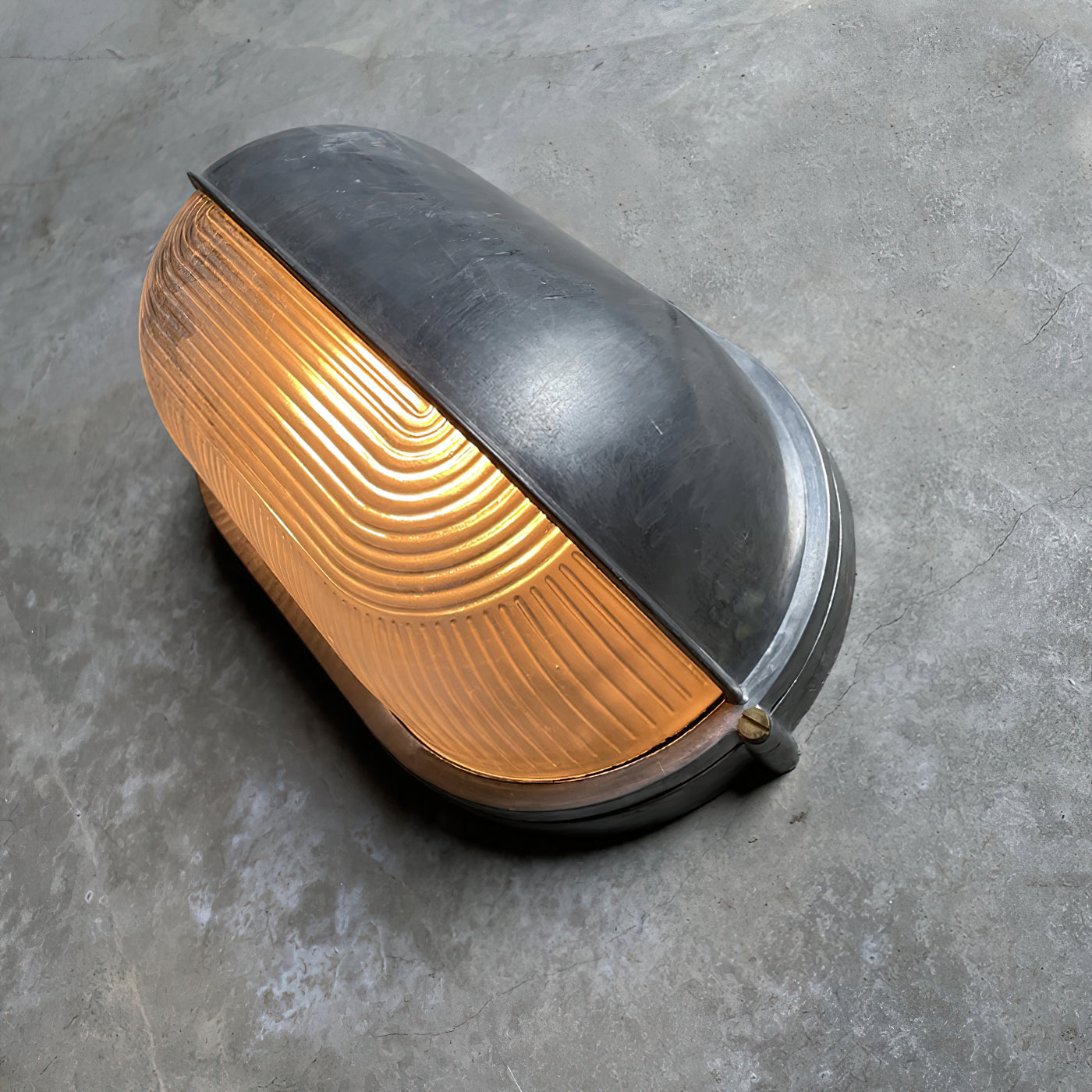
Short answer: an industrial retro glass outdoor wall sconce is the most efficient way to make a porch, entry or patio wall look deliberate instead of unfinished. This one — an aluminum-bodied fixture with a glass shade, sold in two sizes and five finishes — suits both a restored 1920s bungalow and a newly built modern farmhouse, because the shape is period-neutral and the material is honest. Pick the 8.3″ version beside a single door, the 11″ version for a double door or a garage wall, hang the center of the glass at roughly eye level, and fit an E26/E27 bulb in the 2700–3000K range.
Below is what actually matters before you buy: how the materials behave outdoors, which size to choose, where to mount it, and which bulb makes the glass look good rather than harsh.
Design and materials: why aluminum and glass age well outside
The body is aluminum and the shade is glass. That combination matters more than the styling. Aluminum does not rust the way steel does when it is scratched or chipped, which is why it is the standard choice for exterior fixtures near doors, on covered porches, and along coastal walls. Glass, unlike polycarbonate, does not yellow or craze under UV — it stays clear, so the lamp keeps the crisp, slightly industrial look that made you choose it.
The proportions are what give it the retro character: a compact backplate, a short arm, and a shade that reads as a lantern rather than a box. It is a fixture that looks correct with brick, board-and-batten siding, stucco and painted wood — the reason it works equally well on a vintage renovation and a new build is that nothing about it is aggressively modern.
Two sizes — measure before you order
This fixture comes in two sizes. The difference is not cosmetic: it changes how the sconce reads against a door frame, and it changes how much light spreads across a wall.
| Size | Metric | Imperial | Best used for |
|---|---|---|---|
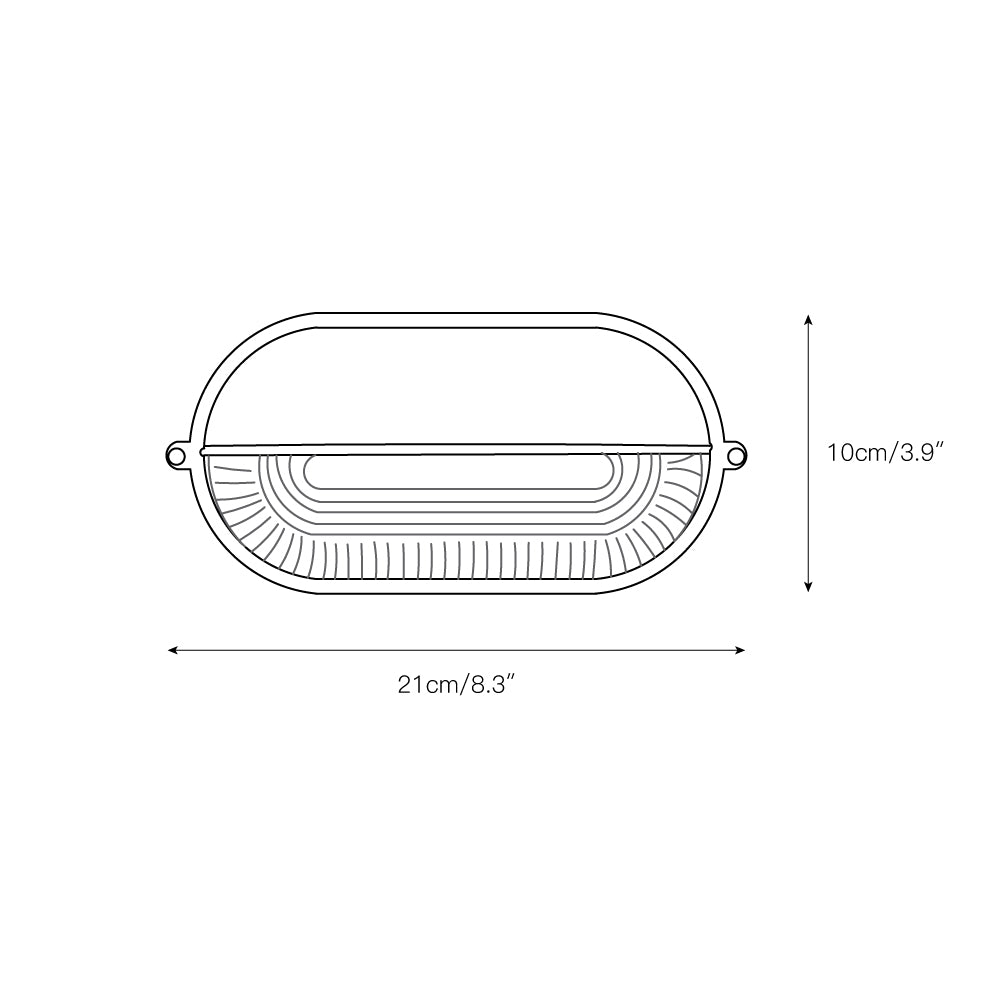
| Small | L 21 × W 10 × H 10 cm | L 8.3″ × W 3.9″ × H 3.9″ | Single doors, narrow sidelights, powder rooms, paired sconces on a small porch |
| Large | L 28 × W 12 × H 16 cm | L 11″ × W 4.7″ × H 6.3″ | Double doors, garage walls, patio columns, larger facades |
As a rule of thumb, the fixture should span roughly one-third to one-half of the door’s height. On a standard 80″ door, the 8.3″ sconce sits comfortably; on a 96″ door or a wide double entry, the 11″ version keeps the composition from looking undersized. If your wall is a long blank run of siding with no door, go larger — small fixtures disappear at distance.
Dimensions are taken by hand, so allow for slight measurement variation. That is normal, and a few millimeters will not change a layout — but do check the backplate against your junction box and siding trim before drilling.
Finishes: green, black, silver, gold, opaque
The color options are green, black, silver, gold and opaque, and the right one depends on what the fixture has to sit next to.
- Black — the safest choice on white, cream, brick and dark charcoal siding. It draws the outline of the lantern, which is the point of the industrial shape.
- Green — reads as heritage without being quaint. Pairs well with brick, copper gutters and warm wood doors.
- Silver — a quieter, more contemporary note. Good on gray siding, metal cladding and modern farmhouse exteriors.
- Gold — the luxury option. Best used sparingly: a pair flanking a front door, or two on a covered patio wall, where the warm metal catches evening light.
- Opaque — softens the bulb and hides the lamp itself, giving a more diffused, hotel-like glow rather than a crisp lantern outline.
One practical note: exterior metal finishes mellow over years of sun and weather. That is not a defect — it is how unlacquered and powder-coated metals behave — but it does mean you should buy the full set at once if the fixtures will sit side by side, so the batch matches.
Where to mount it: heights, spacing and pairing
Most disappointing exterior lighting is not the fixture’s fault; it is mounted too high, too far apart, or with the wrong bulb. These are the numbers worth working to.
Beside a door
Center the glass at roughly 60–66″ above the floor or stoop — approximately eye level for an average adult. A common mistake is centering the fixture at the top of the door; that throws light upward and leaves the entry dim where people actually stand. Align the vertical center of the sconce with the center of the door’s middle panel if you want a tighter, more architectural look.
For a single sconce, place it on the lock side of the door, about 6–8″ from the door trim. For a pair, split them evenly on both sides. For a double door, use two 11″ fixtures rather than two 8.3″ ones — the wider door needs wider visual weight.
On a porch or patio wall
Space wall sconces roughly 8–10 feet apart along a long wall, and keep at least 3 feet from an outside corner so the light does not spill uselessly into the yard. On a covered patio, mount them around 66–72″ so the glow lands on seating and the wall rather than into guests’ eyes.
For symmetry on a blank facade, work from the center line outward. Two sconces flanking a garage door should sit about 12–18″ outside the door frame, centered on the trim.
The bulb: E26 or E27, and why color temperature decides the look
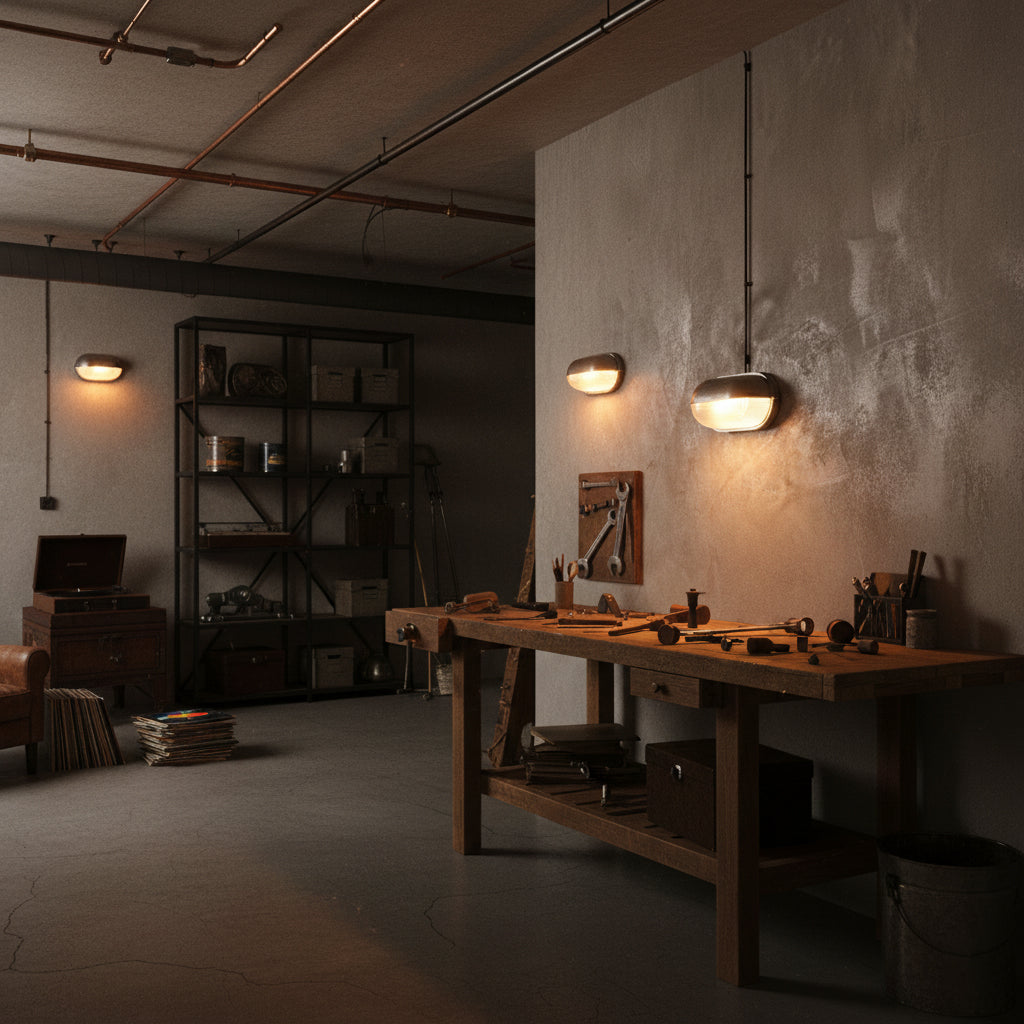
The socket accepts E26 or E27 bulbs, and bulbs are not included. Buy the bulb with the fixture, not after — the glass shade is clear, so the bulb is part of the design.
- Color temperature: 2700K for a warm, amber, residential glow; 3000K if the surrounding light is cooler or the wall is gray. Avoid 4000K and above outdoors — it reads as commercial or security lighting and flattens the glass.
- Shape: a standard A19 works in both sizes; a vintage-style ST58 or globe adds period character and looks better through a clear shade.
- Wattage: choose an LED within the rating printed on the fixture label. LED equivalents deliver plenty of light at a fraction of the heat, which matters inside a sealed glass shade.
- Dimmability: only if the fixture is on a dimmer circuit — exterior dimming is a nice touch for a patio, and it extends the life of the mood you built.
Match bulbs across a pair. Two sconces at slightly different color temperatures is the single most noticeable exterior lighting error, and it is completely avoidable.
Coastal, humid and rainy conditions
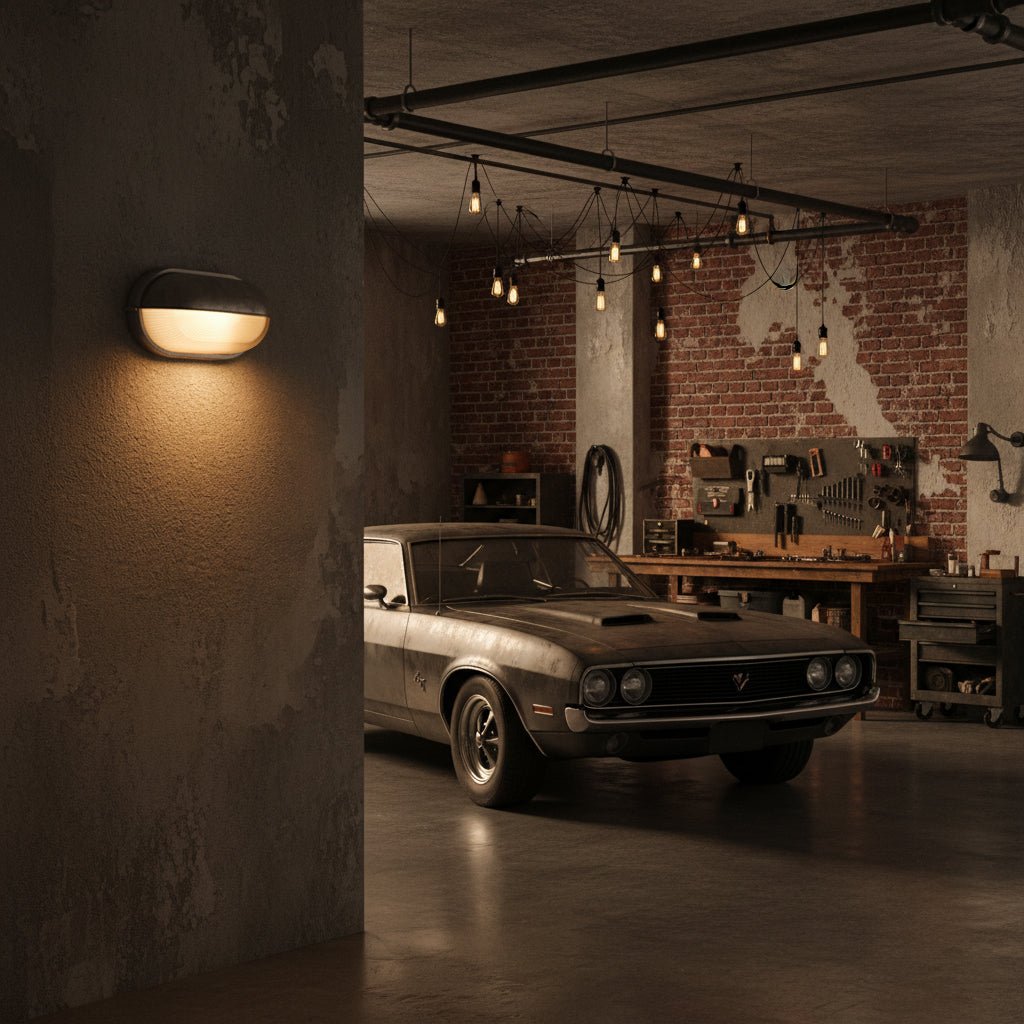
The aluminum body and glass shade are designed to withstand outdoor conditions, and the manufacturer lists this fixture as suitable for coastal and humid environments. In practice, that means two habits: rinse salt film off the glass and metal every few months in coastal areas, and check the shade seating after the first storm season so water does not sit inside the frame.
On installation, seal the backplate against the wall with a bead of exterior-grade sealant if the wall is stucco, brick or any surface that holds water. This is standard practice for exterior fixtures and protects the wiring cavity — not a modification to the lamp.
Safety and compliance
The manufacturer states that this fixture complies with UL certification, ETL listing, CE approval, RoHS compliance and FCC certification. If your project requires documentation for an inspector or a commercial install, ask for the certificate copies before ordering — normal practice for any exterior electrical fixture, and quick to confirm.
How it compares to the alternatives
- vs. plastic or polycarbonate lanterns: cheaper up front, but they yellow and haze within a few seasons. Glass does not.
- vs. painted steel barn lights: similar look, but steel rusts once the coating is breached. Aluminum tolerates scratches far better.
- vs. motion-sensor security lights: different job. A sconce builds the entry’s character; a sensor covers the driveway. Use both, on separate circuits.
- vs. integrated-LED fixtures: integrated units are sleeker but you replace the whole fixture when the module fails. A replaceable E26 socket means a $10 bulb is the only future cost.
FAQ
What are the dimensions?
Two sizes. Small: L 21 × W 10 × H 10 cm (8.3″ × 3.9″ × 3.9″). Large: L 28 × W 12 × H 16 cm (11″ × 4.7″ × 6.3″).
What bulb does it take?
An E26 or E27 bulb. Bulbs are not included, so choose the color temperature and shape deliberately — 2700K to 3000K is the right range for a residential exterior.
Can it be used in a coastal or humid environment?
Yes. The aluminum body and glass shade are designed to withstand outdoor conditions, and the manufacturer lists it as suitable for coastal and humid settings. Rinse salt residue periodically and keep the shade seated.
Is it bright enough to light an entry on its own?
One fixture lights the immediate door zone well. For a wide entry or a dark approach, use a matched pair, or add a path light — a single sconce is accent lighting, not area lighting.
How high should it be installed?
Center the glass roughly 60–66″ above the walking surface for a door, and 66–72″ on a covered patio. Keep it aligned with the door’s visual center rather than tucked under the header.
Bottom line
This is a fixture that earns its place through restraint: aluminum that will not rust, glass that will not yellow, a shape that suits both old houses and new ones, and two sizes that cover most exterior walls. Choose the size by door width, the finish by siding and trim, mount at eye level, and buy the bulb at the same time. That is the whole formula — and it is why the result looks considered rather than decorated.